Suno's Spark Incubator: Financial Lifeline or Corporate Trap for Independent Artists?
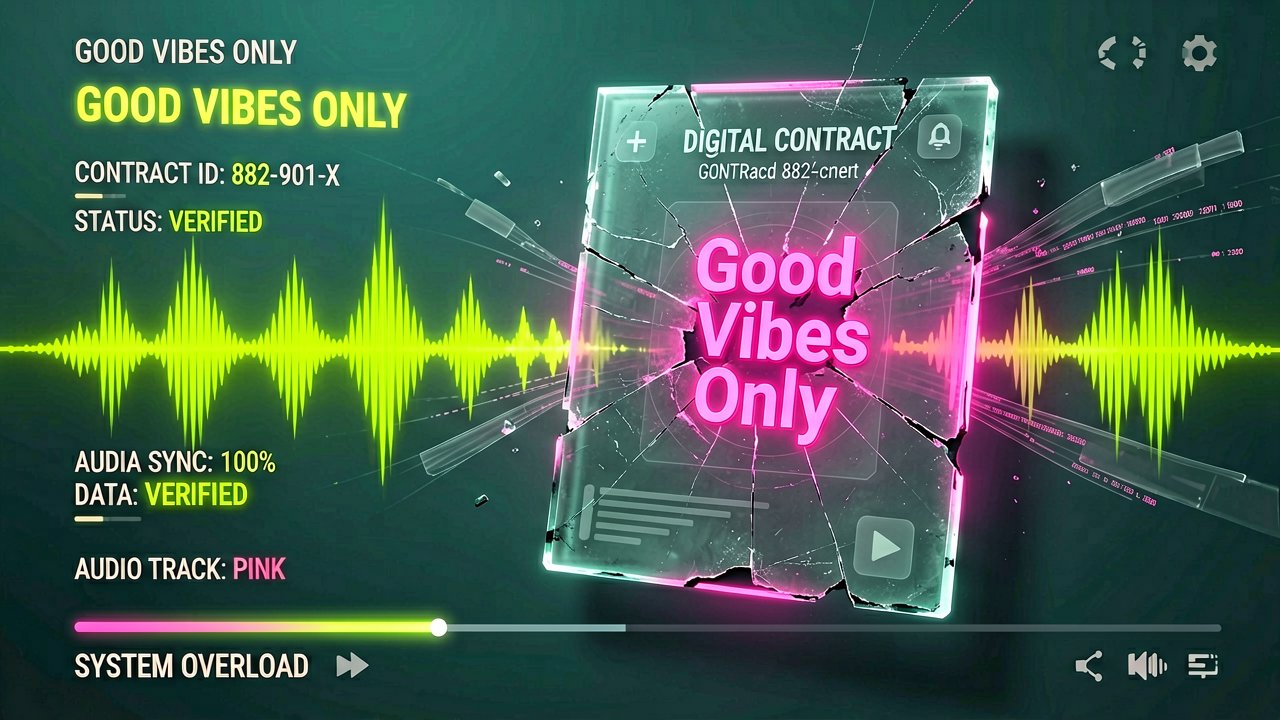
The generative AI music giant Suno, recently valued at $5.4 billion following a massive $400 million funding round, has officially unveiled "Spark," an incubator program designed to offer financial grants, mentorship, and marketing support to unsigned independent creators. While the initiative is publically framed as an artist-friendly tool to help musicians build sustainable careers, the contract's stringent fine print has drawn immediate backlash from the creative community. Industry analysis reveals that the program requires participants to relinquish critical legal freedoms, forcing an industry-wide debate over corporate control and artist autonomy in an increasingly AI-driven marketplace.
According to investigative coverage by The Verge, the underlying terms of the agreement mandate a "Good Vibes Only" non-disparagement clause. This restriction legally bars artists from making any statements, either during the term or indefinitely thereafter, that portray Suno or its products in a negative light. Furthermore, musicians are obligated to create and publish up to 12 original tracks directly on Suno's platform, make their core work available for user remixing, and execute mandatory social media promotion explicitly highlighting Suno's involvement. Legal experts highlight that by checking the application box, artists effectively execute a binding contract that strips away their right to a jury trial or participation in class-action lawsuits via aggressive arbitration clauses.
This aggressive corporate strategy marks a profound shift in how artificial intelligence firms seek to legitimize their platforms amid severe legal pushback. While Suno managed to secure a licensing pact with Warner Music Group, it remains embroiled in high-stakes copyright infringement litigation spearheaded by Sony Music Entertainment and Universal Music Group, alongside separate class-action threats from independent creators. By trading thousands of dollars in upfront grants for absolute promotional compliance and perpetual rights over an artist’s name, image, and likeness, Suno is attempting to reshape public sentiment and manufacture a compliant class of digital creators to validate its commercial ecosystem.
The Fine Print of the Spark Incubator Contract
- "Good Vibes Only" Clause: Enforces an absolute, lifelong ban on any written or oral statements portraying Suno or its personnel in a negative light.
- Mandatory Remix Rights: Forces artists to post their original tracks on Suno's platform and allow other users to remix or generate derivative works from their core hooks.
- Perpetual Likeness Licensing: Grants Suno the right to use the artist's name, image, and likeness for corporate marketing indefinitely, even after the program ends.
- Platform Exclusivity: Prohibits creators from working in any paid or formal capacity with competing AI music firms for 60 days post-program.
- Legal Indemnification: Shifts total legal liability onto the independent artist for any future copyright or sampling disputes regarding the uploaded tracks.
Strategic Market Shifts and Industry Implications
From an executive standpoint, the Spark program reflects a tactical pivot away from purely software-based product offerings toward becoming an end-to-end streaming destination and talent incubator. Reports featured in Variety note that Suno is attempting to mimic traditional record label infrastructure by leveraging its $400 million capital reserves to court vulnerable, unsigned talent. However, traditional labels tie promotional obligations to active funding windows; Suno's requirement of perpetual non-disparagement and marketing access after contract termination shatters standard industry practices, introducing a dangerous precedent where technology platforms hold permanent veto power over an artist's public voice.
Ultimately, Suno's strategy exploits the financial precarity of modern independent musicians. The platform promises that creators retain "commercial and creative rights" over their masters, yet it simultaneously dilutes those rights via sweeping platform licenses. As generative AI firms seek to move past early-stage "AI slop" and capture mainstream cultural relevance, programs like Spark present a stark ultimatum for the future of entertainment: independent artists can secure vital funding, but only if they agree to become silenced marketing assets for the very technology threatening their livelihoods.
Behind the Scenes: The Invisible Structural Leverage of GenAI Platforms
What most public reports miss is that the financial structure of the Spark incubator operates less like a traditional arts grant and more like a high-leverage corporate acquisition of personal branding. Independent musicians have long faced lopsided contracts from major record labels, but the systemic shift here lies in the permanent surrender of an artist's critical voice to an algorithmic distributor. By locking creators into lifelong non-disparagement agreements in exchange for a one-time cash injection, technology platforms are effectively purchasing a permanent shield against the growing cultural backlash facing generative media. This strategy allows a company to clean up its public image while its underlying engineering models remain under intense legal fire for systemic scraping practices.
From the perspective of indie creators, the immediate capital provides a desperate lifeline in an era where streaming payouts have hit historic lows. However, industry insiders warn that the long-term trade-off is incredibly damaging to an artist's career trajectory. When a musician grants a platform the perpetual right to use their name, image, and likeness, they lose control over how their brand is deployed to train or promote automated systems that may eventually replace human session musicians. Intellectual property attorneys point out that these contracts create a troubling class of "synthetic influencers" who are legally bound to smile and praise automated systems, even if those same systems begin systematically diluting the commercial value of human-made catalog music.
This dynamic highlights a deepening ideological divide within the creative industries over the definition of artistic labor. Traditional labor organizations and artist rights coalitions view these predatory incubators as an existential threat to collective bargaining and fair compensation. Conversely, venture-backed AI firms argue that they are democratizing music production by giving underfunded artists access to state-of-the-art distribution and tools. By reframing corporate compliance as "good vibes," tech firms are attempting to bypass established industry standards, creating a precedent where future creative talent must choose between financial survival and the fundamental right to speak out against the tools shaping their medium.
Reading Between the Lines: The Illusion of Creator Empowerment
The tech industry's sudden embrace of artist incubation reveals a deep corporate contradiction. For years, generative AI companies argued that human creators were merely a historical data set, treating copyrighted music as public raw material for algorithmic training. Now, facing multi-billion-dollar copyright lawsuits from major record labels, these platforms are aggressively pivoting to position themselves as the saviors of independent music. This strategic about-face exposes a stark reality: automated platforms have realized that while software can generate endless audio files, it cannot manufacture the cultural authenticity, personal narratives, and human charisma required to sell music to a mainstream audience. The technology needs human artists to validate its existence, yet the terms of these incubators treat those exact creators as highly disposable commodities.
This dynamic introduces a troubling economic paradox for the future of creative labor. By subsidizing a select group of independent musicians under strict promotional gag orders, corporate platforms create a highly visible illusion of shared prosperity. In reality, the financial math remains deeply skewed. A one-time grant does little to offset the broader market devaluation that occurs when platforms flood streaming services with millions of low-cost, algorithmically generated tracks. The artists entering these agreements are essentially funding their own long-term economic displacement, trading their permanent marketing rights for short-term liquidity, while the platform uses their human likeness to build investor trust and secure massive venture capital valuations.
Furthermore, the long-term industry implications extend far beyond individual contract disputes. When tech platforms successfully institutionalize permanent non-disparagement agreements as a standard condition for creator funding, they effectively neutralize organic artistic critique. Historically, independent music communities have served as the fiercest critics of corporate consolidation and exploitative labor practices. By systematically buying out the right to criticize, technology companies are attempting to engineer a sanitized creative landscape where the only permissible stance toward automation is absolute compliance. If this model becomes the industry standard, the traditional role of the independent artist as a cultural disruptor will be replaced by a corporate mandate to maintain a polite brand alignment with the servers.
Independent musicians spent decades fighting traditional record labels for creative freedom, only to sign up for a futuristic tech utopia where they retain 100% of their masters but are legally barred from ever expressing a single authentic emotion about the company that owns the playlist.
Artūras Malašauskas is an AI Systems Integrator with 20+ years of production-grade web engineering experience. He has designed, shipped, and scaled enterprise Python/PHP systems for logistics, SaaS, and public-sector clients. For the past year, he has focused exclusively on AI integrations: deploying open-source LLMs, building generative media pipelines (image, audio, video), and engineering multi-agent workflows for real production environments. His standard: reproducibility, security, cost-efficient inference—no vaporware. He documents and evaluates emerging AI tooling, separating verified capabilities from marketing noise. Technical editor at: muza-ai.eu, ai-verslas.lt, ai-naujinos.lt Connect on LinkedIn
Comments