Artists' Rights Clash with AI Training Practices as SZA Condemns Song Use
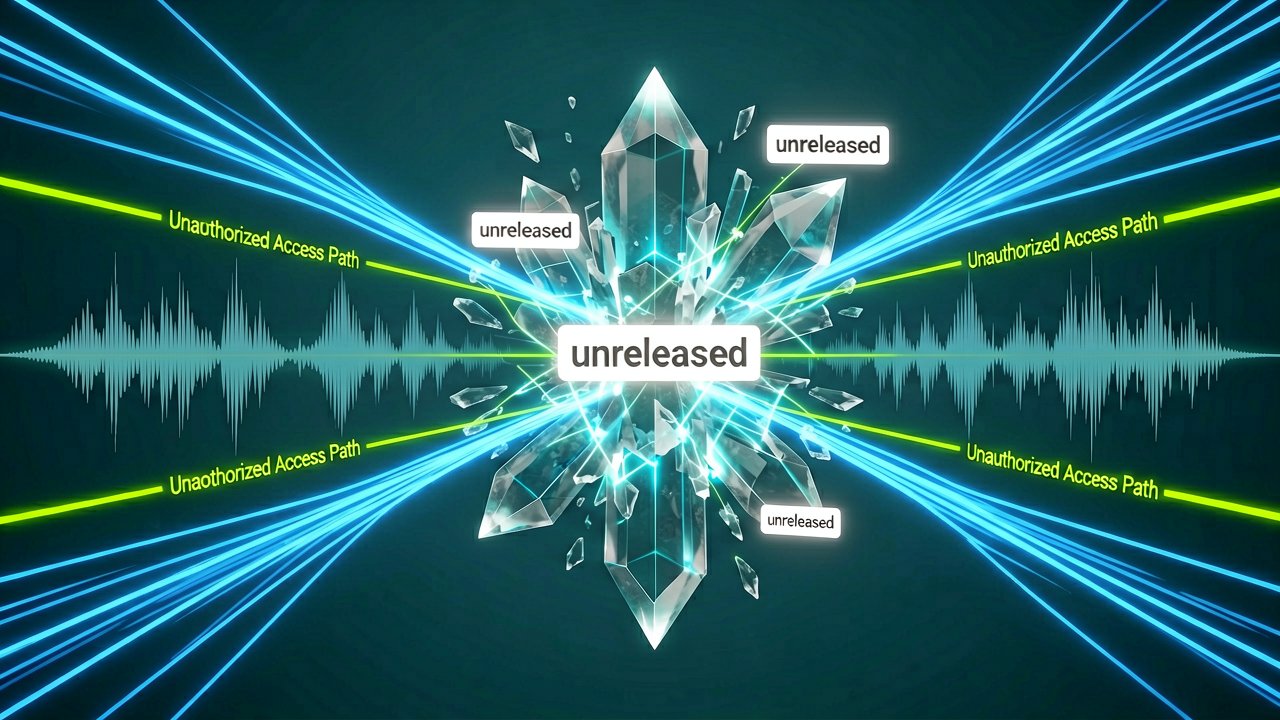
The intensifying battle between creative ownership and machine learning reached a flashpoint when Grammy-winning singer SZA publicly condemned generative music platforms. Utilizing data metrics from a newly publicized media tracker, SZA discovered that artificial intelligence models have been trained on 238 of her songs, including several unreleased tracks. In an emotional statement on her social media channels, the artist labeled the unauthorized use of her intellectual property as "degenerate" and "disgusting," directly lambasting musicians and developers who support unauthorized data ingestion practices. The confrontation underscores a volatile industry-wide dispute regarding copyright infringement and systemic exploitation in automated media pipelines.
This public backlash from a major recording star marks a profound strategic shift in how the entertainment sector addresses large language models and neural audio networks. Platforms like Suno and Udio face mounting legal scrutiny as prominent trade organizations and musicians demand transparent license verification and strict opt-in frameworks. In response to the recent uproar, representatives from Suno pointed to statements emphasizing that their corporate training metadata explicitly excludes proprietary artist names and heavily implements advanced deepfake detection systems. However, the continuous proliferation of automated voice clones and algorithmic replication continues to threaten established monetization architectures and individual streaming revenue distribution systems.
The economic stakes remain remarkably high as capital floods into AI entertainment ventures, exposing a stark ideological divide among top-tier industry practitioners. Reports monitored by Variety reveal that while legendary producers like Timbaland and Will.i.am actively invest in emergent tech startups, creative purists are pushing back forcefully against the devaluation of human artistry. Compounding these intellectual property concerns, creators are raising critical alarms regarding the cultural implications of generative synthesis. SZA has previously noted that automated audio platforms disproportionately target and misrepresent Black music styles by relying on outdated, stereotypical tropes. As technological capability outpaces legislative updates, the entertainment marketplace is moving toward aggressive litigious resistance against unauthorized corporate data scraping.
Escalating Corporate Legal Disputes
Major recording labels and independent distribution conglomerates are establishing stricter digital rights management barriers to block incoming web scrapers. Legal teams are abandoning passive negotiation strategies in favor of aggressive copyright infringement lawsuits targeting unauthorized ingestion of master recordings.

Evolving Data Transparency Metrics
The integration of open database tracking systems allows prominent musicians to audit precisely which software repositories ingested their catalog without prior consent. These analytical tools empower public figures to verify systemic intellectual property violations and coordinate collective boycotts against non-compliant technology firms.
Divergent Monetization Paradigms
The music ecosystem is splitting into an asset-monetized faction investing heavily in synthetic virtual avatars and an artist-first collective demanding rigid regulatory protection. This polarization pressures streaming giants to reformulate royalty distribution algorithms to insulate human performers from automated algorithmic dilution.
Behind the Scenes of the IP Trenches
What Most Reports Miss: The friction between legacy music catalogs and generative audio models is not merely an ideological dispute over creative soul; it is an economic war over data provenance. As technology firms race to train more sophisticated neural audio networks, the scarcity of high-quality, cleanly engineered multi-track stems has turned commercial music catalogs into prime targets for algorithmic ingestion. For an artist like SZA, whose discography relies heavily on complex vocal stacking, specific harmonic arrangements, and unique audio engineering signatures, unauthorized scraping captures more than lyrics—it ingests a distinct, signature acoustic blueprint. When these specialized traits are synthesized into commercial AI platforms, they dilute the marketplace value of the original recordings and disrupt established artist monetization pipelines.
The engineering teams behind generative audio platforms often defend these data ingestion practices by pointing to the legal doctrine of fair use, drawing a technical parallel to how human musicians listen to and learn from existing music. Tech developers argue that neural networks do not copy audio files directly, but rather analyze mathematical patterns to learn the underlying relationships between notes, frequencies, and instrumentation. This legal theory faces immense resistance from major recording labels and artist advocacy groups, who maintain that industrial-scale data scraping without compensation constitutes systematic copyright infringement. The underlying tension stems from a fundamental mismatch between fast-moving machine learning development cycles and static, decades-old intellectual property frameworks that never anticipated automated voice cloning or generative stylistic replication.
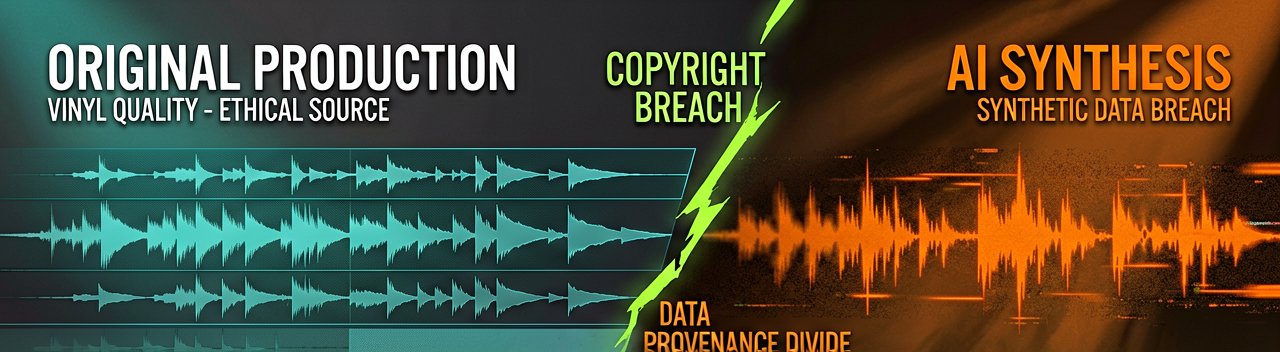
This escalating friction is forcing a dramatic realignment within the music industry's executive suites. Recording labels find themselves walking a delicate tightrope, balancing aggressive litigation against AI startups while simultaneously negotiating lucrative licensing deals with major technology conglomerates. While certain prominent tech entities seek legitimate partnerships by establishing opt-in registries and tracking mechanisms, the parallel growth of open-source models and decentralized scrapers makes absolute copyright enforcement nearly impossible. For working artists, this creates a deeply frustrating environment where the burden of tracking data theft falls entirely on the creators themselves, requiring continuous vigilance against digital platforms that build commercial value using uncompensated human labor.
The Paradox of Technical Progress and Artistic Protection
Reading Between the Lines: The outrage surrounding the unauthorized use of commercial music catalogs reveals a fundamental contradiction in the corporate positioning of generative entertainment tech. Venture-backed AI music companies frequently claim their platforms democratize creativity, enabling anyone to become a composer, yet their underlying software relies entirely on the refined work of elite human artists. This parasitical relationship exposes a fragile business model where the technology's primary value proposition is derived from the very industry it threatens to displace. If the legal landscape shifts toward strict, mandatory opt-in mechanisms, the foundational data layer powering these models risks collapse, exposing a severe overreliance on non-consensual exploitation.
Furthermore, the current enforcement strategies deployed by major recording labels carry their own corporate hypocrisies. While executives publicly champion artists' rights and fund high-profile copyright lawsuits, the same leadership structures are actively seeking institutional licensing agreements behind closed doors. This dual strategy suggests that the primary issue for corporate stakeholders is not necessarily the ethical preservation of human artistry, but rather the exact price point at which that artistry can be commodified for algorithmic training. As major labels prepare to monetize their archives through corporate partnerships, individual creators face a double standard where their personal creative boundaries are overridden by institutional profit motives.
Looking ahead, the proliferation of decentralized, open-source audio networks will likely render traditional digital rights management obsolete. While litigation can temporarily freeze centralized, VC-funded entities, it offers zero protection against anonymous, open-source model repositories hosted globally outside the reach of Western copyright law. This impending reality indicates that the music industry cannot simply sue its way back to the pre-generative era, forcing a structural shift where authentic human performance must be branded as a premium, unreplicable luxury asset. As synthetic content oversaturates digital streaming platforms, the definition of musical value will inevitably be forced to transform from the audio output itself to the verifiable human context behind its creation.
It seems the future of the music industry belongs to a new breed of mathematical accountants, where a hit record will no longer be judged by how many hearts it touches, but by how cleanly its data stems can be formatted to feed the very machine designed to render the singer obsolete.
Artūras Malašauskas is an AI Systems Integrator with 20+ years of production-grade web engineering experience. He has designed, shipped, and scaled enterprise Python/PHP systems for logistics, SaaS, and public-sector clients. For the past year, he has focused exclusively on AI integrations: deploying open-source LLMs, building generative media pipelines (image, audio, video), and engineering multi-agent workflows for real production environments. His standard: reproducibility, security, cost-efficient inference—no vaporware. He documents and evaluates emerging AI tooling, separating verified capabilities from marketing noise. Technical editor at: muza-ai.eu, ai-verslas.lt, ai-naujinos.lt Connect on LinkedIn
Comments