Lehigh Professors Split on AI Classroom Policies
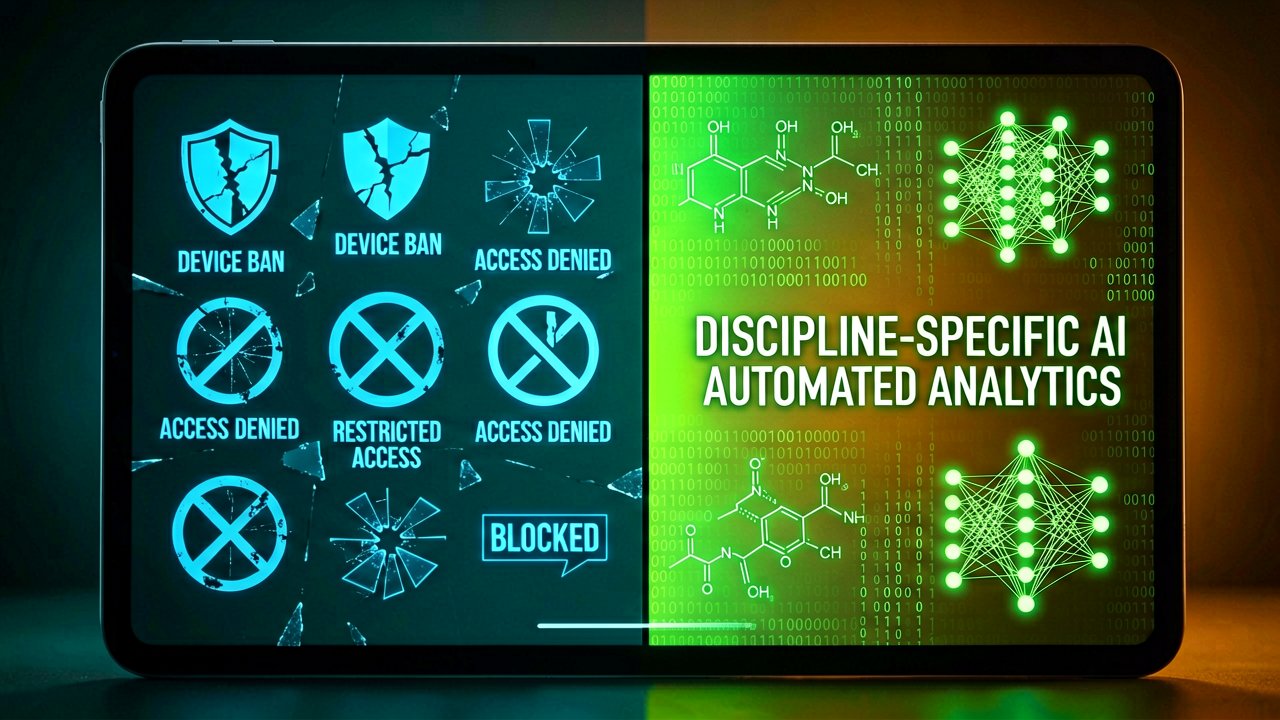
The classroom has become a battleground for artificial intelligence, and Lehigh University professors are drawing different lines in the sand. A recent report from The Brown and White documents how faculty members are navigating the technology's presence in their courses, with policies spanning from total prohibition to strategic adoption.
Psychology professor Michael Gill took the most restrictive path last semester, implementing a no-technology policy across all his classes. The ban covers computers, iPads, and phones during instruction. Gill had considered this approach for over a decade but acted after observing a sharp decline in exam grades following the pandemic. He attributed the drop to students becoming overly reliant on their devices and struggling to readjust to in-person learning.
His decision came after sitting in the back of a colleague's lecture and witnessing students playing games, shopping, and engaging in various off-task activities. Visible distractions, he noted, undermine the classroom environment by discouraging engagement from other students. Gill also cited research suggesting handwritten notes are more effective than typed ones.
After implementing the rule, Gill surveyed his students. About 40 students responded on a scale of 0 to 100, with 0 indicating strong dislike and 100 indicating strong support. The median response was 85. He also noticed increased participation since introducing the policy. "For me learning is a sacred thing," Gill said. "You come to class to listen to professors who've been studying things for decades and putting together this knowledge."
Other faculty take a more flexible approach. Computer science and engineering professor George Witmer allows students to decide how they want to use technology in class. He encourages students to learn how to use AI, noting it will be essential in the workplace. At the same time, he acknowledged the growing challenges of distinguishing between AI-generated and original student work.
"AI has become a huge game changer," Witmer said. He said AI can be useful for completing tedious tasks but shouldn't interfere with learning. To help maintain attention, he distributes worksheets during class to keep students involved and improve attendance. Still, he emphasized that students ultimately control their own choices. "I am dismayed, maybe disappointed, given how much students are spending to be here," Witmer said.
Marketing professor K. Sivakumar views AI as a neutral tool whose value depends on context. He said debates about whether AI is "good" or "bad" often miss the point. "I'm not for AI or against AI," Sivakumar said. "In some cases, it's appropriate, and in some cases, it isn't."
He doesn't support a one-size-fits-all policy, noting that expectations vary by discipline. For example, he would allow tools like Grammarly in an upper-level marketing course but understands why an English professor might prohibit it. Sivakumar said his main concern is that students may use AI to shortcut the thinking process. He encourages them to use it thoughtfully and refine its output with their own judgment.

In his own research, Sivakumar uses AI to reformat citations or summarize literature, allowing him to focus on developing new ideas. Looking ahead, he said AI will reshape employer expectations and that students should demonstrate AI literacy on their resumes. "Companies want people who can use AI to augment their work, not replace it," Sivakumar said.
Health professor Kate Jackson takes a stricter stance, prohibiting AI use in her classes and viewing technology as a barrier to student engagement. She acknowledges that her position makes her an outlier in a college she described as "progressive" and "exploratory" in its approach to AI. Jackson said her concerns stem from the environmental and social impacts of AI.
"For me, AI is not necessary and I find its environmental impacts don't outweigh the benefits for me and the work that I do," Jackson said. She pointed to broader concerns, including the environmental costs of AI — such as water usage, noise pollution and strain on local ecosystems — and the risk of bias in AI systems. Jackson said she'd reconsider her stance if more environmentally responsible AI systems were developed.
The physical reality of these policies matters. When Gill walks into his classroom, he sees students with notebooks and pens instead of glowing screens. When Witmer distributes worksheets, students are physically writing answers rather than typing into chatbots. The tactile difference is intentional — some professors believe the friction of handwriting forces deeper cognitive processing (a claim that research supports, though not universally).
Earlier reporting from The Brown and White in 2024 showed similar tensions. Business communications professor Emily Gobreski incorporates AI into her students' assignments, including resume creation and interview preparation tools. Journalism professor John Vilanova expressed concern about AI's accuracy and the risk of students developing their own writing style. Computer science professor Brian Davison described using AI as a "tutor" to answer complex questions.
The core tension isn't whether AI works — it clearly does for certain tasks. The question is whether students should learn to think without it, or learn to think with it. Some professors believe the answer depends entirely on what they're teaching. A marketing student needs different skills than a psychology student, and a journalism student needs different skills than a computer science student.
Whether universities can maintain this discipline-specific flexibility at scale remains uncertain. As AI tools become more sophisticated and harder to detect, the burden of verification falls on instructors who are already stretched thin. The professors at Lehigh have found their own answers, but the broader question of how to balance technology with learning outcomes has no single solution. Whether students actually develop the critical thinking skills these policies aim to protect is what matters most.
The Brown and White's April 28, 2026 report documents these varied approaches across Lehigh's faculty.
Artūras Malašauskas is an AI Systems Integrator with 20+ years of production-grade web engineering experience. He has designed, shipped, and scaled enterprise Python/PHP systems for logistics, SaaS, and public-sector clients. For the past year, he has focused exclusively on AI integrations: deploying open-source LLMs, building generative media pipelines (image, audio, video), and engineering multi-agent workflows for real production environments. His standard: reproducibility, security, cost-efficient inference—no vaporware. He documents and evaluates emerging AI tooling, separating verified capabilities from marketing noise. Technical editor at: muza-ai.eu, ai-verslas.lt, ai-naujinos.lt Connect on LinkedIn
Comments