Honor Unveils MagicPad Pro 12.3 with Linux Lab AI Support
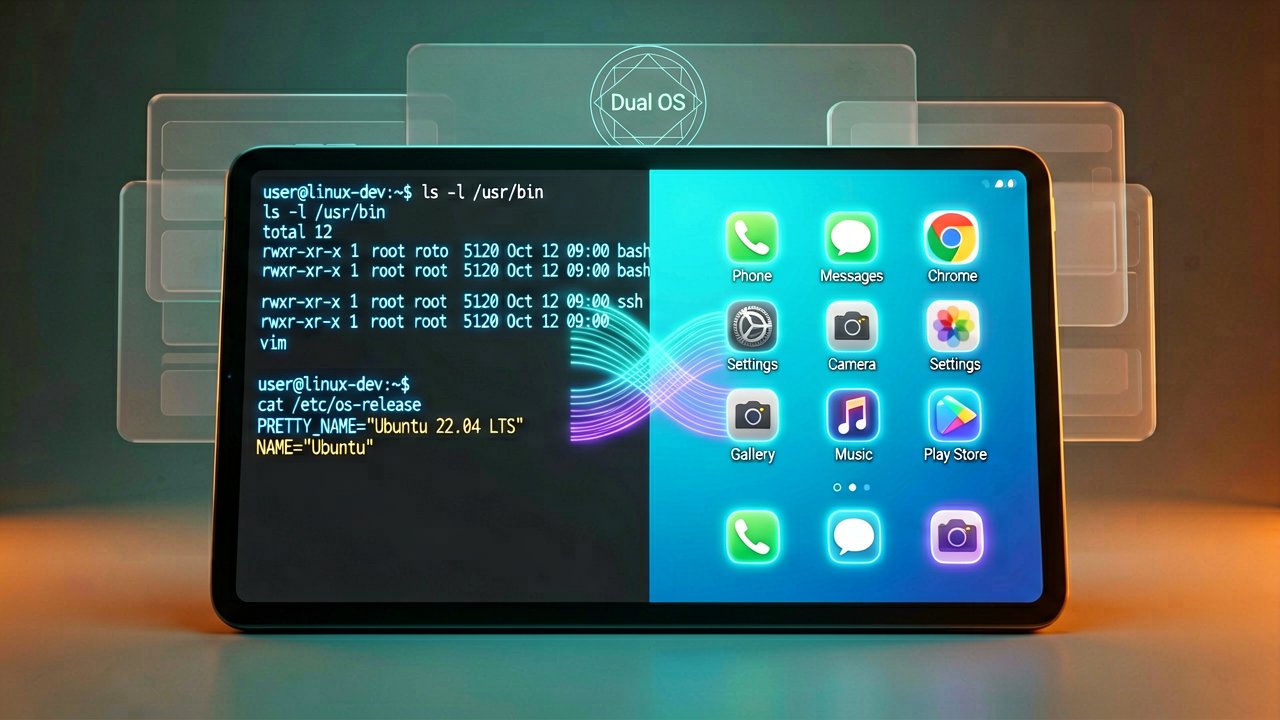
Chinese technology firm Honor has introduced the MagicPad Pro 12.3, positioning it as the thinnest flagship tablet currently available while integrating support for AI agents similar to OpenClaw. The device represents a strategic pivot toward what the company calls the AIoT industry — a convergence of artificial intelligence and Internet of Things terminals.
At 4.8mm thick and weighing 450g, the MagicPad Pro 12.3 undercuts the 13-inch iPad Pro in thickness while offering a larger display than the 11-inch iPad Air. The physical form factor matters here: users can actually hold this thing without their wrists screaming after an hour of use.
The core innovation lies in what Honor terms the "Linux Lab" — a dual-system architecture supporting both Linux and Android environments. This isn't merely a marketing flourish. The tablet ships with pre-installed on-device deployment capabilities that lower barriers to local AI model fine-tuning. For developers who've spent hours wrestling with cloud costs and latency, this represents a tangible shift toward edge computing.
According to data from China's National Data Bureau, the country's average daily token consumption exceeded 140 trillion as of March 2026. The industry-wide challenge now involves balancing cloud infrastructure expenses against on-device performance demands. Honor's approach attempts to address this tension directly.
CEO Li Jian framed the launch within a broader strategic context: "Objectively speaking, in the past we focused mainly on the mobile phone business. But now we are talking about the AIoT industry — that is, various AI terminals and ecosystems." This statement aligns with Honor's earlier announcements at Mobile World Congress 2026, where the company outlined its AI Connect Platform strategy to integrate over 20,000 AI services by year-end.
The Linux Lab feature warrants closer examination. Unlike traditional Android tablets that run sandboxed applications, this architecture permits command-line interface access and local large language model customization. Users can theoretically select their preferred LLM and deploy it without cloud dependency. The friction point here is thermal management — running compute-intensive AI workloads in a 4.8mm chassis generates heat that must dissipate somehow.
Industry observers note this positions Honor differently from competitors. Apple's iPadOS remains a walled garden; Samsung's Galaxy Tab lineup offers DeX mode but lacks native Linux support at this level. The MagicPad Pro 12.3 attempts to bridge consumer tablet convenience with developer-grade flexibility.
During MWC 2026, Fang Fei, President of Products at Honor, described the industry as approaching a "Cambrian Explosion" in AI devices. The company's vision involves "Embodied AI" concepts like the Robot Phone alongside specialized AI companions. Whether a tablet with Linux support fits this narrative depends on execution.
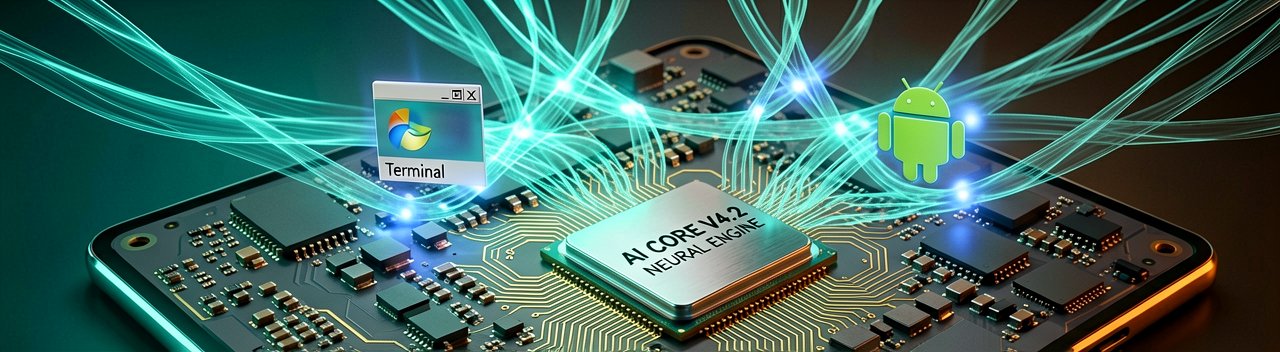
The OpenClaw-like AI agent integration suggests Honor is betting on agentic workflows — where AI assistants can execute multi-step tasks autonomously rather than merely responding to prompts. This requires sustained compute power, memory bandwidth, and thermal headroom that thin devices struggle to provide consistently.
For enterprise users, the implications are straightforward: local AI deployment reduces data privacy concerns and eliminates recurring cloud subscription fees. For hobbyists, the Linux Lab offers a playground for experimentation without maintaining separate development hardware. The catch is that not all AI models run efficiently on mobile-class processors.
Market timing presents another variable. The tablet launches amid broader industry uncertainty about AI monetization. Companies are racing to embed AI capabilities, but consumers remain skeptical about paying premiums for features that may not deliver measurable productivity gains.
Honor's pursuit of "lightness and aesthetics" in the premium tablet segment continues, but the real test involves whether the Linux Lab delivers on its promise. Can a 450g device genuinely support local AI fine-tuning without throttling? Can the battery survive intensive workloads? These questions won't be answered by press releases.
The China Daily report covering this launch notes the device's specifications and positioning, though independent technical reviews remain pending. Until hands-on testing validates the Linux Lab's performance under load, the MagicPad Pro 12.3 remains an intriguing proposition rather than a proven solution.
Whether developers actually adopt this platform depends on ecosystem support, documentation quality, and whether the AI agent capabilities feel genuinely useful rather than gimmicky. The hardware exists; the software maturity remains to be seen.
Artūras Malašauskas is an AI Systems Integrator with 20+ years of production-grade web engineering experience. He has designed, shipped, and scaled enterprise Python/PHP systems for logistics, SaaS, and public-sector clients. For the past year, he has focused exclusively on AI integrations: deploying open-source LLMs, building generative media pipelines (image, audio, video), and engineering multi-agent workflows for real production environments. His standard: reproducibility, security, cost-efficient inference—no vaporware. He documents and evaluates emerging AI tooling, separating verified capabilities from marketing noise. Technical editor at: muza-ai.eu, ai-verslas.lt, ai-naujinos.lt Connect on LinkedIn
Comments