NYC Cancels AI-Focused High School Amid Parental Backlash
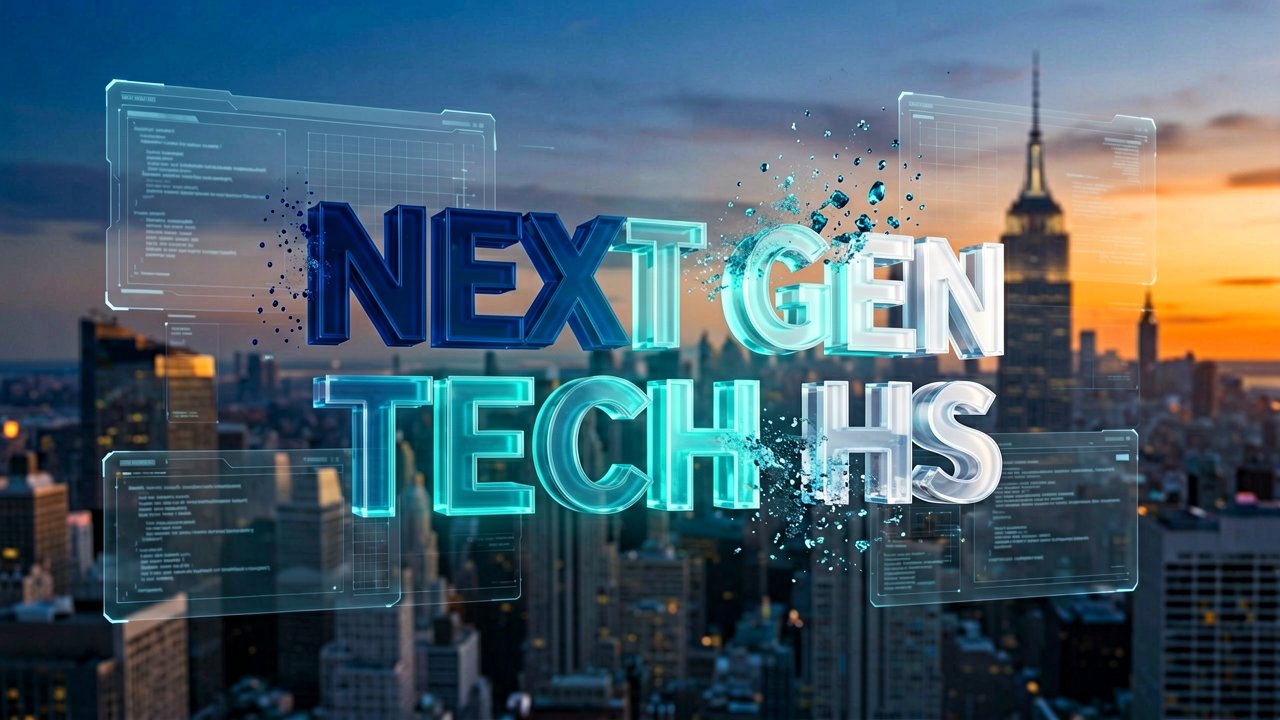
New York City's public school system has abruptly halted plans to open its first artificial intelligence-focused high school. Schools Chancellor Kamar Samuels withdrew the proposal for Next Generation Technology High School on Monday, citing parental concerns about the rapid adoption of AI technology in classrooms and questions about student data privacy.
The decision represents a significant reversal for the nation's largest school district, which had been preparing to launch the selective school in downtown Manhattan for the upcoming academic year. According to The New York Times, families delivered a petition with thousands of signatures to Mayor Zohran Mamdani calling for a two-year moratorium on generative AI tools in schools.
Next Gen was designed as a screened admission school, meaning students would be selected based on their middle school academic records rather than open enrollment. The curriculum focused on cyber security, computer science, robotics, and mathematics, with the stated goal of preparing students for competitive technology careers. Officials claimed the school would teach students to be "builders as well as ethical users of AI and other modern technologies."
Community opposition centered on multiple fronts. Parents expressed anxiety about AI's impact on critical thinking skills and the lack of transparency around data collection practices. Some families worried that companies like Google and OpenAI, both of which participated in the school's planning team, could exert undue influence over how AI tools were deployed in city classrooms. The equity question also surfaced prominently—why would a school teaching technology meant to become more globally accessible remain exclusive in its admissions?
Chalkbeat New York reported that Panel for Educational Policy members raised serious concerns about the proposal's rushed timeline and unclear mission. Chairperson Greg Faulkner sent a letter requesting the withdrawal, arguing the screened designation created access barriers that contradicted the technology's purported democratizing potential.
Samuels acknowledged the complexity of the situation in interviews. "I want to be able to think about the technology in a very thoughtful way," he said, noting that the Education Department needed to finalize its AI guidance playbook before advancing proposals for specialized schools. The draft playbook had already drawn criticism for sidestepping thorny questions about regulating student AI use.
This isn't the first time NYC schools have experimented with AI integration. In Brooklyn, an AI program helps students with pronunciation. In Queens, high schoolers use Google Gemini to improve essays. In the Bronx, robotics lab students consult AI tools before building parts on 3-D printers. The difference with Next Gen was the scale and specificity—dedicating an entire school to AI education rather than embedding tools across existing programs.
The withdrawal also affected other proposals scheduled for the same PEP vote, including plans to close two Upper West Side middle schools and relocate another. All four initiatives were pulled, making it nearly impossible for them to take effect next school year. Samuels described the proposals as ambitious but acknowledged that advancing them so quickly after a major leadership transition wasn't fair to families seeking more time for engagement.
Political considerations likely played a role. Mamdani is lobbying state lawmakers for a four-year renewal of mayoral control over the school system, which expires in June. His campaign pledge to run the system in a more democratic fashion hinges on demonstrating responsiveness to community needs. Losing a high-profile vote could have complicated those arguments.
Education Department officials had already solicited applications from eighth graders to Next Gen, though they hadn't yet offered admission. The cancellation leaves those applicants in limbo, with no clear path forward for students who had begun preparing for the selective program.
Industry observers note this decision reflects a broader national debate about AI in education. While school leaders remain bullish on AI's potential to transform teaching and learning, parents increasingly demand safeguards. The tension between innovation and caution is real (and frankly, nobody has a good answer yet).
What happens next remains uncertain. Samuels indicated he hopes to revisit the proposals later with stronger community feedback mechanisms. But the momentum has shifted. Whether the AI high school concept resurfaces depends on whether officials can address the legitimate concerns about equity, safety, and corporate influence that drove the backlash.
The physical reality of this decision is simple: a planned school building in Lower Manhattan won't open its doors next fall. Students who might have walked through those halls will attend other schools instead. The question isn't whether AI belongs in education—it already does. The question is whether a dedicated school model makes sense when the technology itself remains so contested.
For now, the answer appears to be no. Whether that changes depends on whether parents and officials can find common ground on what responsible AI integration actually looks like in practice. Time will tell if the pause becomes permanent or just a delay.
Artūras Malašauskas is an AI Systems Integrator with 20+ years of production-grade web engineering experience. He has designed, shipped, and scaled enterprise Python/PHP systems for logistics, SaaS, and public-sector clients. For the past year, he has focused exclusively on AI integrations: deploying open-source LLMs, building generative media pipelines (image, audio, video), and engineering multi-agent workflows for real production environments. His standard: reproducibility, security, cost-efficient inference—no vaporware. He documents and evaluates emerging AI tooling, separating verified capabilities from marketing noise. Technical editor at: muza-ai.eu, ai-verslas.lt, ai-naujinos.lt Connect on LinkedIn
Comments