CSIS Report Maps AI's Role in Conflict Mediation
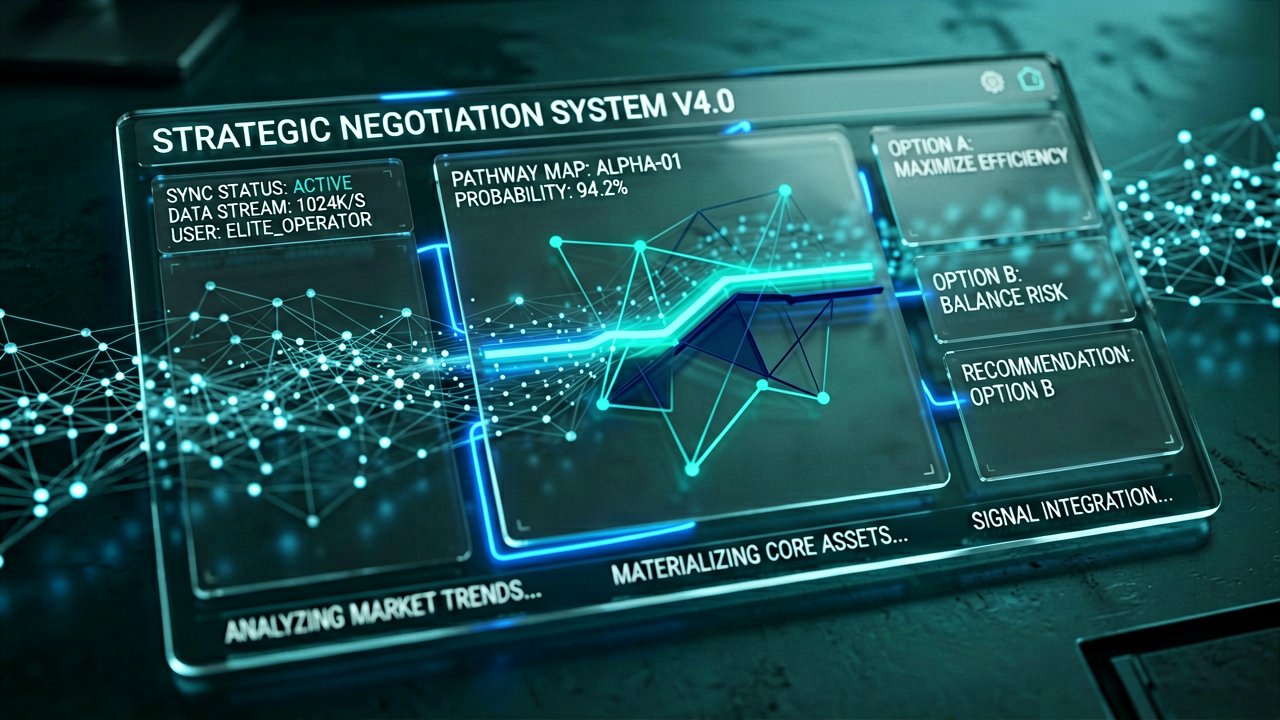
The Center for Strategic and International Studies released a substantive examination of how artificial intelligence could reshape conflict mediation at a time when wars are becoming more frequent, longer lasting, and harder to resolve. The report, titled "AI and the Future of Mediation," draws on a workshop with more than 45 mediators and technology experts to identify where AI can realistically support mediation and where safeguards are required.
Mediation teams face rising demands while often remaining small, time constrained, and short on secure analytical support. Their core tasks, however, remain unchanged. Mediators must manage fragmented information, build trust among conflict parties, track shifting negotiation space, design confidence-building measures, anticipate spoilers, and create verification mechanisms that make agreements more durable. These pressures have intensified as conflicts move further into the digital realm, where disinformation, compressed decision timelines, and amplified audience costs can destabilize shared understandings and complicate negotiations.
AI tools could help by supporting information synthesis, translation, scenario exploration, and post-agreement monitoring, but they could also create new risks if they undermine neutrality, confidentiality, or mediator control. The report argues that AI's most credible role is not to replace mediator judgment, but to augment mediator-controlled workflows. To that end, the report identifies potential AI use cases for pre-mediation, during mediation, and post-mediation phases.
The workshop found that mediators face the greatest pressure from complex actor environments and fragmented information, while concerns about trust, confidentiality, and misrepresentation remain central to AI adoption. This is the crux of the matter (mediators can't afford to have their tools leak sensitive positions to the wrong parties).

CSIS recommends building mediation-specific AI evaluations; investing in mediator training and operational rules; creating partnerships for secure adoption among NGOs, international organizations, and foreign ministries; and beginning with a narrow pilot scenario simulation tool. Taken together, these steps offer a practical path for using AI to expand mediation capacity while keeping political judgment, trust building, and process ownership firmly in human hands.
The report comes from the CSIS Futures Lab, which organizes its AI research around three lines of effort. One line examines how AI-enabled tools affect command and staff processes, force planning, information operations, and professional military education. Another advances benchmarking methods that stress-test AI systems for reliability, robustness, bias, and risk under realistic conditions. The third explores how AI can support mediators and diplomats with bounded, practical capabilities—organizing large document sets, mapping stakeholders and issues, tracking proposals across drafts, and generating scenarios that expand the negotiation space—without replacing human judgment or relationship-building.
Emphasis is placed on secure use, careful deployment, and practitioner-informed evaluation to ensure tools are usable in real mediation contexts. This matters because standard evaluation approaches are often insufficient in national security and crisis settings, where "ground truth" is contested, data are sensitive, and outcomes depend on context.
The research assesses whether models exhibit decision-relevant failure modes tied to escalation dynamics, such as overconfidence, misreading adversary intent, premature use-of-force recommendations, or instability under time pressure, before integration into planning or advisory workflows. The goal is to ensure AI systems increase performance and resilience rather than introduce new vulnerabilities.
Authors Yasir Atalan, Benjamin Jensen, and Ian Reynolds published the report on April 27, 2026. The work builds on earlier CSIS research including "AI and Grand Strategy: The Case for Restraint" from January 2026 and "The U.S. Army and a Second Manhattan Project for AI" from November 2025.
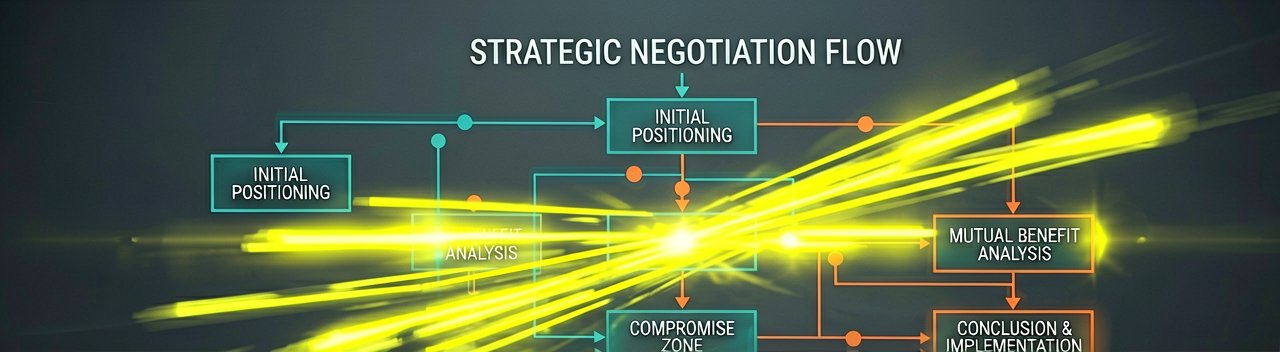
For practitioners, the physical reality of using these tools matters. A mediator scrolling through a document set organized by AI faces a different experience than one manually cross-referencing hundreds of pages. The friction of clicking through structured data versus wrestling with unorganized files changes cognitive load. But the technology also introduces new friction—verifying AI-generated summaries, managing access controls, ensuring no sensitive information leaks into training data.
Industry analysts note this positions mediation differently from other AI applications in security. Unlike battlefield AI, where speed and automation can be advantages, mediation requires deliberation, relationship-building, and trust. The technology must serve those ends, not undermine them. Whether organizations actually invest in the recommended training and evaluation infrastructure remains the real question.
The report is available through the CSIS website. Additional context on the Futures Lab's broader AI research can be found in their AI and the Future of Conflict project page.
Whether users actually pay for it remains the real question. Mediation organizations operate on tight budgets, and the recommended investments in training, evaluation, and secure infrastructure are not trivial. The technology exists. The question is whether the institutions using it have the resources and will to deploy it responsibly.
Artūras Malašauskas is an AI Systems Integrator with 20+ years of production-grade web engineering experience. He has designed, shipped, and scaled enterprise Python/PHP systems for logistics, SaaS, and public-sector clients. For the past year, he has focused exclusively on AI integrations: deploying open-source LLMs, building generative media pipelines (image, audio, video), and engineering multi-agent workflows for real production environments. His standard: reproducibility, security, cost-efficient inference—no vaporware. He documents and evaluates emerging AI tooling, separating verified capabilities from marketing noise. Technical editor at: muza-ai.eu, ai-verslas.lt, ai-naujinos.lt Connect on LinkedIn
Comments