UW–Madison Launches College of Computing and AI with $150M Investment
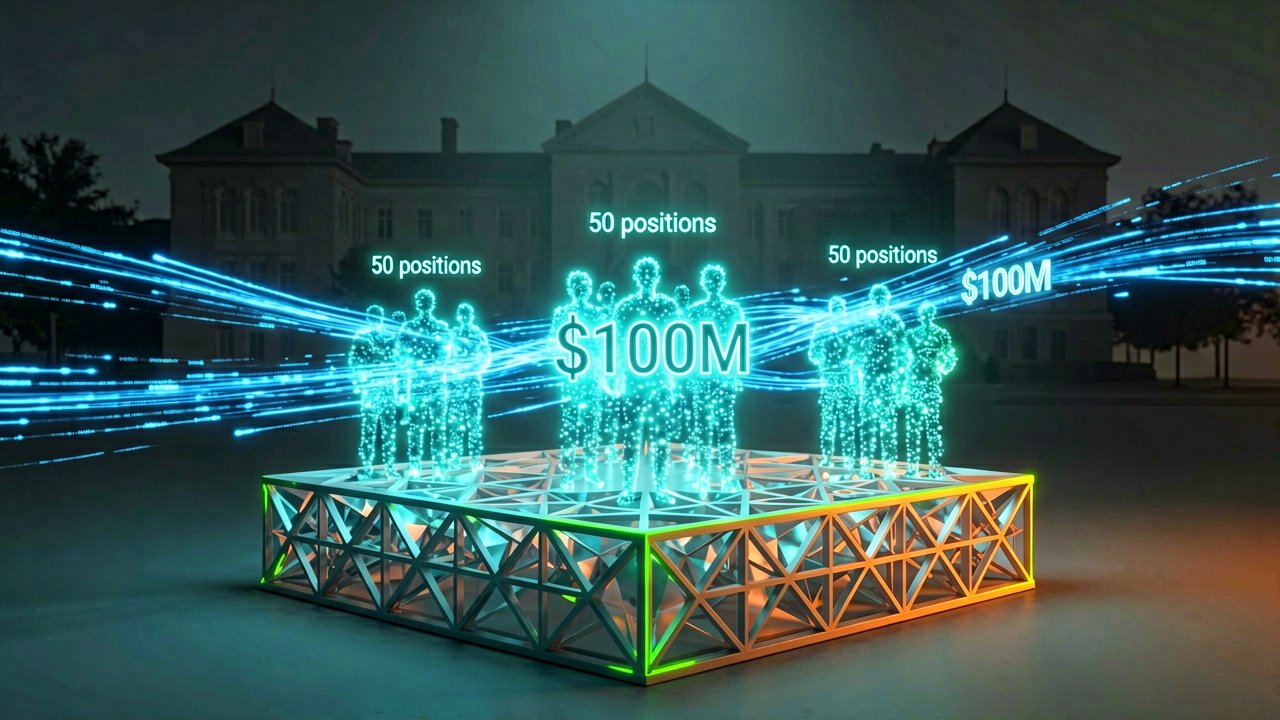
The University of Wisconsin–Madison has officially named Remzi Arpaci-Dusseau as founding dean of its new College of Computing and Artificial Intelligence, with the academic unit set to launch July 1, 2026. The announcement comes alongside a substantial financial commitment: $100 million in philanthropic support from the Catalyst Collective plus more than $50 million in annual institutional investment.
This represents the first new academic division created at UW–Madison in over 40 years. The University of Wisconsin System Board of Regents approved the proposal in December 2025, following a consultation process that began when Arpaci-Dusseau started leading the college creation effort in 2024.
According to the official announcement from UW–Madison News, the new college will consolidate existing programs in computer science, data science, statistics, library science, and information science. It will also create new courses, certificates, majors, and degree programs reflecting AI's growing role across industries.
The numbers are substantial. Enrollment in computer science majors has climbed from 1,043 students in 2015 to more than 3,000 in fall 2025. The data science major, launched in 2019, now enrolls over 1,700 students. Information science, added in 2022, already has 500 students. The college will hire 50 new faculty members, many with joint appointments across campus.
Arpaci-Dusseau brings significant credentials to the role. He is a Vilas Distinguished Achievement Professor and Grace Wahba Professor of Computer Sciences, currently serving as director of the School of Computer, Data & Information Sciences and special advisor to the provost for computing. His research with longtime collaborator Andrea Arpaci-Dusseau has advanced understanding of storage systems, operating systems, and distributed computing.
He is a fellow of both the Association for Computing Machinery and the American Association for the Advancement of Science. The free online textbook he co-authored is downloaded millions of times yearly and used at institutions worldwide. (It's also usually the top-selling operating systems textbook on Amazon, which says something about the state of CS education.)
Chancellor Jennifer L. Mnookin framed the college as a hub and resource for the rest of campus. "Helping society navigate a changing landscape, including AI's ethical questions and implications for the workforce, will require collaboration across disciplines," she said. The college is intended to connect AI experts with philosophers, ethicists, business leaders, medical professionals, and engineers.
The Catalyst Collective—a group of alumni, industry leaders, and corporate partners—committed the $100 million in philanthropic support. This funding, combined with institutional investment, will support research, education, and innovation initiatives. The money isn't just for building servers and buying GPUs; it's meant to fund the human infrastructure needed to guide AI development responsibly.

Independent reporting from Madison Business Journal notes the reorganization grew out of the continuing success of CDIS, which was created within the College of Letters & Science in 2019. The 2019 report that led to CDIS's formation concluded that computing was moving so fast that any campus entity in charge would need tremendous flexibility to create new programs quickly.
A college structure provides that flexibility. The new unit will emphasize translation—moving discoveries from research into practice so they benefit communities and industries across Wisconsin and beyond. This aligns with the Wisconsin Idea, the university's longstanding principle that the boundaries of the campus should be the boundaries of the state.
Arpaci-Dusseau's vision positions AI as a tool that amplifies human work rather than replacing it. "In moments of major change, universities have a responsibility to engage, not stand on the sidelines," he said. "But we also have a responsibility to ask hard questions about their impacts, guide innovation thoughtfully and prepare students to thrive in a changing world."
The physical reality of this expansion means more classrooms, more office space, more faculty meetings, and more administrative overhead. Students will encounter new course catalogs, updated degree requirements, and potentially different advising structures. Faculty will navigate new appointment processes and cross-disciplinary collaboration expectations.
Every major industry in Wisconsin—from agriculture to manufacturing to health care—is expected to be shaped by AI in the coming decade. The new college aims to inform how society benefits from AI while reckoning with its challenges. It will provide talent pipelines, research partnerships, and statewide outreach.
Whether this structure actually delivers on its promises remains to be seen. Universities have announced ambitious AI initiatives before, only to struggle with implementation, funding sustainability, or faculty buy-in. The $150 million investment is significant, but the real test will be whether the college can maintain momentum beyond its launch phase and produce measurable outcomes in research, education, and public impact.
Arpaci-Dusseau's appointment is effective July 1. The college will begin operations that day, with the full scope of programs and initiatives rolling out over subsequent semesters. For now, the infrastructure is in place. The execution starts next month.
Artūras Malašauskas is an AI Systems Integrator with 20+ years of production-grade web engineering experience. He has designed, shipped, and scaled enterprise Python/PHP systems for logistics, SaaS, and public-sector clients. For the past year, he has focused exclusively on AI integrations: deploying open-source LLMs, building generative media pipelines (image, audio, video), and engineering multi-agent workflows for real production environments. His standard: reproducibility, security, cost-efficient inference—no vaporware. He documents and evaluates emerging AI tooling, separating verified capabilities from marketing noise. Technical editor at: muza-ai.eu, ai-verslas.lt, ai-naujinos.lt Connect on LinkedIn
Comments