Pompeii Archaeologists Use AI to Reconstruct Victim's Face
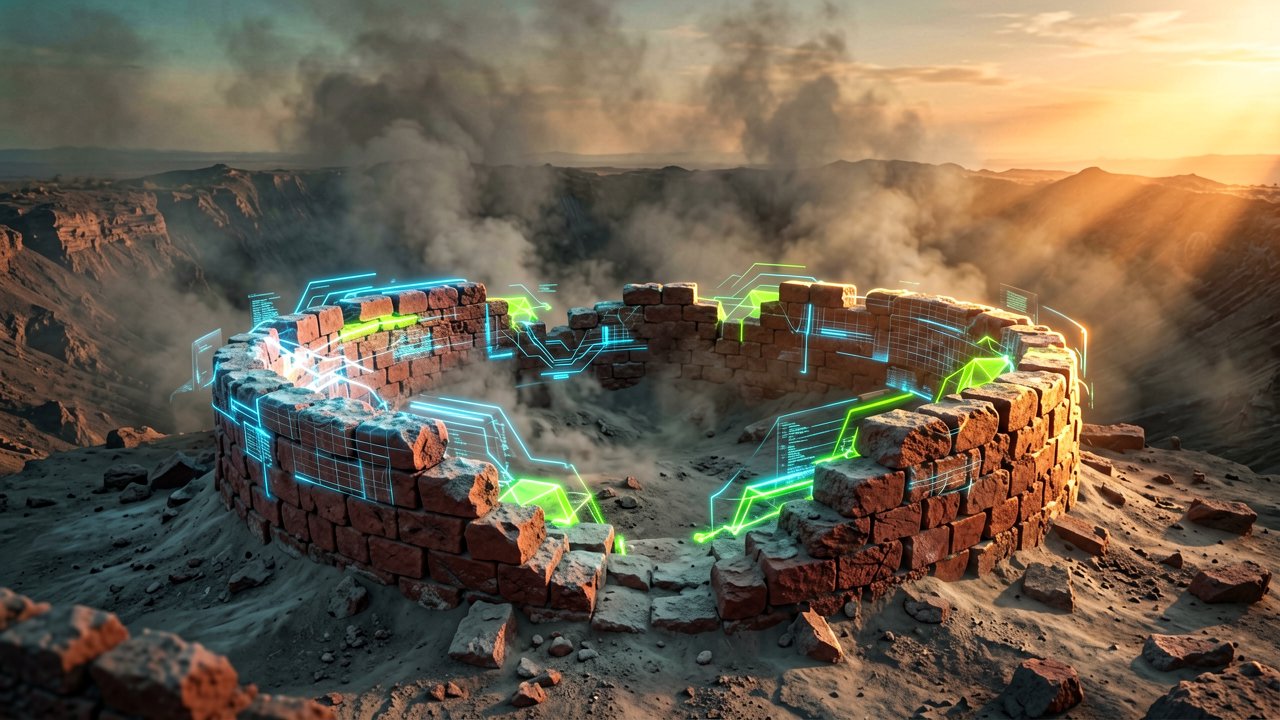
Archaeologists at the ancient Roman site of Pompeii have deployed artificial intelligence to digitally reconstruct the face of a victim from the AD 79 eruption of Mount Vesuvius. This marks the first time AI has been used for facial reconstruction at the UNESCO World Heritage site, according to reporting from The Associated Press.
The digital portrait represents an older man discovered near the Porta Stabia necropolis, just outside the ancient city walls. He was among two victims found attempting to flee toward the coast during the volcanic eruption. Researchers believe he died earlier in the disaster during a heavy fall of volcanic debris.
The reconstruction was developed by the Pompeii Archaeological Park in collaboration with the University of Padua. The work relies on archaeological survey data from excavations at the site. The digital portrait was created using artificial intelligence and photo-editing techniques designed to translate skeletal and archaeological data into a realistic human likeness.
Archaeologists found the victim holding a terracotta mortar. They interpret this as an improvised attempt to shield his head from falling lapilli, the small volcanic stones rained down during the eruption. Ancient accounts, including those of Roman writer Pliny the Younger, describe residents using objects to protect themselves as ash and debris blanketed the city.
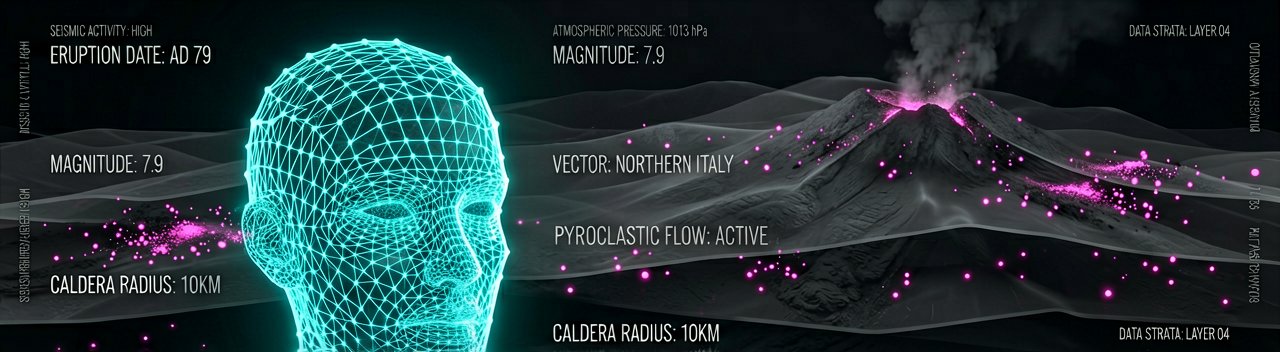
The man was also carrying an oil lamp, a small iron ring and 10 bronze coins. These personal objects offer insight into his final moments as well as daily life in Pompeii before the catastrophe. (It's worth noting: we're talking about a man clutching coins in his final seconds, which says something about human priorities under pressure.)
Pompeii, a UNESCO World Heritage site near Naples, was buried under ash and pumice when Mount Vesuvius erupted nearly 2,000 years ago. The eruption preserved the city and thousands of its inhabitants in remarkable detail. The physical reality of these remains is striking—visitors can walk through streets where plaster casts of victims still show the exact positions of their bodies.
"The vastness of archaeological data is now such that only with the help of artificial intelligence will we be able to adequately protect and enhance them. If used well, AI can contribute to a renewal of classical studies," Pompeii park director Gabriel Zuchtriegel said in a statement.
The project aims to make archaeological research more accessible and emotionally engaging for the public while maintaining a scientific foundation. This is where the tension lies. AI-generated reconstructions look compelling on screens, but they're fundamentally interpretive. The software fills gaps in skeletal data with statistical probabilities, not historical certainty.
Independent reporting from WKMG corroborates the timeline and scope of the announcement. The outlet notes the reconstruction offers a new way to understand one of history's most famous natural disasters.
There's a practical dimension here that matters. Traditional facial reconstruction requires manual sculpting based on bone structure, tissue depth markers, and comparative anatomy. It's labor-intensive and subjective. AI accelerates this process but introduces its own variables—training data biases, algorithmic assumptions about facial features, and the inherent uncertainty of translating 2,000-year-old skeletal remains into a photorealistic image.
The sensory experience of viewing these reconstructions differs from traditional archaeological presentation. A plaster cast shows the shape of a body frozen in death. A digital portrait shows a face that could have existed. The emotional impact is immediate, but so is the risk of misinterpretation. Visitors might mistake the AI output for a photograph rather than a reconstruction.
This approach positions the Pompeii Archaeological Park at the forefront of digital heritage preservation. Other sites may follow, but the precedent matters. The technology can democratize access to archaeological findings, allowing people who can't travel to Italy to engage with the material. It can also generate revenue through digital exhibitions and educational content.
Whether this actually improves public understanding of the eruption or simply creates more shareable content remains the real question. The technology is impressive, but the interpretation of ancient remains will always require human expertise. AI can generate faces, but it can't explain why a man carried ten bronze coins as he fled toward certain death.
Artūras Malašauskas is an AI Systems Integrator with 20+ years of production-grade web engineering experience. He has designed, shipped, and scaled enterprise Python/PHP systems for logistics, SaaS, and public-sector clients. For the past year, he has focused exclusively on AI integrations: deploying open-source LLMs, building generative media pipelines (image, audio, video), and engineering multi-agent workflows for real production environments. His standard: reproducibility, security, cost-efficient inference—no vaporware. He documents and evaluates emerging AI tooling, separating verified capabilities from marketing noise. Technical editor at: muza-ai.eu, ai-verslas.lt, ai-naujinos.lt Connect on LinkedIn
Comments