Instacart Co-Founder Launches AI-Driven Hedge Fund Abundance

A hedge fund called Abundance is attempting something the industry has long discussed but rarely executed: replacing human portfolio managers with artificial intelligence agents. Apoorva Mehta, who co-founded Instacart in 2012, launched the Palo Alto-based firm last year with a team of roughly ten quantitative researchers, engineers, and AI specialists.
The operation deploys thousands of automated agents that trawl information sources, propose trade ideas, conduct research, select positions, determine position sizes, and execute trades. Some of the firm's stock-selection strategies are already fully automated, according to Bloomberg's reporting.
This isn't the first time hedge funds have used AI tools. Many already employ machine learning to support human decision-making. Abundance's longer-term aim, however, is to move toward AI systems managing investment decisions across the portfolio independently. The distinction matters. Most firms use AI as a calculator; Abundance wants it as the decision-maker.
Mehta's argument rests on cognitive limits. People can only track so many opportunities at once, process them only so deeply, and make only so many high-quality decisions. Even for the exceptional investor, the process is locked inside their mind. AI changes that entirely. (Frankly, this is the same pitch every quant fund has made for two decades, just with better marketing.)
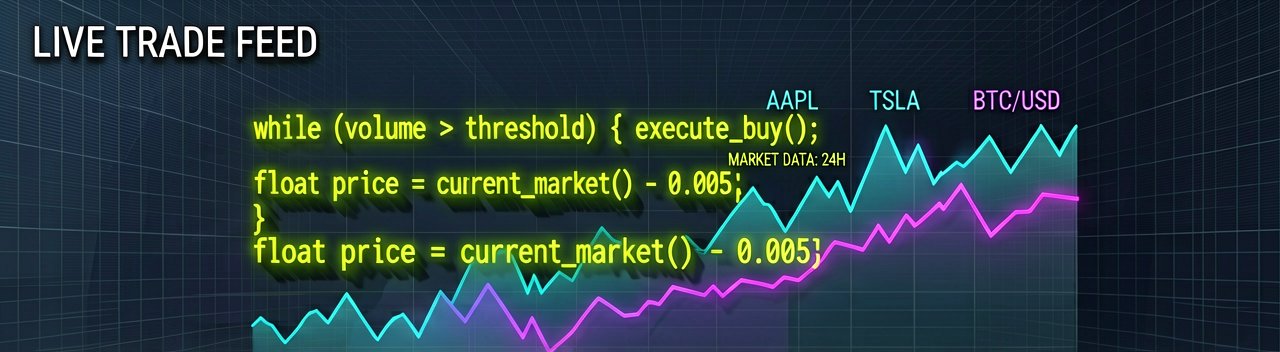
The fund has raised $100 million in seed equity financing. It currently trades its own capital and takes long and short equity positions. Plans exist to expand into other asset classes and accept external money later. A filing shows that as of June 30, Mehta continued to hold nearly 8.4% of Instacart following the grocery delivery company's initial public offering roughly a decade after founding it.
Physical reality check: when you click "buy" on a trading platform, you're making a single decision. Abundance's agents make thousands of these decisions per day without blinking, without fatigue, and without the emotional friction that comes from watching a position move against you. The screens don't flicker, the coffee doesn't get cold, and the models don't need sleep.
Other strategies being developed will still include some human input for the time being. Mehta said the firm has reported performance that has outpaced several market benchmarks, though he did not disclose which indices were used for comparison. That omission is telling. Hedge funds rarely publish detailed performance data until they're ready to raise external capital.
Private Banker International corroborates the timeline and scope of the changes, noting the firm's small team structure and focus on building and maintaining its models.

The approach places Abundance among a growing number of hedge funds experimenting with machine learning and generative AI. Fully autonomous investment management remains relatively uncommon in the industry. Most firms treat AI as a tool, not a replacement for the human judgment that comes from decades of market experience.
Whether users actually pay for it remains the real question. The fund trades its own capital for now. External investors will want to see sustained performance before committing money to a system where the primary decision-makers are algorithms they cannot audit or question. That's the friction point: AI can process more data than humans, but it cannot explain its reasoning in a way that satisfies institutional due diligence.
Mehta's background in consumer technology may inform the fund's approach. Instacart built a platform that optimized grocery delivery logistics at scale. Abundance appears to be applying similar principles to capital allocation. The grocery delivery model worked because it solved a real friction point. Whether AI-driven trading solves a real friction point in investing is less clear.
Time will tell if the model scales. For now, Abundance operates with a small crew in Palo Alto, running thousands of agents through equity markets. The technology exists. The capital exists. The regulatory framework exists. Whether the returns justify the approach is what matters to investors.
The industry has seen bold claims before. Many have failed. Abundance's test is simple: can AI agents consistently outperform human portfolio managers over multiple market cycles? The answer won't come from press releases or seed financing announcements. It will come from audited performance data, and that data won't be public until the fund accepts external capital.
Artūras Malašauskas is an AI Systems Integrator with 20+ years of production-grade web engineering experience. He has designed, shipped, and scaled enterprise Python/PHP systems for logistics, SaaS, and public-sector clients. For the past year, he has focused exclusively on AI integrations: deploying open-source LLMs, building generative media pipelines (image, audio, video), and engineering multi-agent workflows for real production environments. His standard: reproducibility, security, cost-efficient inference—no vaporware. He documents and evaluates emerging AI tooling, separating verified capabilities from marketing noise. Technical editor at: muza-ai.eu, ai-verslas.lt, ai-naujinos.lt Connect on LinkedIn
Comments