Telegram Launches Managed Bots for AI Agent Creation
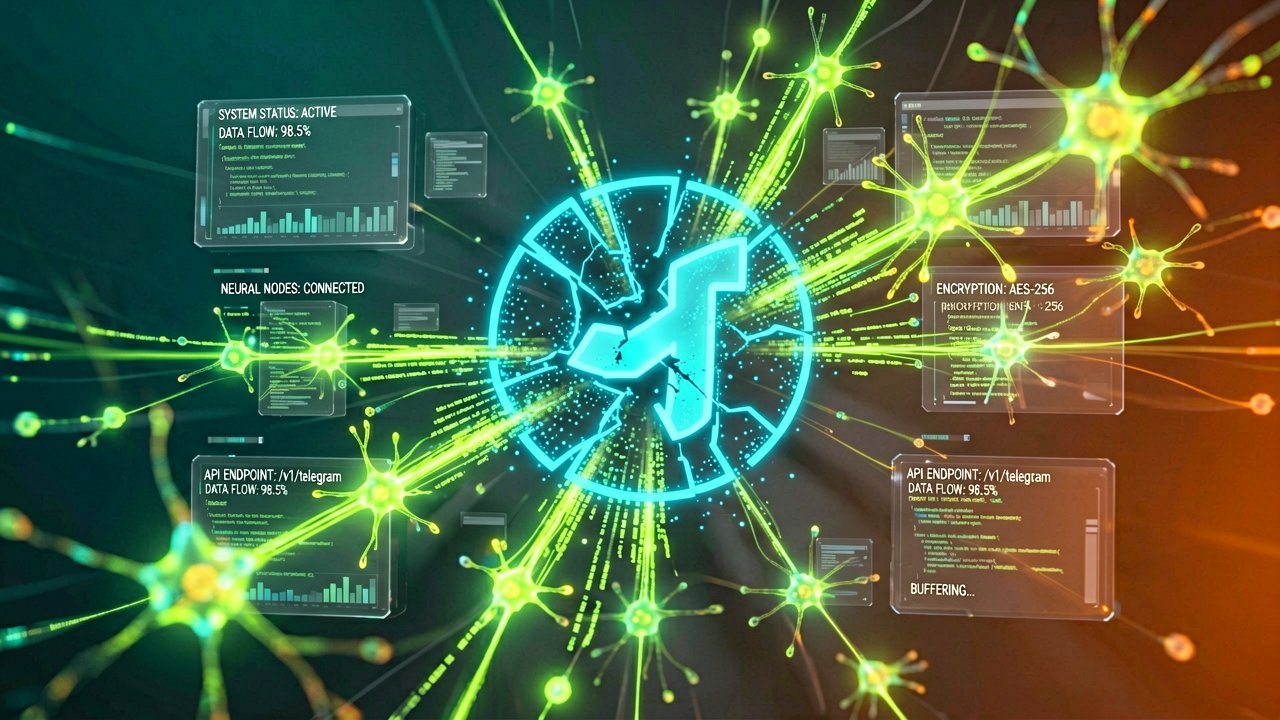
The messaging platform Telegram has introduced a new capability that fundamentally changes how users interact with artificial intelligence within the app. The feature, called Managed Bots, allows anyone to create personal AI agents through the Bot API without requiring coding knowledge.
According to the announcement published on ForkLog, the system works by letting one assistant act as a manager for others. Users select a bot—either their own or a third-party option—enable management mode, and generate a shareable link. Anyone who follows that link can create an assistant with pre-filled data and transfer management to the manager bot.
The manager bot can then send and receive messages, change profiles, and adjust settings on behalf of the user. This is not merely a chatbot interface. It's a delegation architecture where one AI instance controls another, creating a hierarchy of automated actions that feels more like managing employees than talking to a virtual assistant.
Simultaneously, Telegram has expanded the range of input data that bots can process. Beyond text, they now handle files, geolocation, stickers, voice messages, and built-in commands like /start and /help. The embedded keyboards and inline buttons have also been improved, allowing bots to offer menus, quick actions, links, and setting toggles directly within the chat without sending additional messages.

Think about the physical experience: instead of typing commands into a terminal or navigating through multiple screens, you tap a button that appears in your message thread. The friction is gone. The interface feels like a conversation, not a configuration panel (which is exactly what most users want, honestly).
The Telegram team announced the possibility of communication between assistants. This can be used for complex agent processes—for instance, when one bot delegates a task to another or processes its responses in a group chat. This multi-agent capability transforms the platform from a simple messaging app into something closer to an operating environment for autonomous software.
Independent reporting from Startup Fortune corroborates the technical details and adds context about the rollout. The Bot API 9.6 update marks a genuine shift in how the platform thinks about AI. Founder Pavel Durov framed the feature as a way to democratize access to personal AI helpers, noting that most people want AI to do things for them rather than spend twenty minutes figuring out how to deploy it.
What makes Managed Bots technically interesting is that each user gets a separate, isolated bot instance. They are not sharing a single public chatbot the way most consumer AI interfaces work. The architecture is closer to spinning up a personal cloud service on demand, except the user never sees the infrastructure layer. Privacy is baked in at the design level.

The flagship example Durov pointed to is @teleclaw_bot, built on the OpenClaw framework. It demonstrates the range the feature is designed to support: drafting and sending emails, managing calendar entries, generating business pitches, fielding routine messages. These are the kinds of tasks that productivity software has promised to automate for years but rarely delivered on with this little friction.
Telegram bots have carried a spam reputation for years, and Durov acknowledged it. The Managed Bots rollout includes mandatory user confirmation steps before a bot can initiate contact or take action. It is a deliberate friction point, placed specifically where abuse is most likely to occur. Whether it proves sufficient will depend on how quickly bad actors find workarounds.
The timing is pointed. OpenAI, Google, and a growing roster of startups have been racing to build agentic AI products, but nearly all of them require users to come to a dedicated app, learn a new interface, or pay for a subscription tier that unlocks the useful features. Telegram is offering something different: agentic AI that lives inside a messenger app more than a billion people already use every day.
That distribution advantage is not trivial. Anthropic and OpenAI have both invested heavily in operator-facing APIs to get their models embedded in third-party products. Telegram just built a native layer that lets developers do exactly that, at scale, with Telegram handling the identity, delivery, and session management. For a lean startup building an AI assistant, that removes several expensive engineering problems in one move.
There is a commercial dimension worth watching too. Managed Bots will almost certainly attract developers building customer service agents, sales tools, and subscription-based productivity bots. Telegram has been working toward a more robust monetization ecosystem, and a thriving bot marketplace would serve that goal without requiring Telegram to compete directly with OpenAI or Google in the foundation model race.
Back in December 2025, the messenger launched the decentralized network Cocoon for AI on TON. This new feature builds on that infrastructure, creating a more complete ecosystem for AI deployment. The question now is velocity. If high-quality bots appear quickly and users find them genuinely useful, Managed Bots could shift Telegram from a messaging app with bot support into something closer to a personal AI operating environment.
Whether users actually pay for it remains the real question. The technology works. The distribution is there. But the market has seen plenty of AI features that sounded revolutionary in press releases and gathered dust in actual usage. Telegram's bet is that embedding AI in an existing habit—checking messages—will overcome the adoption barrier that has stymied standalone AI products. Time will tell if that intuition holds up.
Artūras Malašauskas is an AI Systems Integrator with 20+ years of production-grade web engineering experience. He has designed, shipped, and scaled enterprise Python/PHP systems for logistics, SaaS, and public-sector clients. For the past year, he has focused exclusively on AI integrations: deploying open-source LLMs, building generative media pipelines (image, audio, video), and engineering multi-agent workflows for real production environments. His standard: reproducibility, security, cost-efficient inference—no vaporware. He documents and evaluates emerging AI tooling, separating verified capabilities from marketing noise. Technical editor at: muza-ai.eu, ai-verslas.lt, ai-naujinos.lt Connect on LinkedIn
Comments