AI Tools Target Nuclear Industry's Documentation Bottlenecks
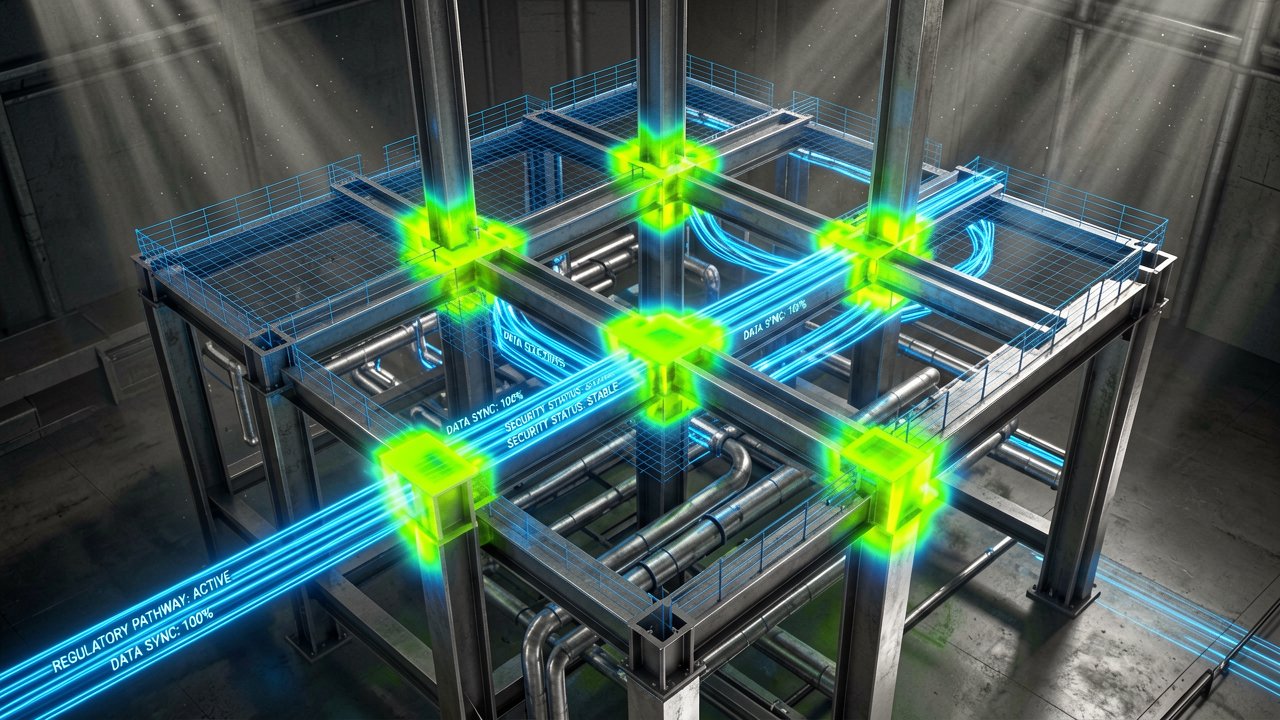
The nuclear power industry faces a paradox: the technology works, but the process does not. According to a recent Forbes analysis, artificial intelligence may finally bridge that gap. Kevin Kong, founder and CEO of Everstar, describes the problem bluntly: "Nuclear physics works, and the industry's safety record is unmatched. What's broken is the process."
That process involves mountains of paper. Nuclear projects drown in regulatory filings, safety analyses, and operational documents trapped in decades-old filing systems. Engineers spend weeks parsing temperature monitoring data for cooling lakes adjacent to facilities. AI language models can compress that timeline to minutes. The system does not just generate text—it operates within the logic of the industry, understanding document hierarchies and regulatory context.
Consider the physical reality of this work. An engineer sits before a terminal, scrolling through PDFs from the 1980s, cross-referencing sensor readings against weather patterns. The lake temperature rises. A threshold might be exceeded. A regulatory filing follows. Millions of dollars hang in the balance. Now imagine that same engineer clicking through a dashboard where the AI has already flagged the anomaly, pulled the relevant standards, and drafted the compliance response. The cognitive load shifts from document retrieval to judgment calls.
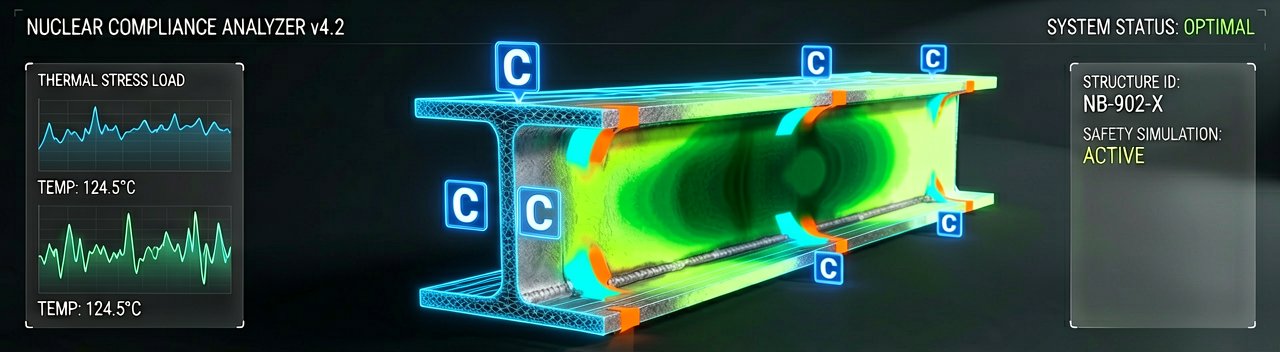
Three categories of AI models address different constraints. Language models handle the documentation bottleneck. Vision models interpret schematics—piping and instrumentation diagrams, electrical circuit diagrams, plant blueprints. These visual systems identify components, map connections, and determine how a failure in one part cascades through others. "If component A breaks, B and C are downstream, leading to potential safety issues," Kong explained. Accuracy is already approaching 99 percent.
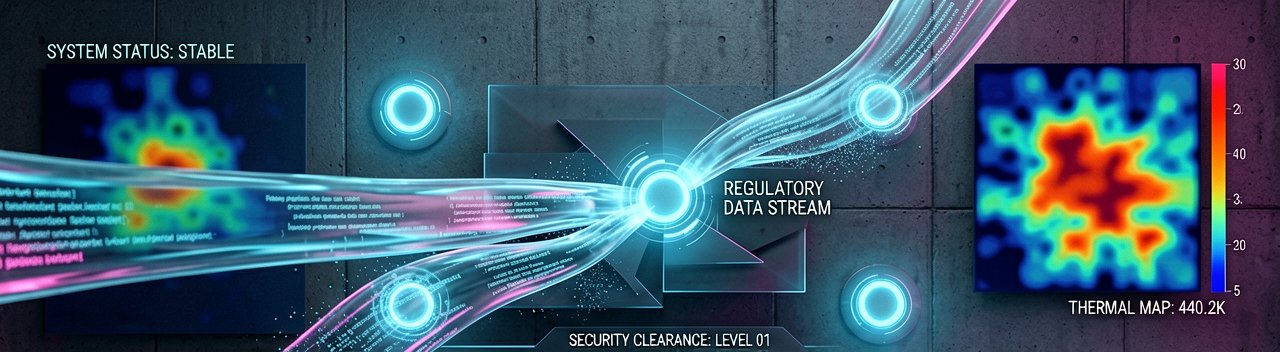
Physics and world models represent the third frontier. These simulate how reactors behave over time across wide ranges of conditions. Traditional safety analysis relies on computationally intensive techniques, especially when multiple physical processes interact. AI accelerates these simulations by orders of magnitude. Site selection becomes faster. Engineers evaluate weather patterns, water access, environmental constraints, and regulatory requirements across federal, state, local, and tribal jurisdictions without waiting months for manual reviews.
The broader context matters. The IPCC report makes it clear that nuclear power is necessary to keep temperatures within the 2-degree limit while building data centers and electrifying infrastructure. Yet nuclear reactors cost billions to build in the U.S. Global experience shows six to eight reactors can be completed per year at much lower cost. France, South Korea, Japan, and China have done it. The United States did it decades ago.
What changed? The system that allowed scaling disappeared. Pre-licensed domestic designs exist, ranging from larger power plants like Westinghouse to smaller modular reactors from NuScale. What is missing is consistent demand and large order books enabling serial construction. The first reactor in decades will be expensive. Successive plants can be built faster and cheaper once experience accumulates.
Everstar's approach applies AI across these bottlenecks. The goal is making nuclear move at what Kong calls "the speed of national need." Other countries are already doing this. We do not need to break any laws of physics to do the same. Instead, focus on four steps: standardize reactor designs, build in series, develop an integrated domestic supply chain and train the workforce, and align the regulatory environment to support volume while maintaining safety.
This is not theoretical. Microsoft and Amazon are already securing nuclear power for their AI infrastructure. Microsoft is restarting the former Three Mile Island Unit 1 reactor, now the Crane Clean Energy Center. Constellation Energy secured a $1 billion Department of Energy loan in late 2025 to accelerate the restart, with commercial operation targeted around 2027. Amazon acquired the Cumulus Data Center campus from Talen Energy, gaining direct access to electricity from the Susquehanna nuclear facility.
The convergence is real. Hyperscale AI data centers demand 300 to 500 megawatts of electricity, comparable to mid-sized cities. Intermittent resources like wind and solar cannot guarantee the steady output required by massive computing clusters without firm generation. Nuclear energy aligns with critical requirements: capacity factors exceeding 90 percent, continuous output suited for constant workloads, minimal direct carbon emissions, and operational lifetimes measured in decades.
Technology companies spent years trying to abstract away the physical world. Artificial intelligence is forcing a return to fundamentals. Computing power ultimately depends on energy density, infrastructure, and reliability. Electricity supply is emerging as a structural driver of technology investment decisions.
Whether users actually pay for it remains the real question. The AI tools exist. The nuclear physics works. The regulatory maze remains. Time will tell if automating documentation translates to shovels in the ground before the climate window closes.
Artūras Malašauskas is an AI Systems Integrator with 20+ years of production-grade web engineering experience. He has designed, shipped, and scaled enterprise Python/PHP systems for logistics, SaaS, and public-sector clients. For the past year, he has focused exclusively on AI integrations: deploying open-source LLMs, building generative media pipelines (image, audio, video), and engineering multi-agent workflows for real production environments. His standard: reproducibility, security, cost-efficient inference—no vaporware. He documents and evaluates emerging AI tooling, separating verified capabilities from marketing noise. Technical editor at: muza-ai.eu, ai-verslas.lt, ai-naujinos.lt Connect on LinkedIn
Comments