Simply Contact Deploys AI Call Simulation for Agent Onboarding
Simply Contact has launched an AI-powered call simulation training program designed to prepare contact center agents for complex customer interactions before they handle live calls. The program, announced April 27, 2026, runs simulated scenarios across multiple languages and is now deployed across the company's agent onboarding operations.
The announcement comes via GlobeNewswire, where the company detailed internal results showing a 30% reduction in onboarding time and doubled first-contact resolution readiness compared to the previous training model. For context, Simply Contact manages more than 10 million customer interactions annually across voice, chat, and email channels.
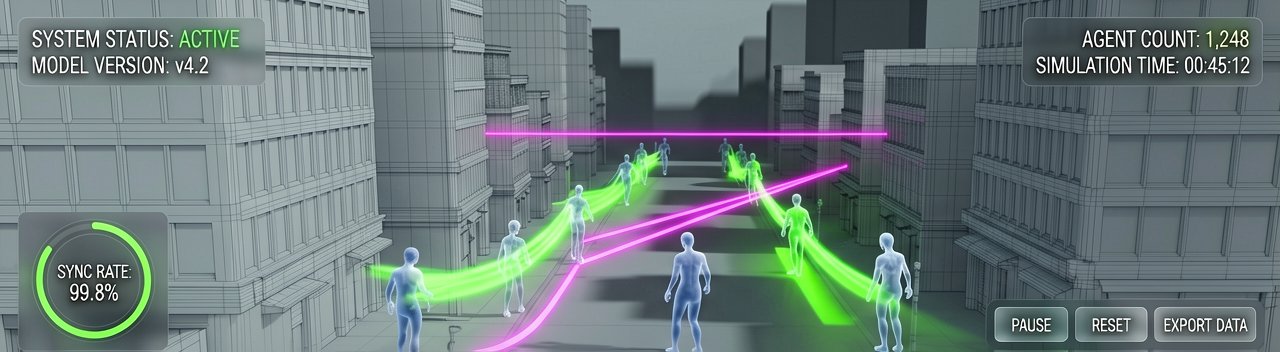
Here's the physical reality of what this means for agents: instead of reading scripts and watching training videos, new hires now sit in front of a screen and engage with AI-generated customer scenarios that mimic real frustration, confusion, and urgency. They practice their responses, make mistakes, and iterate—all without burning a real customer relationship. The software tracks their performance, flags gaps in knowledge, and adapts scenarios accordingly.
The timing matters. A February 2026 forecast from Gartner projects that 50% of companies that reduced customer service headcount due to AI will rehire staff by 2027. A separate Gartner survey of 321 customer service leaders conducted in October 2025 found that only 20% of organizations actually reduced agent staffing because of AI, while 55% kept headcount stable and used automation to absorb rising interaction volumes. The sector is shifting, not shrinking (which is a relief for anyone who's ever been on hold for 45 minutes).

Konstantin Ryzhov, Co-Founder and CEO of Simply Contact, framed the program's purpose bluntly: "The biggest threat to customer loyalty right now is AI deployed with the wrong objective. Systems built to deflect contact create a convincing surface of service while delivering none of the substance." The simulation program trains agents on the interactions that actually determine whether a customer stays or leaves—the complex cases that automated systems can't resolve.
The program also screens incoming agents for critical thinking, data literacy, and emotional adaptability. These capabilities have become central to handling the more complex interactions that reach human agents after automated systems have managed routine queries. It's a recognition that the job hasn't disappeared; it's just gotten harder.
Industry data underscores why this matters financially. Servion reports that 74% of contact center agents are currently at risk of burnout, with annual attrition rates ranging from 30 to 45%. Frost and Sullivan estimates replacing a single agent costs between $30,000 and $40,000, amounting to $16 million per year for a 1,000-agent operation at 40% attrition. By reducing the onboarding cycle, Simply Contact's program lowers the compounding cost of that turnover at the entry point.
On the company's own website, Simply Contact describes the approach as allowing agents to "experience real customer interactions from day one" in a risk-free environment. The firm positions itself as Europe's leading customer support provider, blending human empathy with AI to deliver personalized solutions for global brands. The company holds PCI DSS, ISO 27001, ISO 27701 (PIMS) certifications and maintains GDPR and HIPAA compliance.
Ryzhov added another observation worth noting: "Agents using AI as a copilot, not a replacement, consistently outperform fully automated flows on both resolution rate and customer satisfaction. Slow support loses you the interaction. Bad AI loses you the account." That distinction—between augmentation and replacement—seems to be the core philosophy driving the simulation program.
What this doesn't address is whether other contact center operators will adopt similar training models. The program is currently available across Simply Contact's own operations, not as a standalone product for external clients. Whether this becomes a sellable capability or remains an internal competitive advantage depends on whether the company decides to package it separately.
There's also the question of whether 30% faster onboarding actually translates to better customer outcomes long-term. The internal metrics show improved first-contact resolution readiness, but customer satisfaction scores and retention data would require more time to validate. The program has only been live for a matter of weeks as of late April 2026.
For now, the move signals a broader industry shift: contact centers are investing in how humans work with AI rather than how AI replaces humans. Whether that translates to better experiences for customers waiting on hold remains to be seen. The real test isn't the training program—it's whether agents who go through it actually deliver better service when the phones start ringing.
Artūras Malašauskas is an AI Systems Integrator with 20+ years of production-grade web engineering experience. He has designed, shipped, and scaled enterprise Python/PHP systems for logistics, SaaS, and public-sector clients. For the past year, he has focused exclusively on AI integrations: deploying open-source LLMs, building generative media pipelines (image, audio, video), and engineering multi-agent workflows for real production environments. His standard: reproducibility, security, cost-efficient inference—no vaporware. He documents and evaluates emerging AI tooling, separating verified capabilities from marketing noise. Technical editor at: muza-ai.eu, ai-verslas.lt, ai-naujinos.lt Connect on LinkedIn
Comments