New Jersey Schools Face AI Divide as State Considers Standards
A call on a Friday evening in January 2025 set off a chain reaction in Plainfield, New Jersey. A local charter school was preparing to launch a nursing program at the former Muhlenberg Hospital. The district's board leadership panicked about declining public enrollment. Rashon K. Hasan, who leads Plainfield public schools, saw it differently. This was a forcing function—an opportunity to innovate career and technical education rather than compete through marketing.
Hasan's response landed in the realm of spatial computing tools, including the Apple Vision Pro headset. What began as a district-level challenge quickly revealed itself as something larger. In an op-ed for NJ Spotlight News, Hasan argues this is a preview of the next education divide. Students are already encountering generative AI in their daily lives. The question is whether schools will guide them toward ethical, rigorous use—or treat AI as contraband and leave learning to chance.
The stakes are concrete. The World Economic Forum's "Future of Jobs Report 2025" points to rapid growth in technology-driven roles. Employers anticipate sweeping change in how work gets done by 2030. Skill gaps remain a leading barrier to transformation. The implication for education is direct: If we don't build AI fluency at scale, opportunity will concentrate where guidance and access already exist. (This is the part where educators roll their eyes at another "future of work" report, but the data is actually compelling.)
AI isn't staying on screens. Spatial computing—where digital information layers into physical space—pushes learning toward immersive simulations, digital twins, and 3D environments that mirror modern industries. Universities and employers are moving quickly. Purdue University launched a Spatial Computing Hub. Stanford Medicine and the University of California San Diego Health have explored clinical applications. Nvidia is advancing digital-twin workflows that bring immersive analysis into everyday work.

When Hasan visited Purdue's hub in April 2026, one design choice stood out. The space operates more like the computer labs many remember from the early internet era—open, staffed, and intentionally set up to lower barriers. It isn't a closed lab or a showcase for outsiders. Faculty are encouraged to design solutions to problems they identify in their disciplines, supported by an on-ramp that reduces friction and builds capacity. That lesson applies directly to New Jersey schools.
The physical reality matters here. Students touching a Vision Pro headset, manipulating 3D models of anatomical structures, or running simulations in a supervised lab environment experiences something fundamentally different from reading about these concepts in a textbook. The friction of setup, the weight of the device, the latency between gesture and response—these sensory details shape how deeply the learning sticks. (Most tech vendors gloss over this, but anyone who's tried to calibrate spatial tracking in a crowded classroom knows the difference between theory and practice.)
Hasan outlines five practical moves for New Jersey districts, especially when budgets are tight:
- Set clear norms: Teach before you punish. Adopt an "AI for learning" policy with grade-banded expectations, disclosure requirements, and guardrails. Include an appeals process so inconsistent enforcement doesn't become inequitable discipline.
- Guarantee access during the school day. Equity cannot depend on home devices or wi-fi. Use libraries, labs, and after-school programs as supervised access points so every student gets guided practice.
- Build teacher-creator pathways. Train educators to design AI-supported lessons and immersive learning experiences aligned to standards—not just "Use the tool." Start with a small cohort of teacher-leaders and scale through professional learning communities and shared lesson banks.
- Modernize assessment so rigor rises. Require drafts, checkpoints, reflections, and brief oral defenses. Grade verification, reasoning, and iteration so students demonstrate learning in an AI-rich world.
- Measure equity and impact. Track access, participation, training, and student growth. If the data show gaps, adjust quickly.
The debate often goes sideways. People argue about screen time, distraction, and novelty. Those concerns are valid, but they miss the point: Not all screen time is created equally. Creation beats consumption. When students use AI and immersive environments to draft, test, revise, simulate, build, and explain, technology becomes a tool for deeper thinking, not a shortcut around it.

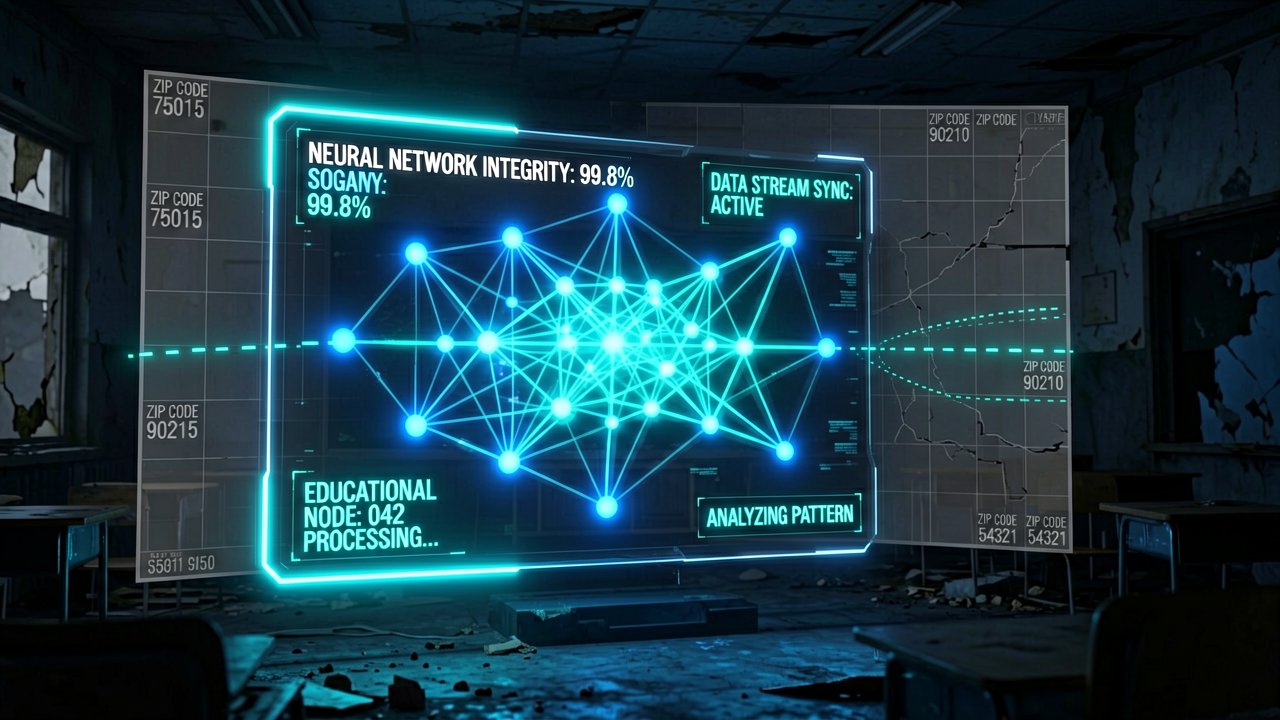
New Jersey has always competed economically, academically, and culturally. The next competition is over skills: who can think analytically, communicate clearly, and use technology with judgment. AI and spatial computing are not "extras." They are quickly becoming foundational tools of learning and work. The question is whether the state will build access and guidance at scale, or allow opportunity to harden by zip code.
State-level action is already moving. With AI and information-literacy expectations now before the state Board of Education, New Jersey is signaling that these competencies belong in learning standards, not just in disciplinary codes or device rules. Done well, statewide guidance can help districts move from reactive bans to consistent instruction: teaching students how to verify information, cite and disclose AI use appropriately, and develop the analytical habits required in a world where generative tools are ubiquitous.
Separately, the New Jersey Assembly passed a seven-bill package regulating AI in March 2026. The legislation covers political ads, business dealings, and companion chatbots. While not directly education-focused, these regulatory efforts signal that the state is grappling with AI's broader societal impacts. The education piece will need to align with these frameworks if students are to graduate ready for a regulated AI economy.
Whether New Jersey schools actually implement these recommendations at scale remains the real question. Budgets are tight. Every initiative competes for funding. Teacher training takes time and money. The technology itself evolves faster than most procurement cycles can accommodate. Hasan's framework is sound, but execution is where most education technology initiatives fail. The divide won't be fixed by policy documents alone. It will be fixed—or widened—by what happens in classrooms when the bell rings.
Artūras Malašauskas is an AI Systems Integrator with 20+ years of production-grade web engineering experience. He has designed, shipped, and scaled enterprise Python/PHP systems for logistics, SaaS, and public-sector clients. For the past year, he has focused exclusively on AI integrations: deploying open-source LLMs, building generative media pipelines (image, audio, video), and engineering multi-agent workflows for real production environments. His standard: reproducibility, security, cost-efficient inference—no vaporware. He documents and evaluates emerging AI tooling, separating verified capabilities from marketing noise. Technical editor at: muza-ai.eu, ai-verslas.lt, ai-naujinos.lt Connect on LinkedIn
Comments