Alibaba's Qwen AI Enters Chinese Cars at Beijing Auto Show
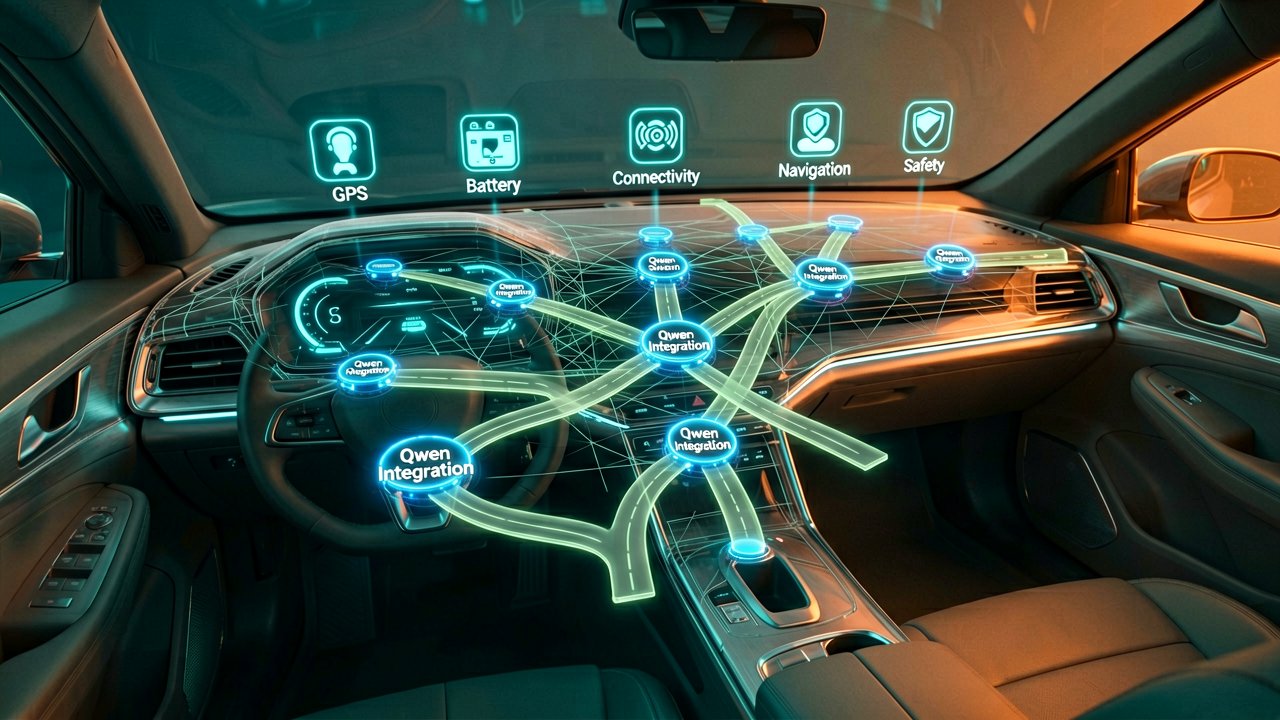
Chinese tech giant Alibaba announced on April 24, 2026 that its Qwen artificial intelligence model will be embedded into vehicle systems from multiple automakers. The reveal came on the opening day of the Beijing Auto Show, positioning in-car AI as a key differentiator as the electric vehicle market cools.
The integration spans nine manufacturers: BYD, Geely, Li Auto, Changan, Dongfeng, BAIC, Great Wall Motor, SAIC Volkswagen, and SAIC IM Motors. According to CNBC's coverage, the system will let drivers order food delivery, book hotels, purchase attraction tickets, and track packages using voice commands.
Under the hood, the architecture combines on-device processing with cloud-based computing. This hybrid approach interprets voice commands, plans multi-step tasks, and connects to services like payments and navigation. The system is designed to function even with limited network connectivity, which matters when drivers are in tunnels or rural areas (a problem that has plagued users for years, frankly).
Alibaba Cloud's official documentation reveals the technical foundation: the Qwen-Omni multimodal model runs on Nvidia's DRIVE AGX Thor automotive chip platform. The edge-side deployment handles perception and interpretation of the physical environment, while the cloud-side delivers agentic AI capabilities for task decomposition and workflow orchestration.

This isn't Alibaba's first automotive AI deployment. Earlier in 2026, FAW Group's Hongqi brand integrated Qwen into its "Lingxi Cockpit" intelligent system, debuting on the Hongqi HS6 plug-in hybrid model. That implementation enabled recognition of ambiguous voice commands and sophisticated planning of complex, multi-step tasks.
The competitive landscape is heating up. At the same auto show, a local version of Audi in China announced its E7X electric SUV will incorporate AI features from ByteDance's Doubao and iFlyTek. Cadillac also showcased a new model with voice-assistant capabilities connecting to Doubao AI.
Why the rush? The automotive industry is trying to add more digital features to attract buyers as the market for electric vehicles cools. Software differentiation has become the new battleground when hardware specs converge. PYMNTS found that 75% of carmakers were planning AI integration into their vehicles at the end of 2024, and a year later these efforts expanded beyond commercial products into engineering, manufacturing, and design.
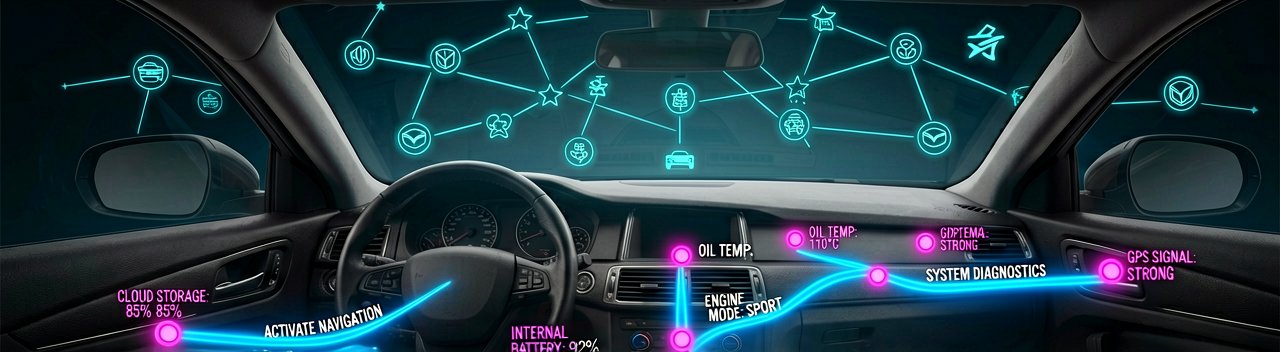
For drivers, the physical experience shifts from tapping screens to speaking commands while keeping hands on the wheel. The friction of navigating menus while driving gets replaced by natural conversation. But there's a catch: the system's effectiveness depends on voice recognition accuracy in noisy cabin environments, and the latency between command and execution.
It wasn't immediately clear whether the AI features would be available in cars exported outside China. This matters for global automakers watching the technology's trajectory. The localization of services—food delivery platforms, hotel booking systems, payment gateways—creates natural barriers to international expansion.
Alibaba's move signals a broader industry shift toward agentic commerce in vehicles. Voice becomes the connective tissue between consumers and execution systems, turning complex prompts into spoken conversations. The question isn't whether this technology works, but whether drivers will trust it enough to use it while moving at highway speeds.
Whether users actually pay for these features remains the real question. Automakers are betting that software services will become recurring revenue streams, but consumers have shown resistance to subscription models for features they expect included. The integration is technically impressive, but market adoption depends on pricing strategy and perceived value.
Artūras Malašauskas is an AI Systems Integrator with 20+ years of production-grade web engineering experience. He has designed, shipped, and scaled enterprise Python/PHP systems for logistics, SaaS, and public-sector clients. For the past year, he has focused exclusively on AI integrations: deploying open-source LLMs, building generative media pipelines (image, audio, video), and engineering multi-agent workflows for real production environments. His standard: reproducibility, security, cost-efficient inference—no vaporware. He documents and evaluates emerging AI tooling, separating verified capabilities from marketing noise. Technical editor at: muza-ai.eu, ai-verslas.lt, ai-naujinos.lt Connect on LinkedIn
Comments