Critical AI Policy Virtual Fellowship 2026 Opens Applications for Global Researchers

The academic research landscape for artificial intelligence governance is expanding beyond traditional technical domains. Manchester Metropolitan University and Loyola University Chicago have jointly announced the Critical AI Policy Virtual Fellowship 2026, a four-month research programme designed to bring together interdisciplinary scholars examining AI through social, political, and ethical lenses.
Unlike many prestigious fellowships that require physical relocation, this initiative operates entirely online. The programme runs from April 13 to July 17, 2026, with fellows committing approximately one day per week to collaborative activities. This virtual structure removes visa barriers, travel costs, and institutional mobility constraints that typically exclude researchers from the Global South.
According to the official announcement from Manchester Metropolitan University's Digital Society Research Cluster, the fellowship is jointly organised by DISC and the Center for Digital Ethics & Policy (CDEP) at Loyola University Chicago. Professor Florence Chee leads the initiative, which explicitly welcomes researchers without current institutional affiliation alongside established academics and doctoral candidates.
The application deadline is February 27, 2026, with outcomes announced March 9. (There was some confusion about this date on social media, but the university page confirms the February deadline.) Selected fellows will participate in synchronous and asynchronous online events, present their work in seminars, and contribute to a joint policy report on generative AI governance.
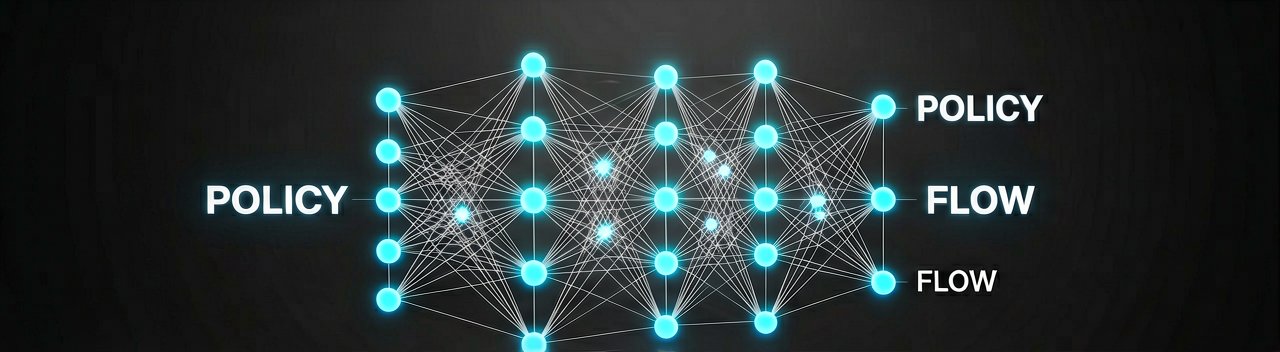
Research themes span the political economy of artificial intelligence, environmental sustainability of AI systems, misinformation and platform accountability, legal frameworks for AI regulation, and decolonial, Indigenous, feminist, and queer perspectives on technology. The programme explicitly challenges treating AI as purely technical work, instead emphasizing its social and political dimensions.
Application requirements include a 500-word fellowship plan, a 500-word description of the applicant's critical approach to AI policy, and a two-page CV. Applicants must already be working on critical AI policy research at any stage—literature review, data collection, or writing up. During the fellowship, participants will write public-facing articles, attend training workshops on policy interventions, and present at the 2026 Online Digital Ethics & Policymaking Summer School.
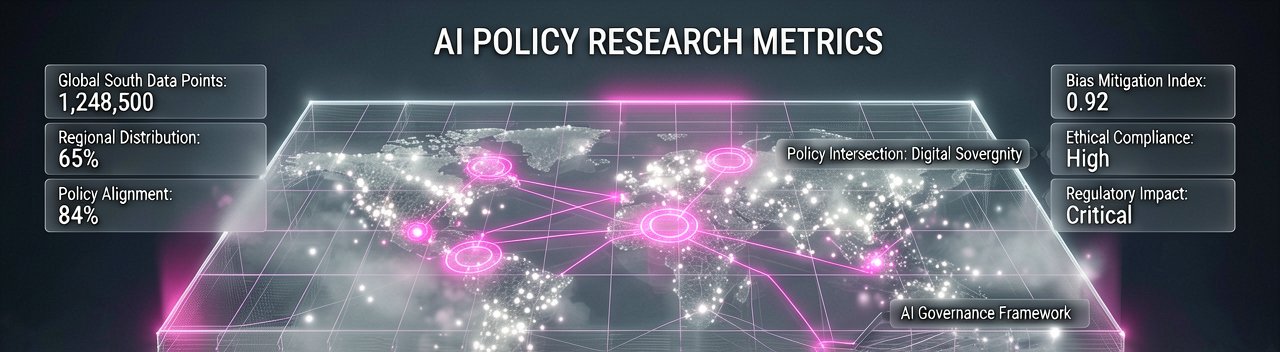
Independent coverage from Global South Opportunities corroborates the programme structure and highlights its emphasis on underrepresented regions. The fellowship particularly values diverse perspectives from scholars across Africa, Asia, Europe, North America, and South America.
There's a practical reality check here: the fellowship is generally self-funded. While separate events may receive sponsorship, participants must cover their own costs. This is less of a barrier than traditional visiting fellowships requiring international travel, but it still limits accessibility for researchers without institutional support or personal funding.
The physical experience of participating is straightforward but demanding. Fellows will spend roughly four hours weekly in online meetings across multiple time zones. The asynchronous work—writing policy contributions, reviewing fellow research, preparing presentations—happens during self-directed time. There's no campus to walk through, no coffee shop to meet colleagues at, just Zoom calls and shared documents. (Which, for many researchers, is actually preferable to the exhaustion of international travel.)
Alumni may retain associate or affiliate membership with the partnering organisations upon completion. This provides ongoing network access without the pressure of immediate publication or impact metrics that plague traditional academic fellowships.
The timing matters. With the EU AI Act implementation underway and various national AI regulations emerging globally, policy-relevant research on artificial intelligence governance has become increasingly urgent. This fellowship positions itself at the intersection of academic research and practical policymaking, aiming to bridge that gap through evidence-based recommendations.
Whether this programme achieves its stated goal of influencing AI governance debates remains to be seen. The joint policy report will be the tangible output, but policy change requires more than academic recommendations—it needs political will, institutional adoption, and sustained advocacy beyond the fellowship's four-month window.
For researchers in the Global South or those facing mobility constraints, the virtual format represents genuine progress. For those with funding to spare, it offers a legitimate pathway to contribute to AI policy discourse without the traditional barriers of academic prestige or institutional affiliation.
The real question isn't whether the fellowship exists. It's whether the policy recommendations it generates will actually reach decision-makers who can implement them. Time will tell if this translates to meaningful change or remains another well-intentioned academic exercise.
Artūras Malašauskas is an AI Systems Integrator with 20+ years of production-grade web engineering experience. He has designed, shipped, and scaled enterprise Python/PHP systems for logistics, SaaS, and public-sector clients. For the past year, he has focused exclusively on AI integrations: deploying open-source LLMs, building generative media pipelines (image, audio, video), and engineering multi-agent workflows for real production environments. His standard: reproducibility, security, cost-efficient inference—no vaporware. He documents and evaluates emerging AI tooling, separating verified capabilities from marketing noise. Technical editor at: muza-ai.eu, ai-verslas.lt, ai-naujinos.lt Connect on LinkedIn
Comments