Equinix Launches AI Discovery Hub in Hong Kong with HPE and Nvidia
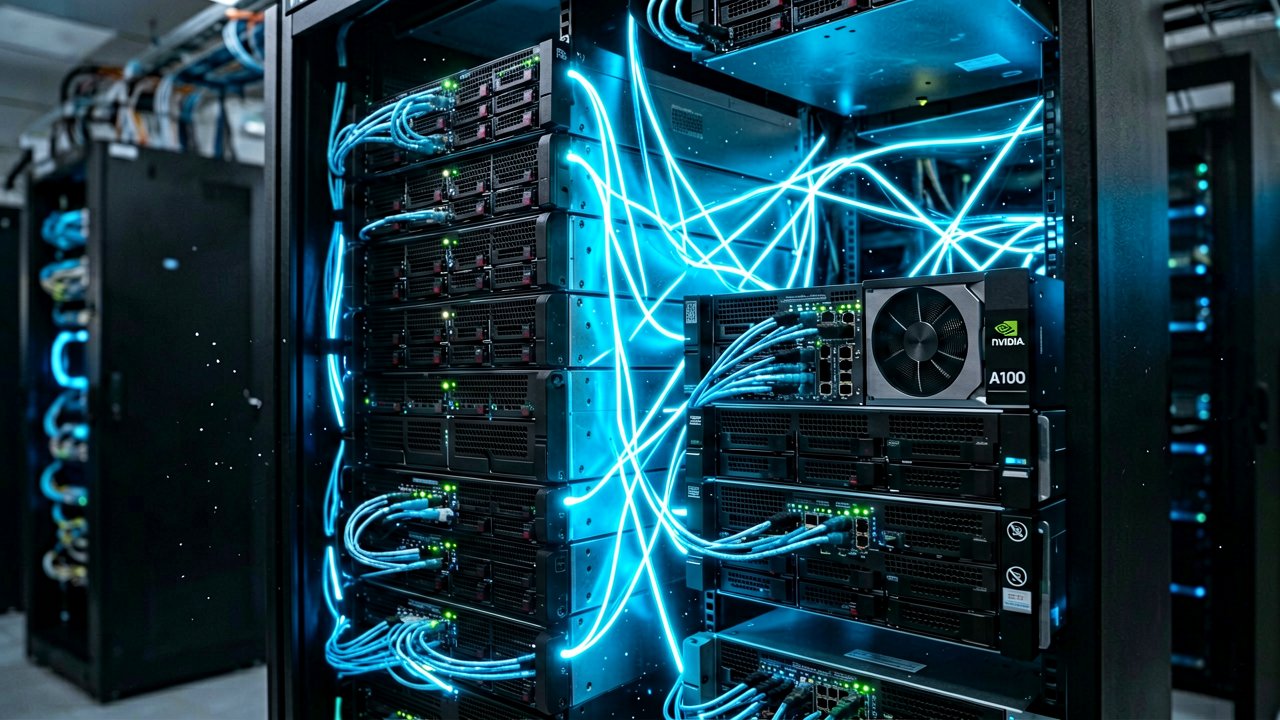
Digital infrastructure provider Equinix announced a strategic collaboration with HPE and Nvidia to establish an AI Discovery Hub in Hong Kong. The facility will operate as an open AI testing environment designed to help enterprises validate applications before committing to full-scale production deployments.
The announcement came on April 23, 2026, through Equinix's official newsroom. The hub brings together an AI factory at-scale solution from HPE with Nvidia AI infrastructure, software, and guardrails to Equinix's interconnection-rich, cloud-dense ecosystems in Hong Kong.
According to the company's press release, the AI Discovery Hub will become available in the second half of 2026. Companies can leverage the environment to test and validate AI applications before full scale deployment, enabling them to evaluate performance, compatibility, and operational workflows under real-world conditions while maintaining low latency.
Physical infrastructure matters here. The hub will be hosted at HK6, Equinix's AI-ready facility in Tsuen Wan. The site uses direct-to-chip liquid cooling technology, which supports GPUs that far exceed the thermal limits of traditional air-cooled data centers. This isn't just marketing speak—when you're running high-performance graphics processing units for AI training, the heat output is substantial enough to require liquid cooling rather than standard air circulation.
As companies move from pilots to production, AI deployments often stall due to practical constraints. These include siloed data and infrastructure, limited AI-ready power and cooling, latency and throughput bottlenecks when moving large datasets, fragmented access to clouds and partners, and governance requirements that are difficult to implement consistently across distributed environments.
Joanne Hon, Managing Director at Equinix Hong Kong, noted that Hong Kong is at an inflection point where AI is moving from experimentation into day-to-day operations. That shift shows up immediately in how much data enterprises need to move and the speed at which they need to move it. As enterprises scale AI, they quickly run into practical constraints around latency, throughput, cloud access and governance.
The joint offering addresses these requirements by providing an AI-ready foundation where datasets, models and ecosystem partners can converge in close proximity to clouds and networks, supported by automation to reduce manual effort and enable proactive optimization.
Technical specifications include HPE's AI factory at scale solution, which combines Nvidia AI software, accelerated infrastructure, and high-performance, low-latency networking. It also has built-in guardrails and governance modules that support secure, efficient, and traceable AI operations.
The AI Discovery Hub will feature enterprise-grade agentic AI guardrails through Nvidia GPUs, Nvidia Nemo Claw, and the Nvidia Agent Toolkit. This open-source reference stack is designed to make OpenClaw autonomous AI agents safer with policy-based controls. It includes Nvidia OpenShell, which enforces policy-based privacy and security, as well as auditable runtime features designed for regulated and data-sensitive environments.
Vincent Kwok, Managing Director at HPE Hong Kong and Macau, said the company is focused on helping organizations operationalize AI in the real world by bringing these elements together through a unified operating model without adding complexity. By integrating an AI factory at-scale from HPE with Equinix and Nvidia, they are enabling customers to operationalize AI seamlessly across the entire lifecycle.
Independent reporting from Light Reading corroborates the timeline and scope of the changes. The outlet confirms the facility targets enterprises and financial institutions that need secure infrastructure for regulated AI workloads.
For the financial sector, moving sensitive data to public clouds often presents regulatory challenges. The hub allows banks and insurers to build and test models, including real-time inference systems and autonomous AI agents, within a controlled infrastructure. It keeps data processing close to their existing networks to reduce latency and support compliance requirements.
Ashok Pandey, VP of Operation, Asia Pacific at Nvidia, stated that enterprises in every industry are racing to ready AI agents to help people transform the way they work by unlocking incredible productivity gains. Pairing Nvidia Agent Toolkit software like the Nvidia OpenShell runtime on an AI factory at-scale from HPE with Equinix's interconnect platform in Hong Kong delivers a secure and efficient path for full-stack AI infrastructure to fuel real-world success.
The official documentation from Equinix reveals the company's positioning of this as a bridge between experimentation and production. The facility supports deployment across on-premises and cloud environments, which is critical for organizations maintaining hybrid architectures.
Industry context matters. Hong Kong's position as a financial hub means regulatory compliance isn't optional—it's the baseline. The governance features embedded in this infrastructure directly address that reality. Organizations can't simply move AI workloads to the nearest available cloud provider if data sovereignty requirements mandate local processing.
The solution is multi-tenant, highly scalable, flexible, and cost-optimized according to HPE's description. Whether that translates to actual cost savings for customers remains to be seen (pricing details weren't disclosed in the announcement).
What this actually means for end users is a testing ground where they can validate AI applications under real-world conditions before committing to full-scale rollouts. The physical proximity to networks reduces the friction of moving large datasets. The liquid cooling infrastructure handles the thermal load without the noise and inefficiency of traditional air-cooled systems.
Second half of 2026 availability gives enterprises time to prepare. But the window between announcement and actual deployment is where most projects lose momentum. Whether organizations actually commit to this infrastructure depends on whether their AI pilots have already proven viable enough to warrant production investment.
The collaboration addresses a specific gap in the market: the transition from proof-of-concept to operational AI. Many companies have run pilots. Fewer have successfully scaled them. This hub attempts to remove the infrastructure friction that typically blocks that transition.
Whether users actually pay for it remains the real question. The technology stack is impressive, but adoption depends on whether enterprises see enough value to justify the investment over existing cloud-based alternatives. Time will tell if this infrastructure becomes essential or just another option in an already crowded market.
Artūras Malašauskas is an AI Systems Integrator with 20+ years of production-grade web engineering experience. He has designed, shipped, and scaled enterprise Python/PHP systems for logistics, SaaS, and public-sector clients. For the past year, he has focused exclusively on AI integrations: deploying open-source LLMs, building generative media pipelines (image, audio, video), and engineering multi-agent workflows for real production environments. His standard: reproducibility, security, cost-efficient inference—no vaporware. He documents and evaluates emerging AI tooling, separating verified capabilities from marketing noise. Technical editor at: muza-ai.eu, ai-verslas.lt, ai-naujinos.lt Connect on LinkedIn
Comments