Taboola Launches Realise+ Agentic AI Platform for Advertisers

Taboola announced the launch of Realise+, an agentic AI system designed to automate performance marketing campaigns beyond traditional search and social channels. The platform represents the next phase of Taboola's Realize performance marketing infrastructure, targeting advertisers who struggle to scale on the open web.
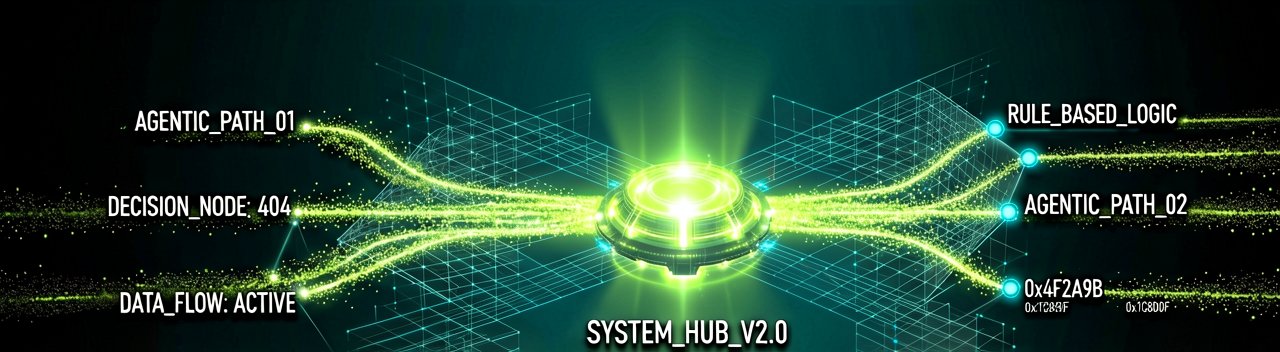
The official press release from Taboola's corporate site details the core architecture. Realise+ operates through two distinct components: a Decision Engine that automatically reallocates budget in real time using a Budget Allocator tool, and an Element Generator that creates and continuously improves ad creatives and targeting parameters without manual intervention.
This isn't just another dashboard with AI features slapped on top. The system is designed to make and execute campaign decisions continuously, reducing the hours marketers spend clicking through interfaces and adjusting bids. (Anyone who's spent a Friday afternoon tweaking campaign settings knows the frustration.)
Adam Singolda, CEO and founder of Taboola, stated that advertisers have hit a ceiling when scaling performance beyond search and social platforms. The company's research indicates around 80% of marketers would increase investment in the open web if it offered automated, AI-powered campaign solutions comparable to walled gardens. Additionally, nearly 86% say they would allocate up to a quarter of their performance budgets to the open web if such capabilities were available.

ExchangeWire reported on the launch, corroborating the technical specifications and timeline. The outlet noted that Realise+ has spent several months in beta testing, with phase 2 expanding in Q2 2026 featuring improved models and an extensive roadmap throughout the year.
The platform also opens itself to Claude Skills, giving advertisers and agencies a conversational front door to Taboola from inside Claude. The first skill handles campaign setup and optimization, with several more planned for release over coming months. This integration removes friction for agencies and advertisers standardizing on AI-native workflows.
Physical interaction with the system changes fundamentally. Instead of logging into a dashboard, navigating menus, and manually adjusting bid parameters across multiple campaigns, marketers can now describe their goals in natural language. The agent evaluates strategies across thousands of signals, learns from patterns across the entire ecosystem, and makes decisions in real time.
Supporting quotes from early beta users highlight the practical value. Héctor Vargas Mendoza, Senior Growth Marketing Manager at Sonova Marketing GmbH, noted that allocating budget across campaigns in real time is one of the biggest challenges in performance marketing. He described Realise+ and its Budget Allocator as compelling because they automatically shift spend toward what's working best without constant manual adjustments.
Matt Linder, Co-founder at Strand Marketing, echoed this sentiment. He mentioned being encouraged by early results from Realize, particularly its ability to optimize campaigns in real time and surface new opportunities for growth. The potential to further streamline execution with Realise+ represents a meaningful shift in how agencies approach campaign management.
The competitive landscape matters here. Walled gardens like Meta and Google have long offered automated campaign management with minimal human intervention. Taboola's pitch is that Realise+ replicates this performance and autonomy while providing direct access to premium inventory across publishers, OEMs, and apps. More budget gets spent on actual outcomes rather than platform fees.
Transparency remains a differentiator. Singolda emphasized that advertisers don't just get outcomes—they understand and guide how those outcomes are achieved. This addresses a common complaint about walled garden systems where optimization happens in a black box with limited visibility into decision-making processes.
The technology stack integration is equally important. As the industry shifts toward AI-native media operations, Taboola wants to be the easiest open web platform to plug into any agent, any stack, any workflow. This positions Realise+ not as a standalone tool but as a component in broader marketing automation ecosystems.
Implementation friction will determine adoption. Agencies managing multiple client accounts across different platforms need to evaluate whether the learning curve and integration effort justify the promised efficiency gains. The beta expansion in Q2 2026 provides more data points for this assessment.
Whether the open web actually captures that 25% of performance budgets remains the real question. Automation alone doesn't guarantee results—creative quality, audience targeting, and inventory quality still matter. Realise+ removes some manual labor, but it doesn't solve the fundamental challenge of making ads that convert.
The market will judge this on performance metrics, not feature lists. Early beta results appear positive, but widespread adoption depends on whether Realise+ delivers measurable ROI improvements at scale. Time will tell if this changes the open web advertising landscape or just adds another tool to an already crowded stack.
Artūras Malašauskas is an AI Systems Integrator with 20+ years of production-grade web engineering experience. He has designed, shipped, and scaled enterprise Python/PHP systems for logistics, SaaS, and public-sector clients. For the past year, he has focused exclusively on AI integrations: deploying open-source LLMs, building generative media pipelines (image, audio, video), and engineering multi-agent workflows for real production environments. His standard: reproducibility, security, cost-efficient inference—no vaporware. He documents and evaluates emerging AI tooling, separating verified capabilities from marketing noise. Technical editor at: muza-ai.eu, ai-verslas.lt, ai-naujinos.lt Connect on LinkedIn
Comments