Dataland Opens as World's First AI Art Museum in Los Angeles
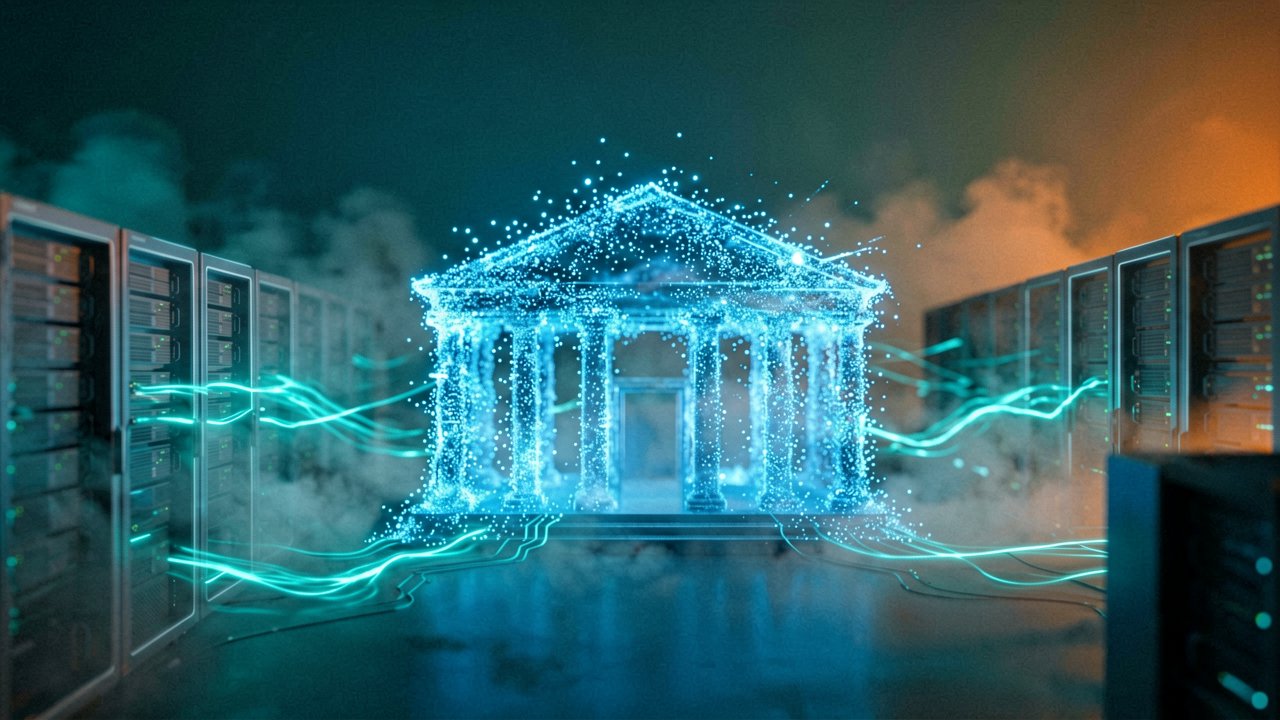
The cultural corridor of downtown Los Angeles is about to get stranger. Dataland, billed as the world's first museum dedicated to artificial intelligence art, opens its doors on June 20. The privately funded institution anchors the Frank Gehry-designed Grand LA complex, sitting across from the Walt Disney Concert Hall and within walking distance of The Broad and the Museum of Contemporary Art.
This isn't a traditional gallery with white walls and individual canvases. The 35,000-square-foot space dedicates 10,000 square feet to the technology infrastructure required to run the exhibitions. Five immersive galleries feature 30-foot ceilings designed for total sensory engagement. Visitors won't just look at art—they'll walk through it, hear it, and in some cases, smell it.
Co-founders Refik Anadol and Efsun Erkiliç spent more than two and a half years planning and building the facility. The brainchild emerged from Anadol's decade-long work with data visualization and machine learning. As Anadol told the Los Angeles Times, the museum represents "a living museum" where digital sculptures evolve in real time based on visitor interaction and continuous data streams.
The inaugural exhibition, "Machine Dreams: Rainforest," was inspired by a trip the founders took to the Amazon. Anadol's studio created an open-access AI model called the Large Nature Model, fed it millions of images of nature, and prompted the machine to learn and play with the intelligent behaviors of the natural world. The result is a multisensory experience where visitors encounter soundscapes woven from audio including oral histories of the Yawanawá people of Brazil and the last recorded call of the extinct Kauaʻi ʻōʻō bird of Hawaii.

Standing in one of those galleries, you'll notice the air conditioning hums differently than a normal museum. The temperature shifts. The lighting changes. There's a faint scent of damp earth and vegetation. This is the physical reality of AI art—not a static image on a screen, but an environment that breathes (or at least simulates breathing). The sensory overload is intentional, designed to make visitors feel present in a machine-generated ecosystem.
The use of AI in creative fields has been a lightning rod for controversy. Generative models like Midjourney and DALL-E rely on massive datasets of pre-existing images—many sourced without human artists' permission. The legal ownership of any art they produce remains a source of debate. Earlier this year, the U.S. Supreme Court turned away a case on whether AI-generated art can be copyrighted under the law.
The humans behind Dataland are well aware of these concerns. According to Smithsonian Magazine, Anadol tells CBS News the images he uses are sourced "ethically," from institutions including the Smithsonian, London's Natural History Museum, and the Cornell Lab of Ornithology. The Large Nature Model does not source without permission, culling mountains of data about the natural world from these partners. This includes up to half a billion images of nature.
"AI art is a part of digital art, meaning a lineage that uses software, data and computers to create a form of art," Anadol explained. "I know that many artists don't want to disclose their technologies, but for me, AI means possibilities. And possibilities come with responsibilities. We have to disclose exactly where our data comes from." (Transparency is a nice idea in theory, but the art world has a long history of saying one thing and doing another.)
Sustainability is another responsibility that Anadol takes seriously. For more than a decade, he has devoted much thought to the massive carbon footprint associated with AI models. Generating one image with AI consumes up to 1,000 times more energy than performing a simple web search, according to MIT researcher Noman Bashir. The Large Nature Model is hosted on Google Cloud servers in Oregon that use 87 percent carbon-free, renewable energy. Anadol says the energy used to support an individual visit to the museum is equivalent to what it takes to charge a single smartphone.
Even with the museum's efforts to consider ethics, Dataland still faces an uphill battle with certain art connoisseurs. Some critics have a philosophical opposition to AI-generated art. Whether you are creating a novel or a painting or a digital sculpture, the question remains: who is the artist? Is it the human who designed the prompt? The engineers who built the model? Or the machine itself?
The architecture firm Gensler designed the space. An escalator by the entrance will transport guests to the experiences below. The museum declined to say how much Dataland cost to build, though the Grand LA complex itself is a $1-billion development. The privately funded museum will collect and preserve artificial intelligence art and acts as a public repository for large-scale, nature-focused data sets.
Dataland sees Anadol deepen his relationship with Los Angeles. Born in Turkey, Anadol moved to the city in 2012 to study design media arts at the University of California Los Angeles, the same program in which he has taught for more than a decade. In 2014, he founded Refik Anadol Studio with Erkiliç. Together the pair have pioneered a new type of art that blurs the line between human creativity and machine intelligence.
This year will see the opening of LACMA's $720-million David Geffen Galleries, the Lucas Museum of Narrative Art, and Meow Wolf's reimagined, '90s-themed movie theater, among others. Dataland adds to a growing cultural corridor in Downtown Los Angeles. Whether it survives the inevitable backlash from traditionalists remains to be seen.
Whether users actually pay for it remains the real question. The museum's business model hasn't been disclosed, and the art world has a habit of romanticizing technology until the bills come due. Time will tell if Dataland becomes a landmark or a cautionary tale about the limits of machine-generated culture.
Artūras Malašauskas is an AI Systems Integrator with 20+ years of production-grade web engineering experience. He has designed, shipped, and scaled enterprise Python/PHP systems for logistics, SaaS, and public-sector clients. For the past year, he has focused exclusively on AI integrations: deploying open-source LLMs, building generative media pipelines (image, audio, video), and engineering multi-agent workflows for real production environments. His standard: reproducibility, security, cost-efficient inference—no vaporware. He documents and evaluates emerging AI tooling, separating verified capabilities from marketing noise. Technical editor at: muza-ai.eu, ai-verslas.lt, ai-naujinos.lt Connect on LinkedIn
Comments