Auburn University Launches Interdisciplinary AI Course for Engineering Students
The Department of Electrical and Computer Engineering at Auburn University is running an interdisciplinary course that bridges traditional engineering education with modern artificial intelligence tools. Applied Statistics and Machine Learning (ELEC 5970 6970 600) entered its fourth iteration this semester, serving 23 Auburn students alongside nine from Tuskegee University.
Published: April 24, 2026. The course details appear in Auburn University's official engineering news release.
Yin Sun, the Godbold Associate Professor at Auburn, co-directs the course with Rui Chen, Research Extension Assistant Professor at Tuskegee. The curriculum covers foundational algorithms—K nearest neighbor, support vector machines, decision trees—alongside deep learning architectures including convolutional neural networks for computer vision and transformer networks powering systems like ChatGPT.
Simple machine learning algorithms are typically good for small dataset problems. More cutting-edge deep learning algorithms handle big data problems. Because students come from both engineering and agriculture backgrounds, they face different problems. (That's the whole point of interdisciplinary work, though it makes grading a nightmare.)

Student projects demonstrate the course's applied focus. Final presentations held April 22 in Broun Hall included temporally consistent real-time video captioning systems, interactive large language model tokenization analyzers, and automatic video highlight detection for long-form footage. These aren't hypothetical exercises. Students write code, train models, and present working prototypes.
Carson Easterling, an electrical engineering senior graduating in May, plans to specialize in control theory during graduate school at Auburn. He took the course for extra preparation. "It's invaluable to have an understanding of the foundations of artificial intelligence models and deeper knowledge of why they do certain things," Easterling said. "From an electrical engineering perspective, machine learning is a nice way to create models of very complex things when you have the data."
The physical reality of this work matters. Students don't just read about neural networks. They sit at terminals, watch training progress bars crawl, debug tensor shape mismatches, and defend their architectures to faculty during poster sessions. The friction of real implementation—data cleaning, hyperparameter tuning, computational limits—teaches what textbooks cannot.
Sam Chamoun, a teaching and research assistant earning his master's degree in electrical engineering in May, emphasized the collaborative structure. "I am grateful for this course because it allowed me to learn machine learning while immediately applying it to a real-world project," Chamoun said. "The collaborative structure was especially valuable. It taught me how to effectively manage and split up technical tasks for a major coding project, which is a practical skill I haven't had the chance to develop in other courses."
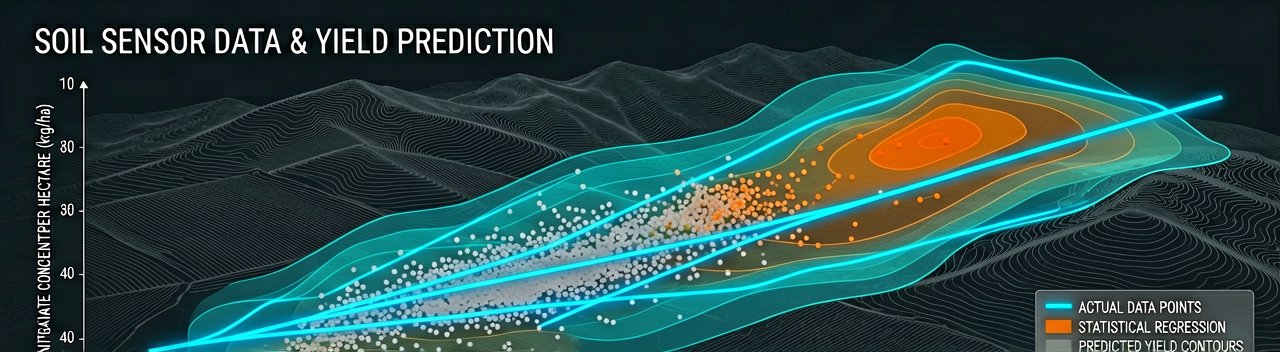
Sun noted the course encourages faculty to think more broadly about AI applications. "AI itself is interdisciplinary and all industries and private businesses in Alabama will need it," he said. During years teaching this course, Sun began new projects regarding AI for agriculture, AI for education, AI for 6G wireless, and AI for robotics with NVIDIA and several professors at Auburn and Tuskegee.
The course exists alongside other data-focused offerings at Auburn. STAT 4000: Introduction to Data Science, taught by Roberto Molinari in the Department of Mathematics and Statistics, serves 60 students this semester after launching in 2024. That course emphasizes statistical reasoning and uncertainty alongside technical skills in R and Python. The Applied Statistics and Machine Learning course takes a more engineering-focused approach, prioritizing implementation and systems design.
LinkedIn reported in January 2026 that "AI Engineer is the #1 fastest growing job in the US." Auburn's Master of Science in Artificial Intelligence Engineering program reflects this demand, requiring three core courses and seven technical electives covering machine learning, natural language processing, computer vision, and robotics.
Whether this undergraduate course translates into career advantage remains the real question. Students gain hands-on experience with transformer architectures and convolutional networks, but the job market's actual requirements shift faster than most curricula can adapt. The course provides tools. It cannot guarantee employment.
Time will tell if graduates from this cohort outperform peers without similar training. For now, the poster presentations in Broun Hall suggest students can build working AI systems. That's more than most engineering programs offer. Whether employers value this specific experience over general computer science degrees is another matter entirely.
Artūras Malašauskas is an AI Systems Integrator with 20+ years of production-grade web engineering experience. He has designed, shipped, and scaled enterprise Python/PHP systems for logistics, SaaS, and public-sector clients. For the past year, he has focused exclusively on AI integrations: deploying open-source LLMs, building generative media pipelines (image, audio, video), and engineering multi-agent workflows for real production environments. His standard: reproducibility, security, cost-efficient inference—no vaporware. He documents and evaluates emerging AI tooling, separating verified capabilities from marketing noise. Technical editor at: muza-ai.eu, ai-verslas.lt, ai-naujinos.lt Connect on LinkedIn
Comments