AI Models Predict Kidney Disease Progression Before Symptoms Appear
Kidney diseases develop silently. The body compensates so effectively that patients often remain unaware of the problem for years. Symptoms typically appear only at advanced stages, and even then they are frequently nonspecific—fatigue, swelling, nothing that immediately points to renal failure. This diagnostic lag is precisely why modern nephrology is shifting from reactive diagnosis to predictive modeling.
Researchers from Wroclaw Medical University published a comprehensive review in the International Journal of Molecular Sciences detailing how artificial intelligence is transforming this approach. The paper, titled "Artificial Intelligence in Nephrology—State of the Art on Theoretical Background, Molecular Applications, and Clinical Interpretation," was published on January 28, 2026. According to the official EurekAlert! news release, the study represents a literature review examining AI applications across theoretical frameworks, molecular diagnostics, and clinical implementation.
The technical architecture varies depending on data type. For structured clinical data—test results, age, clinical parameters—classical machine learning models like logistic regression, random forests, and XGBoost perform exceptionally well. These algorithms organize information efficiently and estimate the risk of specific events. They're workhorses for tabular data, the kind that fills electronic health records in spreadsheet-like rows and columns.
Deep neural networks enter the picture when data complexity increases. Medical image analysis, particularly histopathological diagnostics, requires models that can recognize structures and patterns regardless of their arrangement. The difference is tangible: a pathologist examining a kidney biopsy slide versus an algorithm scanning thousands of pixel patterns simultaneously. (The latter doesn't get tired after three hours, which matters.)
Dr. Jakub Stojanowski, a PhD candidate at the university, explains that intermediate solutions exist—multilayer perceptrons, which are simplified neural networks combining classical model advantages with more complex methods. The key insight: complexity doesn't automatically equal better clinical utility. Sometimes simpler models are more interpretable, and interpretation matters when treatment decisions hang in the balance.
Dr. Tomasz Gołębiowski, a professor at the university, emphasizes that what matters most is whether the model helps answer a question about the patient and whether its results can inform treatment decisions. Overly complex solutions aren't always better—they can make interpretation and practical implementation more difficult. This is a pragmatic stance in a field where hype often outpaces utility.
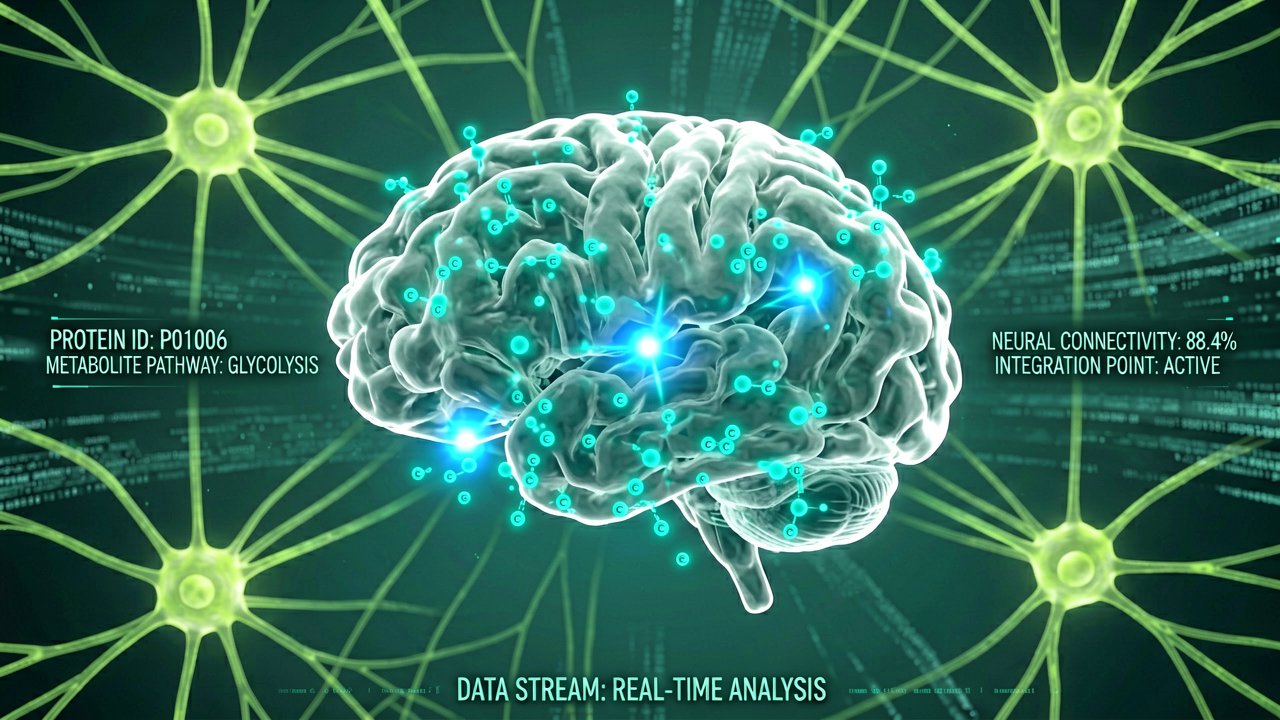
The most innovative direction involves combining artificial intelligence with modern biological analysis, such as proteomics or metabolomics. This approach allows detection of very early signs of disease—before symptoms appear or changes become visible in standard tests. Prof. Kinga Musiał, Ph.D., from the Department and Clinic of Pediatric Nephrology at Wroclaw Medical University, notes that the greatest potential lies in analyzing vast sets of biological data and identifying patterns invisible in classical diagnostics.
In practice, this means earlier disease detection and better prediction of disease course before irreversible kidney damage occurs. The physical reality: a blood draw today could reveal molecular signatures that traditional creatinine tests won't flag for months or years. That's the difference between catching a problem at stage one versus stage four.
The industry is responding with dedicated conferences. The third edition of "Artificial Intelligence & Nephrology" took place in Paris on November 20–21, 2025, organized by Prof. Jean-René Larue and Prof. Marvin Edeas. The event explored how generative AI and large language models are transforming kidney medicine, covering AI-driven diagnostics, data integration, omics analysis, and ethical challenges. Keynote speakers included Wisit Cheungpasitporn from Mayo Clinic and Sebastian F. Winter from Harvard Medical School.
A separate conference is scheduled for April 23–24, 2026, at UC San Diego's T. Denny Sanford Medical Education and Telemedicine Building. The AI in Nephrology Conference will feature keynote addresses, expert-led sessions, and interactive discussions on AI applications in chronic kidney disease, acute kidney injury, dialysis, transplant nephrology, nephropathology, and precision medicine.
For patients, these developments represent a qualitative shift. Diseases can be detected earlier, progression better predicted, and treatment more tailored. The technology doesn't replace clinical judgment—it augments it. Artificial intelligence remains a tool to support the doctor. The human makes the decisions; the technology helps make those decisions more informed.
Implementation challenges remain. Data quality, model interpretability, regulatory approval, and integration into existing clinical workflows are non-trivial hurdles. A model that works in a research setting doesn't automatically translate to a busy nephrology clinic where clinicians have minutes, not hours, per patient. The friction between algorithmic output and clinical reality is where most AI health projects stall.
Whether healthcare systems actually adopt these tools at scale—and whether patients benefit from earlier detection enough to justify the infrastructure investment—remains the real question. The science is advancing faster than the systems needed to deploy it.
Artūras Malašauskas is an AI Systems Integrator with 20+ years of production-grade web engineering experience. He has designed, shipped, and scaled enterprise Python/PHP systems for logistics, SaaS, and public-sector clients. For the past year, he has focused exclusively on AI integrations: deploying open-source LLMs, building generative media pipelines (image, audio, video), and engineering multi-agent workflows for real production environments. His standard: reproducibility, security, cost-efficient inference—no vaporware. He documents and evaluates emerging AI tooling, separating verified capabilities from marketing noise. Technical editor at: muza-ai.eu, ai-verslas.lt, ai-naujinos.lt Connect on LinkedIn
Comments