Samsung Subverts Specs with Style: Galaxy Glasses Merge Gemini and Runway Aesthetics
Samsung chose the grand stage of its Galaxy Unpacked event in London to formally unveil its foray into smart eyewear, proving that wearable technology is finally moving past the awkward phase of bulk and wires. Developed as a direct challenge to the incumbent smart glasses landscape, this display-free hardware ecosystem marks a tight three-way alliance between Samsung's manufacturing muscle, Google's ambient software vision, and elite lifestyle framing. By executing this drop with immediate lifestyle integration, the hardware emphasizes cultural adoption just as much as its silicon architecture.
Instead of forcing early adopters to look like walking science experiments, the tech giant teamed up with luxury eyewear brand Gentle Monster and prescription favorite Warby Parker to introduce distinct, face-friendly chassis styles. The Gentle Monster variant leans heavily into high-fashion minimalism with a sharp, black frame featuring a straight upper rim and softly contoured lower edges. Meanwhile, the Warby Parker edition pivots toward classical, everyday wearability, relying on a rich brown palette and an elegant, upswept brow line. Both designs effectively camouflage the intensive computer vision tech packed inside their slender temples.
Under the Hood: Snapdragon AR1 Meets Android XR
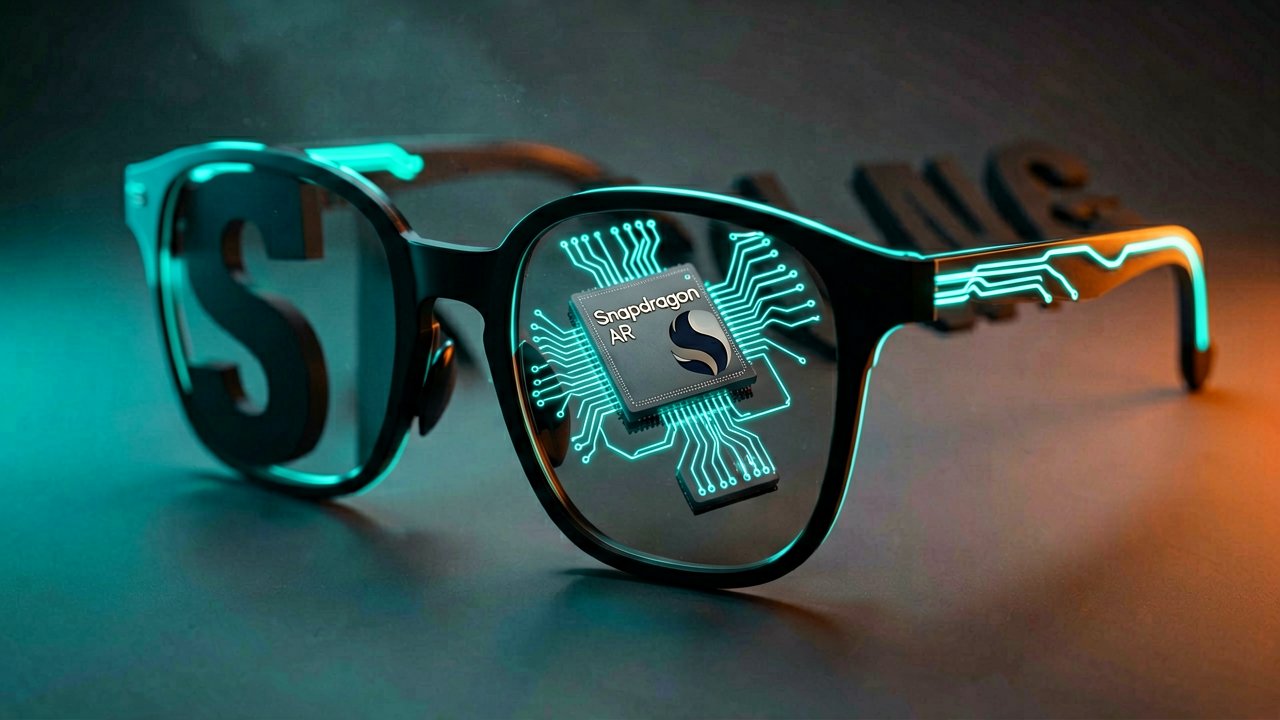
While the exterior looks ready for the runway, the internals are purely bleeding-edge. The hardware runs entirely on Qualcomm's Snapdragon AR1 Gen 1 platform, an architecture meticulously optimized for low thermal output and high-efficiency contextual processing. This chip behaves as the foundational bedrock for Android XR, a specialized operating system built by Google to transition spatial computing away from heavy headsets and directly into lightweight, daily routines. As detailed by NotebookCheck, the device extracts an impressive nine hours of continuous battery life from a single charge, which is further bolstered by a protective charging case capable of delivering seven additional full cycles on the go.
Gemini's Ambient Eyes and Ears
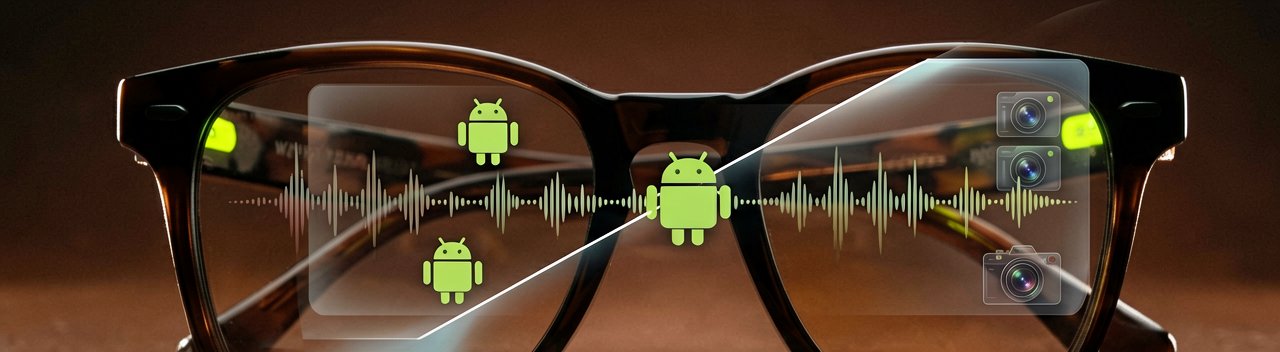
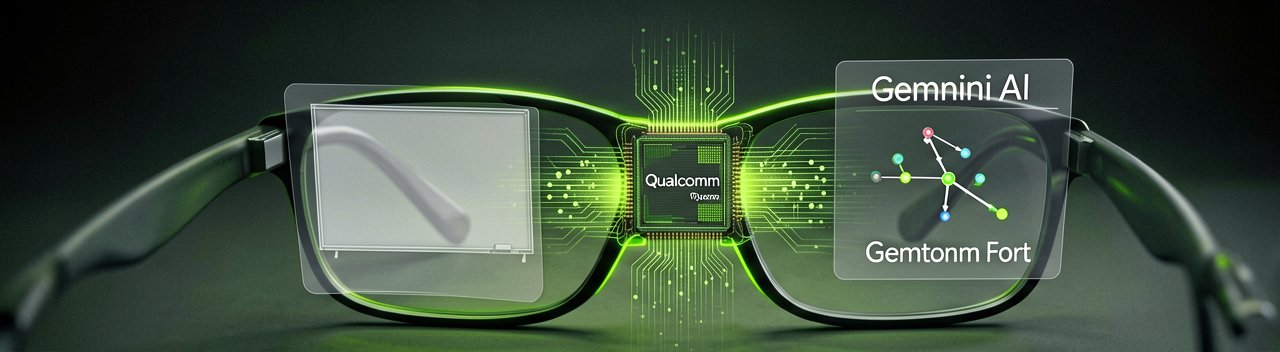
The true centerpiece of the user experience is a deeply baked integration with Google's Gemini AI assistant, transforming the glasses from a passive audio accessory into a context-aware companion. Utilizing an onboard camera array, Gemini can actively perceive, interpret, and process a user's real-world environment in real time. Rather than relying on constant phone-screen interaction, users can simply look at an object or document to execute sophisticated multimodal tasks. According to breakdown insights from Gizmochina, the system can seamlessly scan physical whiteboards to organize text neatly into Samsung Notes, provide instantaneous translation overlays for spoken conversations, and offer heads-up navigation prompts based on visual landmarks. The AI can also dictate contextual summaries of incoming messages or broadcast a live point-of-view feed directly into a video call, ensuring users remain completely hands-free while navigating their day.
Silicon Alliances and the Shift to Ambient Intelligence
What Most Reports Miss: The arrival of Samsung’s smart glasses represents a critical truce in the platform wars, signaling that tech titans have finally realized neither can conquer the face alone. For years, the industry watched as companies attempted to build closed, vertically integrated hardware silos, often resulting in heavy headsets that consumers rejected. By anchoring this launch in a three-way partnership with Qualcomm and Google, Samsung is essentially open-sourcing the burden of spatial computing. Qualcomm handles the micro-architecture thermal constraints, Google orchestrates the contextual cloud, and Samsung fine-tunes the physical form. It is a calculated bet that the next dominant computing platform will succeed through ecosystem interoperability rather than proprietary isolationism.
Industry insiders view this deployment as a necessary philosophical pivot away from the immersive, isolationist promises of mixed-reality pass-through goggles. Instead of trying to replace the physical world with digital pixels, the Snapdragon AR1 platform focuses entirely on augmenting reality through audio and light-touch visual assistance. This ambient approach acknowledges a harsh truth that early wearable experiments ignored: people do not want to walk around with screens strapped to their eyes all day. By ditching the heavy display optics entirely, Samsung lowered the power requirements enough to make the hardware indistinguishable from traditional acetate eyewear, solving a massive cultural adoption barrier in one clean sweep.
The choice of Google Gemini as the core cognitive engine also exposes a deep shift in how we will interact with data moving forward. Historically, voice assistants were reactive tools, waiting for a specific wake word to execute basic, siloed commands like setting timers or checking the weather. Gemini’s multimodal architecture shifts this dynamic into a proactive partnership, where the glasses continuously process visual data streams to anticipate user needs before they are explicitly verbalized. For Google, embedding Gemini into Samsung's hardware secures a vital, continuous stream of real-world training data, ensuring the search giant remains the primary gateway to information even as users look away from traditional smartphones.
However, blending high-end fashion with high-tech components introduces unprecedented manufacturing and distribution friction that both industries are scrambling to navigate. Traditional tech distribution relies on high-volume, uniform retail configurations, whereas eyewear demands personalized fitting, prescription customization, and curated boutique experiences. By partnering directly with style powerhouses like Gentle Monster and Warby Parker, Samsung is forced to adapt to a lifestyle retail model. This means training boutique staff to troubleshoot Android XR connectivity alongside adjusting frame temples. It is a risky, high-overhead strategy, but one that is absolutely vital if tech companies ever want their hardware to be viewed as a personal style statement rather than a mere utility device.
The Privacy Paradox and the Reality of Always-On Glass
Reading Between the Lines: The celebratory press releases surrounding this launch carefully gloss over the massive regulatory and social friction that comes with sticking an AI-powered camera on the bridge of everyone's nose. Samsung and Google are betting that the promise of frictionless, hands-free convenience will finally desensitize the public to the reality of ambient surveillance. Yet, history suggests that society does not easily acquiesce to being constantly recorded by passing strangers. While the hardware relies on subtle LED indicators to signal active recording, these tiny lights have proven remarkably easy to modify, cover, or ignore in past wearable iterations, setting up an inevitable clash with privacy advocates and local jurisdictions.
There is also a glaring contradiction in marketing a device as a "screen-free escape" from smartphone addiction when its primary function is to feed users an uninterrupted stream of data. The narrative that smart glasses will help users reclaim their real-world presence ignores the psychological reality of notifications. Moving a digital ping from a pocketed smartphone directly to the auditory and visual periphery does not reduce cognitive overload; it merely lowers the barrier to distraction. Instead of looking away from our screens to engage with the world, our very vision becomes the screen, turning every physical interaction into a potential data-mining opportunity for Google's Gemini engine.
Financially, the reliance on design partnerships highlights a fragile business model that risks alienating mainstream consumers. High-fashion collaborations with names like Gentle Monster allow Samsung to charge premium lifestyle prices, but tech hardware depreciates at a rate that traditional fashion items never do. A consumer might comfortably wear a high-end pair of designer frames for five or six years, but the silicon and battery inside these glasses will face obsolescence within twenty-four months. Convincing users to adopt a luxury fashion upgrade cycle for what is essentially an ephemeral piece of consumer electronics remains an expensive, uphill battle that neither the tech industry nor the fashion world has quite figured out how to solve.
"We have officially reached the era where your spectacles require a software patch and your AI companion knows exactly which brand of cereal you are staring at in the grocery aisle. It turns out the future of augmented reality isn't a cyberpunk dystopia of neon holograms, but a beautifully framed, designer-label notification telling you that your software license is about to expire."
Artūras Malašauskas is an AI Systems Integrator with 20+ years of production-grade web engineering experience. He has designed, shipped, and scaled enterprise Python/PHP systems for logistics, SaaS, and public-sector clients. For the past year, he has focused exclusively on AI integrations: deploying open-source LLMs, building generative media pipelines (image, audio, video), and engineering multi-agent workflows for real production environments. His standard: reproducibility, security, cost-efficient inference—no vaporware. He documents and evaluates emerging AI tooling, separating verified capabilities from marketing noise. Technical editor at: muza-ai.eu, ai-verslas.lt, ai-naujinos.lt Connect on LinkedIn
Comments