The Orbital Mechanics are Changing: SpaceX Launches Northrop’s New Sat-Medic
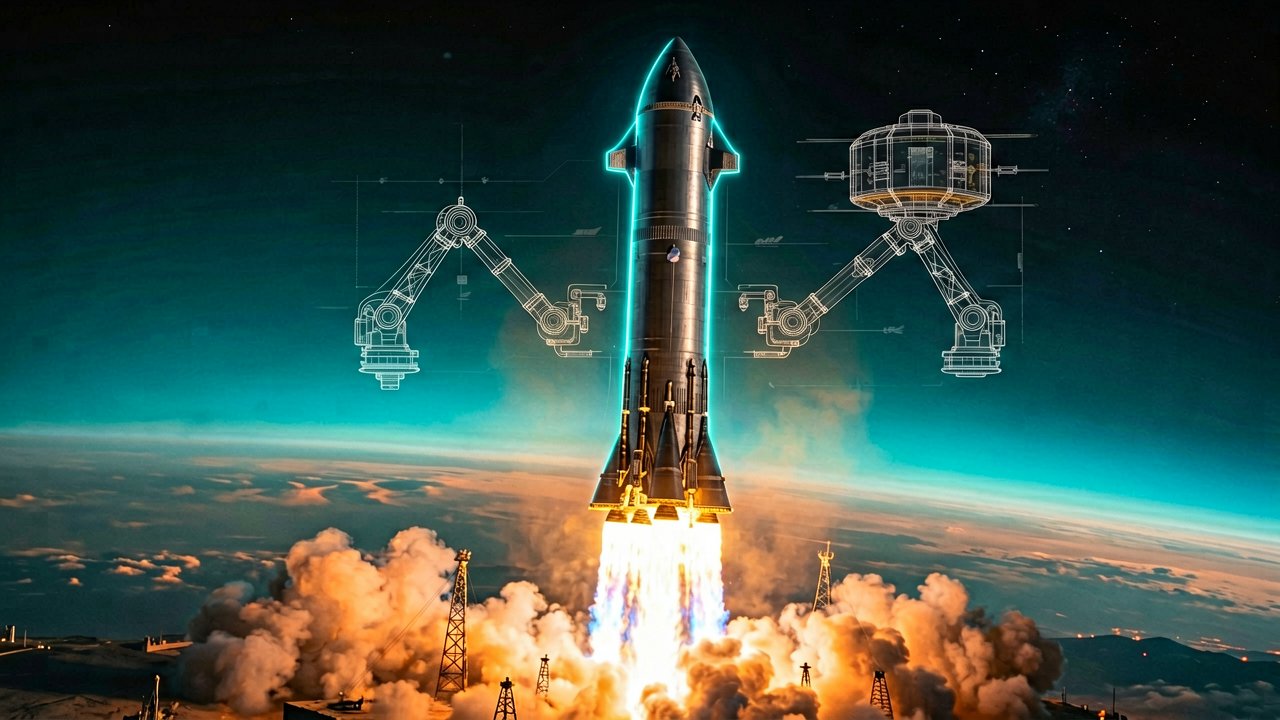
SpaceX successfully launched Northrop Grumman's pioneering Mission Robotic Vehicle (MRV) into a geostationary transfer orbit, kicking off a new era for in-space satellite servicing. The historic liftoff occurred on July 21, 2026, when a Falcon 9 rocket roared alive at Cape Canaveral Space Force Station in Florida. The ambitious mission bypassed a traditional booster landing, requiring every drop of performance to propel the advanced robotic mechanic and its trio of companion "jetpacks" into their target trajectory. According to SpaceX, the specialized payloads successfully deployed in orbit roughly an hour after leaving the pad.
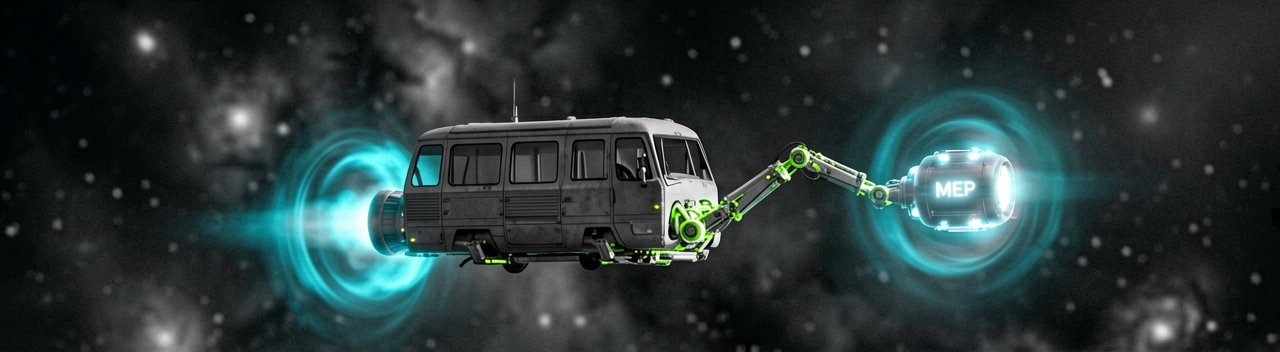
Developed by Northrop Grumman subsidiary SpaceLogistics, the minivan-sized MRV represents a fundamental shift in how the aerospace industry manages aging orbital infrastructure. Instead of letting multimillion-dollar communication platforms turn into floating space junk when they run out of gas, this spacecraft is designed to fix them. Equipped with two fully articulated robotic arms built in collaboration with the U.S. Naval Research Laboratory and DARPA, the vehicle functions as an orbital multi-tool capable of inspecting, upgrading, and relocating customer hardware. It is a major evolutionary step beyond the company’s previous-generation servicing vehicles, which were restricted to docking with a single satellite and remaining attached for life.
The Jetpack Strategy
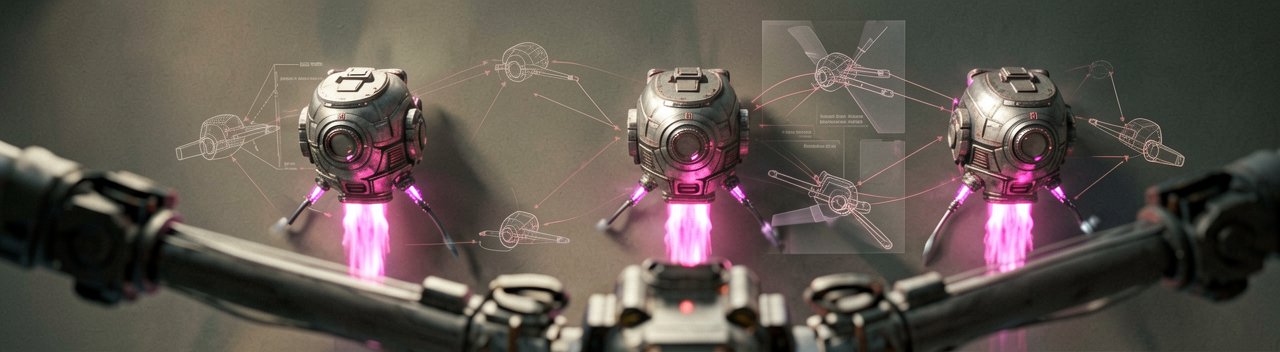
This time around, Northrop Grumman isn’t committing its main spacecraft to just one customer. The MRV launched alongside three Mission Extension Pods (MEPs)—smaller, 400-kilogram auxiliary propulsion units that essentially act as orbital jetpacks. Over the next year, the MRV and the pods will use their internal solar-electric thrusters to slowly climb 22,300 miles above Earth into geostationary orbit. Once positioned, the main robotic vehicle will grab the pods one by one and mechanically latch them onto the back of aging commercial satellites from operators like Intelsat and Optus, as detailed by Interesting Engineering. Each pod will provide up to six years of fresh maneuvering capability, breathing new life into platforms that are otherwise healthy but fresh out of propellant.
A Fitting Sacrifice for Reusability
The sheer mass of carrying the robotic servicer alongside three independent propulsion pods meant SpaceX had to make a rare concession: sacrificing one of its beloved veteran boosters. Falcon 9 booster B1069 was intentionally expended on its 32nd flight, with engineers removing its landing legs to maximize the fuel margins needed for the heavy haul. Reports from Spaceflight Now noted that this final flight concludes an impressive operational resume for the booster, which previously carried multiple commercial sat-payloads and dozens of Starlink batches. It is a fitting poetic touch that a rocket designed to pioneer hardware reuse on the ground spent its final breath launching a spacecraft meant to do the exact same thing in the vacuum of space.
The Hidden Economics of Life Extension
What Most Reports Miss: The true breakthrough of this mission isn't just the robotic dexterity on display, but the profound shift it forces in the financial calculus of the telecommunications industry. For decades, satellite operators have faced a brutal reality: once a $300 million geostationary broadcast satellite exhausts its maneuvering fuel, it must be steered into a graveyard orbit and abandoned, even if its transponders, solar arrays, and internal computers are functioning flawlessly. Northrop Grumman’s ride-sharing approach with the Mission Extension Pods flips this script, allowing operators to buy time without buying an entirely new spacecraft. By renting a localized "jetpack" instead of monopolizing a multi-ton servicing vehicle for a decade, companies can defer massive capital expenditures, keeping revenue-generating hardware active while newer technologies mature on the ground.
This development is also sending ripples through the secretive world of aerospace insurance, where risk assessment has historically been based on a one-way ticket mentality. Insurers are now scrambling to draft new frameworks for a future where third-party vehicles regularly approach, grapple, and manipulate active, high-value assets in a crowded orbital regime. The technical risk of a docking anomaly leading to a catastrophic collision remains the primary anxiety for underwriting syndicates. However, SpaceLogistics has spent years building a track record with its earlier Mission Extension Vehicles (MEV-1 and MEV-2), which successfully docked with Intelsat satellites and proved that proximity operations could be done safely without disrupting commercial broadcasts. This historical precedent gave both commercial operators and cautious insurers the confidence needed to greenlight a far more complex robotic choreography.
Beyond the immediate commercial windfall, the mission carries massive geopolitical weight that defense analysts are watching closely. The specialized robotic arms developed with DARPA and the U.S. Naval Research Laboratory represent the pinnacle of dual-use technology; a system that can delicately attach a propulsion pod to a friendly satellite possesses the inherent capability to inspection, manipulate, or potentially disable an adversary's hardware. While Northrop Grumman emphasizes the strictly peaceful, commercial utility of its servicing fleet, the Pentagon's heavy involvement in the underlying robotics research underscores a broader strategic goal. As space increasingly becomes a contested domain, the ability to rapidly repair damaged military satellites, clear space debris, or clear blind spots on orbital sensors is transitioning from a sci-fi luxury to a national security necessity.
The Fine Line Between Salvage and Sabotage
Reading Between the Lines: The industry’s sudden infatuation with "orbital sustainability" conveniently masks a harsher commercial reality. While the public relations narrative champions a green future free of space junk, the immediate catalyst for satellite life extension is pure economic preservation. By stretching the lifespan of aging hardware, operators are effectively kicking the space-debris can down the road rather than cleaning it up. Extending the operational timeline of decades-old electronics increases the statistical likelihood of component failure, meaning we may simply be keeping active a class of orbital zombies that are more prone to unresponsiveness, erratic behavior, or unexpected fragmentation events.
Furthermore, the technology introduces a glaring regulatory paradox that international space lawyers are entirely unprepared to handle. Current space law, rooted in the Outer Space Treaty of 1967, dictates that a nation bears continuous liability for any object it launches. But when a Swiss-insured, American-built robotic mechanic latches onto a British-owned satellite over international waters—in a territory with no borders—the lines of ownership and liability blur dangerously. If a Mission Extension Pod experiences a thruster anomaly and accidentally pushes a client's satellite into a rival nation's orbital slot, determining fault will trigger a bureaucratic nightmare that could drag on for years in terrestrial courts while the physical hardware drifts unchecked.
There is also an inescapable strategic irony in the dual-use nature of these robotic arms. The exact same mechanical dexterity required to gently install an external propulsion pod on a friendly commercial platform is identical to the capability needed to snap an antenna off a foreign military asset. By pioneering these technologies under the guise of commercial maintenance, the aerospace sector is effectively normalizing the deployment of highly capable orbital interceptors. As space logistics vehicles become a common sight in geosynchronous orbit, the line between an innocent roadside mechanic and a specialized piece of space-warfare infrastructure will depend entirely on who owns the software controlling the arms.
Leaving the launch pad used to mean a satellite's fate was sealed by the laws of physics and its fuel tank, but we are entering an era where your multi-million-dollar spacecraft can simply get a mid-life crisis upgrade from an automated mechanic—provided, of course, that your insurance policy is paid up and the mechanic doesn't accidentally rip off your solar panels.
Artūras Malašauskas is an AI Systems Integrator with 20+ years of production-grade web engineering experience. He has designed, shipped, and scaled enterprise Python/PHP systems for logistics, SaaS, and public-sector clients. For the past year, he has focused exclusively on AI integrations: deploying open-source LLMs, building generative media pipelines (image, audio, video), and engineering multi-agent workflows for real production environments. His standard: reproducibility, security, cost-efficient inference—no vaporware. He documents and evaluates emerging AI tooling, separating verified capabilities from marketing noise. Technical editor at: muza-ai.eu, ai-verslas.lt, ai-naujinos.lt Connect on LinkedIn
Comments