ePlane Unveils Full-Scale e200X Prototype: A Strategic Leap for Urban Air Mobility
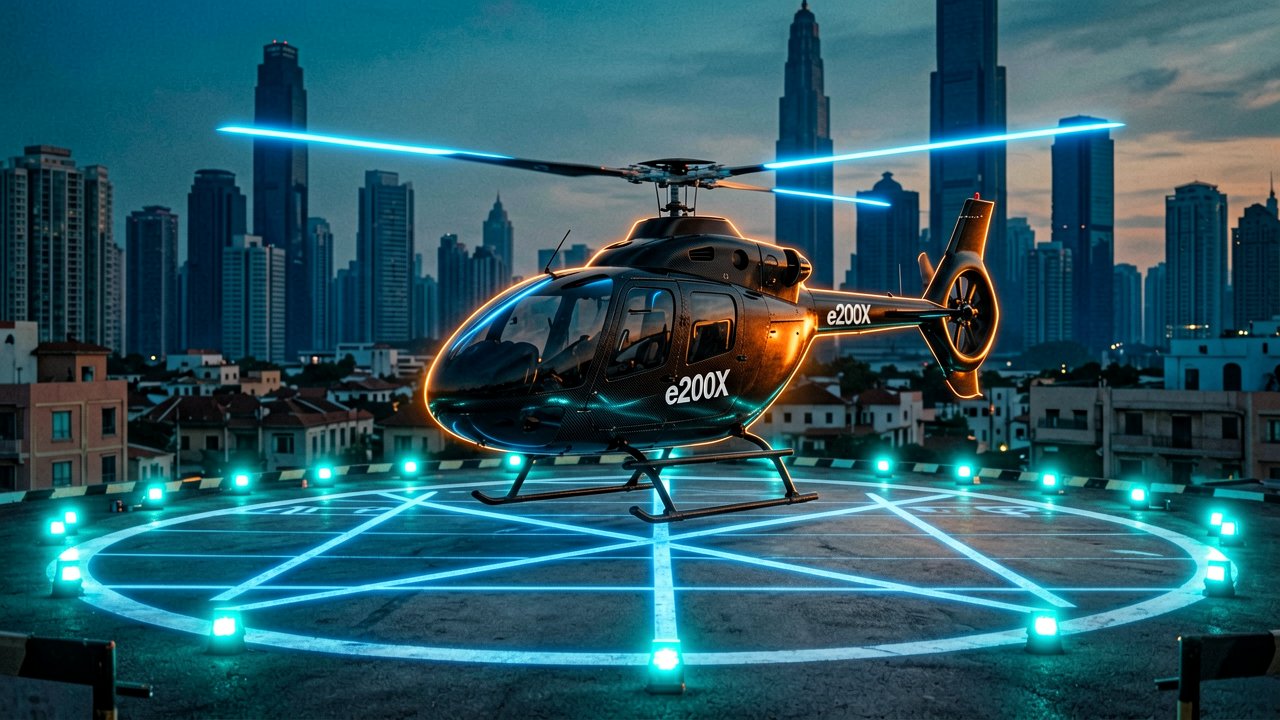
The global Advanced Air Mobility sector has reached a critical inflection point as Chennai-based startup The ePlane Company officially unveiled its first full-scale electric vertical take-off and landing (eVTOL) prototype. Designated as the e200X (PT-01), the 2.2-tonne carbon-fibre composite aircraft marks India's entry into the highly competitive electric air taxi race. Developed at the IIT Madras Discovery Campus, this indigenous platform represents a structural shift toward localized, high-density transportation engineering. The company has finalized its assembly and is shifting focus toward rigorous ground validation before executing comprehensive flight tests scheduled for mid-2027.
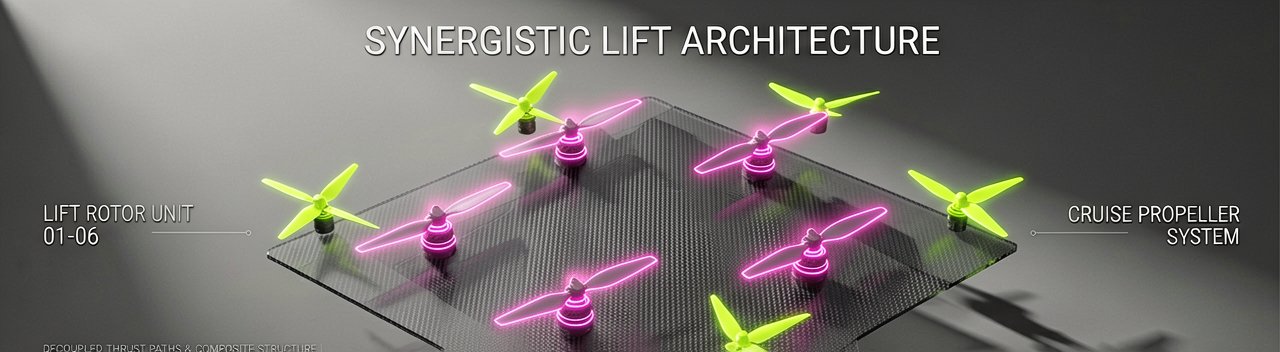
From a market context perspective, the e200X project diverges significantly from Western eVTOL designs that favor expansive wingspans and extended regional ranges. Instead, this platform is tailored specifically for ultra-congested megacities, boasting an incredibly compact footprint of just 8 meters by 11 meters. According to reports by Aviation Week, the aircraft utilizes a distinctive lift-plus-cruise configuration equipped with six independent lift rotors and four forward propellers. This engineering choice deliberately mitigates single-point mechanical failures, allowing the vehicle to operate safely from tight urban infrastructure, such as rooftops and existing hospital helipads, without requiring massive real estate overhauls.
The broader commercial implications of this rollout are underscored by an aggressive commercialization timeline. The company aims for full regulatory type certification by late 2027 or early 2028, with commercial operations slated to commence by 2028. Market confidence remains robust; as documented by Fortune India , the company has already secured over 800 aircraft commitments. To fulfill this substantial order pipeline, manufacturing operations will scale up at a new 60,000-square-foot production facility capable of an initial output of 80 aircraft annually, establishing a clear pathway toward volume production.
Strategic Focus on Emergency Medical Services
Unlike competitors targeting premium airport transfers at launch, ePlane is strategically positioning its initial operations around the healthcare sector. The first commercial variant of the e200X will roll out as an electric air ambulance. This approach circumvents some of the consumer adoption anxieties associated with early-stage urban air mobility platforms by addressing a critical public health infrastructure deficit. Moving emergency patients through hyper-congested traffic corridors via a 110-kilometer-range aerial vehicle provides immediate, undeniable economic and humanitarian value, accelerating municipal regulatory approvals.
Technological Differentiation and Architecture
The technical architecture of the e200X addresses the steep power demands of frequent vertical take-offs through an advanced 800-volt electric motor system. According to vehicle specifications published by The Economic Times, the airframe leverages a proprietary, patented Synergistic Lift architecture. By decoupling vertical thrust from forward cruise mechanisms, the aircraft minimizes aerodynamic drag and mechanical complexity during transition phases. Furthermore, the integration of advanced computing hardware enables precise power distribution across its multi-rotor layout, ensuring the platform maintains operational redundancy even if a single propulsion unit experiences an in-flight failure.
Regulatory Pathways and Market Scaling
Regulatory progression remains the steepest hurdle for any advanced aerospace program, but ePlane has systematically de-risked its path forward. The startup is the first private Indian entity to secure Design Organisation Approval from the Directorate General of Civil Aviation for an electric aircraft. To ensure the highest safety margins prior to crewed deployment, early 2027 flight tests will be conducted entirely uncrewed via fly-by-wire automation. This phased validation strategy provides a highly repeatable testing framework that satisfies conservative aviation watchdogs while simultaneously proving out the vehicle's acoustic and aerodynamic efficiencies before final commercial deployment.
Architectural Realism and the Local Infrastructure Imperative
Behind the Engineering Blueprint: While Western eVTOL leaders like Joby Aviation or Archer Aviation design aircraft that require specialized, sprawling vertiports, ePlane's engineering philosophy is anchored in the brutal reality of existing South Asian urban infrastructure. The e200X's compact 8-by-11-meter footprint is a deliberate constraint imposed by the team to ensure the vehicle can utilize standard, pre-existing helipads found on corporate offices and municipal hospitals. By choosing a smaller wing area and augmenting lift through a highly optimized, multi-rotor layout, the developers have effectively decoupled the aircraft's commercial viability from expensive, slow-moving municipal real estate rezonings.
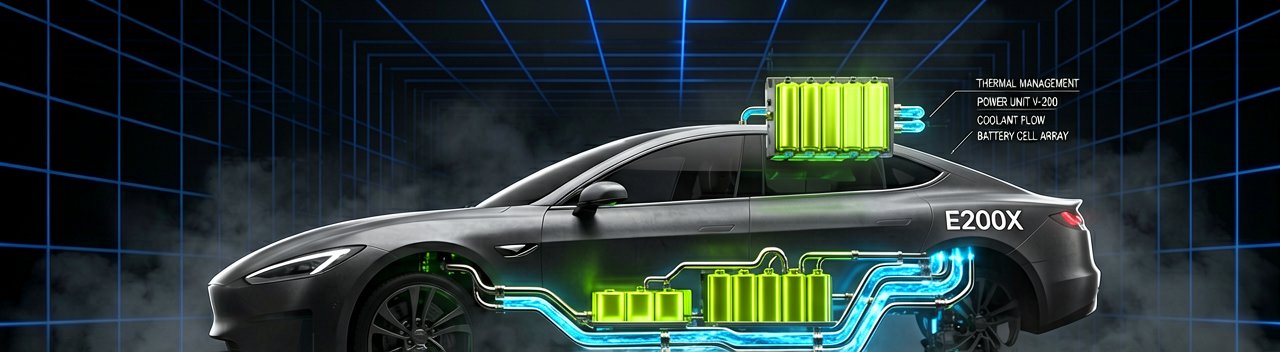
This localized design strategy directly addresses a massive bottleneck in the advanced air mobility ecosystem: charging infrastructure. Instead of banking on the immediate, widespread availability of mega-watt charging stations, ePlane's 800-volt powertrain is designed to optimize thermal efficiency and battery life cycle during rapid turnaround times. Aerospace engineers close to the project note that the proprietary Synergistic Lift technology isn't just about aerodynamics; it is a power-management strategy. By allowing the fuselage itself to generate a portion of the lift during cruise phases, the aircraft reduces the continuous draw on the battery pack, preserving energy for the high-intensity vertical segments of successive short-haul flights without requiring a full recharge between every single leg.
From a regulatory and safety standpoint, the decision to prioritize an Air Ambulance variant for initial rollout serves as a masterful tactical maneuver. Historically, civilian aviation authorities are deeply conservative when approving new aircraft architectures for commercial passenger flight over densely populated zones. However, by collaborating early with healthcare providers and positioning the e200X as a life-saving asset, ePlane creates a compelling public-interest case that can streamline bureaucratic bottlenecks. Securing the Design Organisation Approval from India’s DGCA was the first institutional nod, but executing early missions under an emergency medical framework provides a predictable, highly controlled environment to accumulate the thousands of operational hours necessary to prove the platform’s safety metrics to the public.
The financial backing and manufacturing roadmap further reflect a pragmatic shift away from the speculative capital burn that characterized early American eVTOL ventures. Backed by institutional depth from IIT Madras and a growing manufacturing footprint, the company's scaling strategy relies on domestic supply chains for carbon-fibre composites and localized precision machining. This insulates the startup from the volatile global aerospace supply chain bottlenecks that have delayed Western competitors. By controlling production costs from the prototype stage onward, the company positions itself to offer per-seat pricing that can realistically compete with premium ground transportation, transforming the air taxi from an exclusive luxury for tech executives into a functional utility for broader urban markets.
The Reality Gap Between Aviation Physics and Urban Economics
Reading Between the Lines: The enthusiasm surrounding ePlane’s 800 aircraft commitments masks a profound operational contradiction that plague the entire eVTOL industry. While a compact 8-meter by 11-meter footprint solves the spatial constraints of rooftop landings, it simultaneously creates an aerodynamic penalty. In aviation, smaller wingspans demand higher disc loading, requiring significantly more power to hover and transition into forward flight. Delivering an 800-volt powertrain capable of sustaining these energy-intensive cycles while operating within India's ambient temperatures—which regularly exceed 40 degrees Celsius—will push current battery chemistry to its absolute limits, potentially degrading battery health far faster than standard commercial spreadsheets project.
Furthermore, the strategic pivot toward Emergency Medical Services (EMS) as a soft launchpad presents its own logistical friction. While an air ambulance format bypasses consumer skepticism and gains regulatory goodwill, emergency medical operations are inherently unpredictable and chaotic. They require instant dispatch readiness, overriding the optimized, scheduled battery-swapping or charging sequences that standard urban air taxi networks rely on. If an aircraft must sit idle while maintaining a full charge for emergencies, or if it requires immediate, rapid back-to-back deployments, the economic model of maintaining an expensive 2.2-tonne composite asset begins to fray under the weight of low utilization rates.
The manufacturing projection of building 80 aircraft annually at a new 60,000-square-foot facility also understates the monumental leap from aerospace prototyping to serialized aviation production. Aerospace supply chains are notoriously unforgiving, and the DGCA’s rigorous type certification process involves destructive testing and quality control audits that routinely derail timelines by years. Securing a design approval is a commendable milestone, but scaling a factory workforce to flawless precision standards while keeping production costs low enough to compete with premium ground transportation is an unproven thesis in the electric aviation sector.
Ultimately, ePlane's bold 2027 flight testing timeline serves as a high-stakes test case for decentralized, regional aerospace engineering. If the platform successfully bridges the gap between its patented aerodynamic efficiencies and the brutal thermal realities of urban operations, it will rewrite the playbook for megacity transit. However, if battery degradation and infrastructure bottlenecks stall the rollouts, the project risks becoming a highly sophisticated, multi-million-dollar academic exercise rather than the mass-transit solution its extensive order book promises.
"It turns out that conquering the laws of aerodynamics and bureaucratic airspace regulations might actually be the easy part; the real miracle will be convincing a city’s grid to fast-charge an air taxi fleet while half the neighborhood is running their air conditioners on a hot Tuesday afternoon."
Artūras Malašauskas is an AI Systems Integrator with 20+ years of production-grade web engineering experience. He has designed, shipped, and scaled enterprise Python/PHP systems for logistics, SaaS, and public-sector clients. For the past year, he has focused exclusively on AI integrations: deploying open-source LLMs, building generative media pipelines (image, audio, video), and engineering multi-agent workflows for real production environments. His standard: reproducibility, security, cost-efficient inference—no vaporware. He documents and evaluates emerging AI tooling, separating verified capabilities from marketing noise. Technical editor at: muza-ai.eu, ai-verslas.lt, ai-naujinos.lt Connect on LinkedIn
Comments