IBM Redefines Enterprise Infrastructure With New Power Systems Targeting Risk and Flexibility
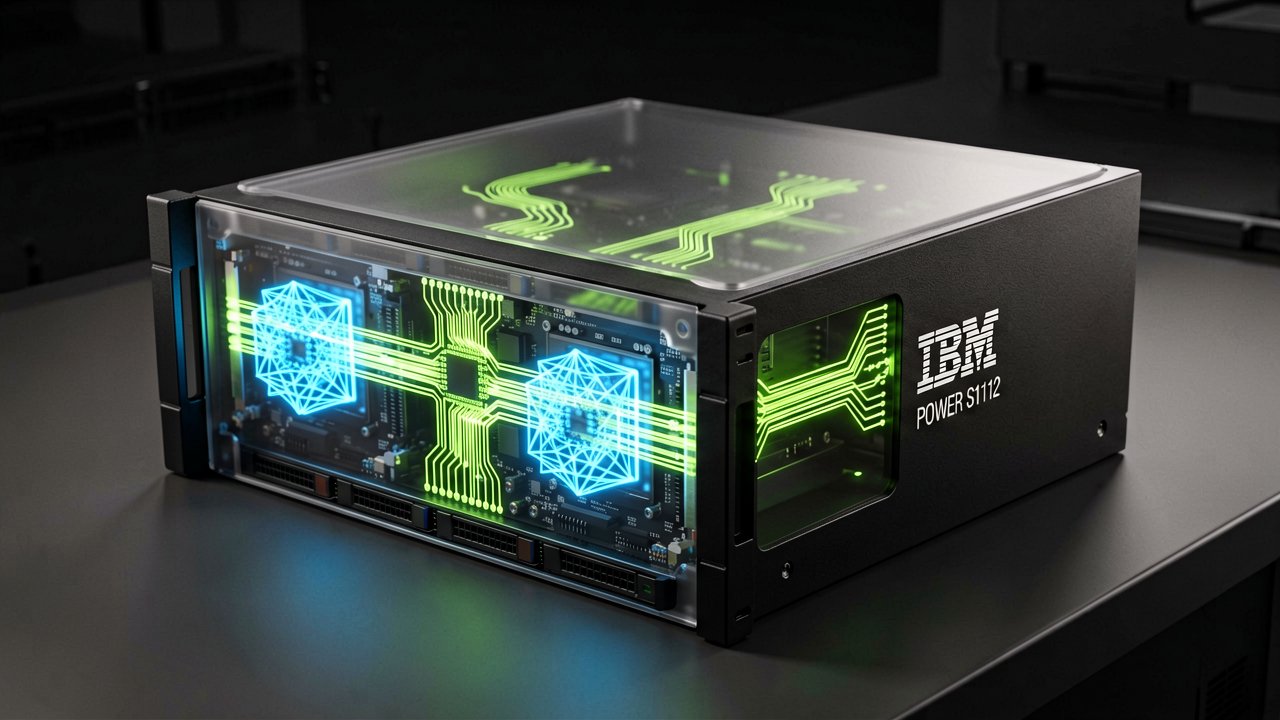
IBM has launched a fresh lineup of hardware and autonomous software under its Power banner to address escalating hybrid cloud risks and enterprise productivity strains. The newly unveiled IBM Power S1112 server represents a tactical expansion toward edge environments, packaging the Power11 architecture into a compact, single-socket design optimized for localized on-premises deployment. According to the official press release on the IBM Newsroom , this specialized hardware focuses heavily on localized artificial intelligence workloads via on-chip Matrix Math Acceleration (MMA), providing up to three times the core performance of older legacy servers while boosting energy efficiency by 69%.
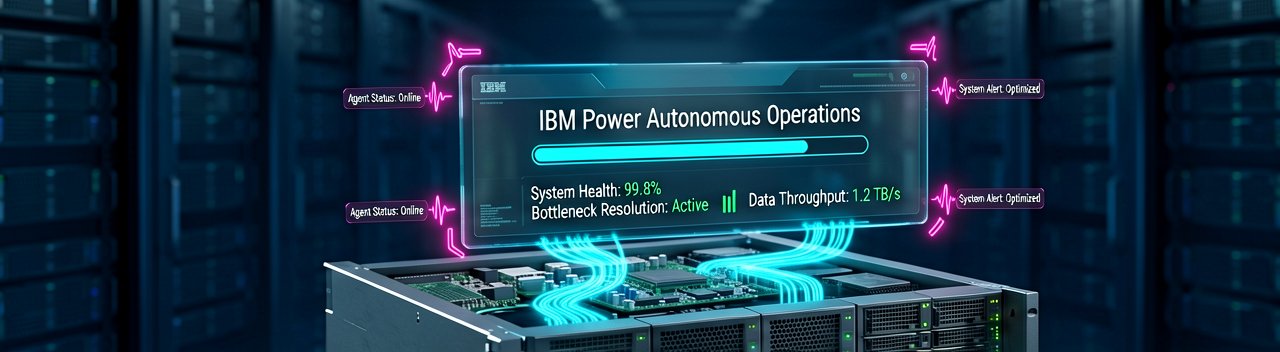
Alongside the hardware rollouts, IBM is aggressively integrating agentic AI into its core management software to streamline mission-critical environments. A standout introduction is IBM Power Autonomous Operations, an advanced AI companion built to identify and resolve critical system capacity bottlenecks up to 15 times faster than standard manual troubleshooting. Industry reports by Network World highlight that this conversational agent eliminates the rigid requirement for highly specialized administrative skills, enabling general IT personnel to orchestrate complex tuning commands via text dialogues.
Furthermore, the technology giant is addressing severe developer talent shortages through the introduction of the IBM Bob Premium Package for i. This specialized development assistant leverages multi-step agentic workflows to help engineers safely refactor monolithic applications, write unit tests, and translate outdated fixed-format RPG code into modern structures. As documented by AITech365, real-world early adopters are already noticing up to 60% faster application onboarding, proving that infrastructure flexibility must be paired with software accessibility to build long-term operational resilience.
Strategic Shifts in Edge Inference and Localized Power
Enterprise demands are pivoting rapidly away from absolute cloud dependency toward a balanced edge computing strategy. By provisioning localized hardware like the Power S1112, companies can bypass the latency, bandwidth costs, and regulatory compliance risks associated with piping raw data back to centralized hyperscale facilities. This approach enables industries like retail, manufacturing, and financial services to deploy local AI inference models immediately alongside their active operational data layers.
Autonomous Systems Confronting Chronic Skills Shortages
Modern hybrid networks are becoming too intricate for conventional IT operations teams to optimize manually without experiencing severe service disruptions. IBM's aggressive transition toward autonomous, self-healing infrastructure addresses a vital market gap as workforce skills in core operating environments face contraction. Elevating infrastructure to a self-operating state ensures baseline stability and frees human engineering teams to focus directly on digital modernization pipelines rather than basic server upkeep.
Behind the Scenes of the Power Architecture Evolution
The arrival of the single-socket IBM Power S1112 highlights a broader, cyclical industry shift back toward localized compute, reversing a decade-long stampede toward total cloud consolidation. For decades, large enterprise architectures were defined by monolithic data centers where scale was achieved by adding massive, power-hungry server racks. Today, the physics of data transmission and strict regional compliance frameworks like Europe's GDPR and the Digital Operational Resilience Act (DORA) have altered the math. Organizations are finding that moving petabytes of operational data to a public cloud for real-time processing introduces unacceptable latency and regulatory exposure, breathing new life into the on-premises market.
From an engineering standpoint, this hardware iteration bridges a historical divide between legacy transactional processing and modern predictive modeling. Traditionally, IBM Power systems were regarded as the unyielding backbone of high-volume financial accounting and inventory management, running stable but isolated workloads. By embedding dedicated Matrix Math Acceleration directly onto the silicon, chip designers have circumvented the need for costly, power-intensive secondary accelerators like external GPUs for standard inference tasks. This structural refinement allows a single machine to execute core database operations while simultaneously running localized machine learning models against that exact same data stream without performance degradation.
The introduction of agentic software companions also signals a pragmatic response to a looming human resources crisis within the enterprise IT ecosystem. Long-time systems administrators and engineers who spent decades mastering specialized enterprise operating systems are rapidly reaching retirement age, leaving a distinct knowledge gap in their wake. By layering generative AI capabilities and automated refactoring tools directly into the development environment, companies can essentially convert decades of institutional knowledge into accessible, natural-language workflows. This shift democratizes system administration, allowing generalist cloud engineers to manage specialized infrastructure without enduring a multi-year learning curve.

This technical realignment ultimately reshapes the competitive dynamics between legacy infrastructure providers and hyperscale public cloud vendors. Chief Information Officers are increasingly pushy about cloud repatriation due to unexpected data egress fees and unpredictable variable pricing models. IBM's strategy leverages this financial friction by offering a highly predictable, subscription-like cloud operating model that remains physically anchored within the client’s secure facility. Providing this architectural flexibility allows enterprises to retain absolute control over their core data custody while enjoying the rapid scalability and automated management typical of public cloud ecosystems.
Reading Between the Lines of the Autonomous Infrastructure Promise
The enterprise tech sector is notorious for treating automation as an immediate panacea for operational friction, and IBM’s recent pivot toward agentic AI infrastructure is no exception. While the promise of resolving complex capacity bottlenecks 15 times faster sounds revolutionary on paper, it glosses over the inherent unpredictability of deploying generative AI models into mission-critical systems. System administrators are being asked to trust autonomous agents with the telemetry of environments that process millions of transactions per second. In practice, the introduction of self-healing layers often creates a complex secondary tier of abstraction, making it significantly harder for human engineers to diagnose failures when the underlying AI behaves unexpectedly.
There is also a palpable contradiction in relying on automated software tools to solve a deep-seated IT talent drought. Introducing AI translation layers to automatically refactor outdated fixed-format RPG code into modern structures provides immediate operational relief, but it simultaneously disincentivizes organizations from training the next generation of engineers in foundational system logic. If an automated assistant acts as the sole intermediary between the engineer and the core infrastructure, the deep, structural understanding of legacy systems risks being entirely lost. Over-reliance on these tools may swap a dependency on hard-to-find human experts for a dependency on proprietary AI models whose precise decision-making processes remain opaque.
Furthermore, the push toward localized edge servers like the Power S1112 presents a clear paradox regarding corporate sustainability and energy mandates. IBM boasts a 69% improvement in energy efficiency for these newer units, yet the broader strategy encourages a decentralized sprawl of hardware across hundreds of localized distribution centers and retail storefronts. Managing and maintaining optimal power efficiency across a massively fragmented footprint is fundamentally more challenging than optimizing a centralized, hyperscale data center facility. While individual server boxes consume less energy per core, the aggregate operational carbon footprint of edge expansion could easily outpace the theoretical efficiencies gained at the silicon level.
Ultimately, this architectural shift reveals a calculated bet that enterprises will willingly pay a premium to escape the unpredictability of public cloud vendor lock-in. By packaging autonomous cloud-like capabilities into a physical box, legacy vendors are trying to convince cautious CFOs that predictable capital expenditure beats variable cloud consumption fees. Whether these enterprise clients can successfully integrate autonomous agents without suffering catastrophic configuration drift remains the true, unanswered gamble of this next infrastructure era.
Replacing a retiring sysadmin with a natural-language AI agent sounds brilliantly efficient until the server crashes at three in the morning, and the chatbot politely reminds you that it does not possess hands to plug the network cable back into the wall.
Artūras Malašauskas is an AI Systems Integrator with 20+ years of production-grade web engineering experience. He has designed, shipped, and scaled enterprise Python/PHP systems for logistics, SaaS, and public-sector clients. For the past year, he has focused exclusively on AI integrations: deploying open-source LLMs, building generative media pipelines (image, audio, video), and engineering multi-agent workflows for real production environments. His standard: reproducibility, security, cost-efficient inference—no vaporware. He documents and evaluates emerging AI tooling, separating verified capabilities from marketing noise. Technical editor at: muza-ai.eu, ai-verslas.lt, ai-naujinos.lt Connect on LinkedIn
Comments