China’s Open-Source Offensive: How WAICO Aims to Reshape the Global AI Order
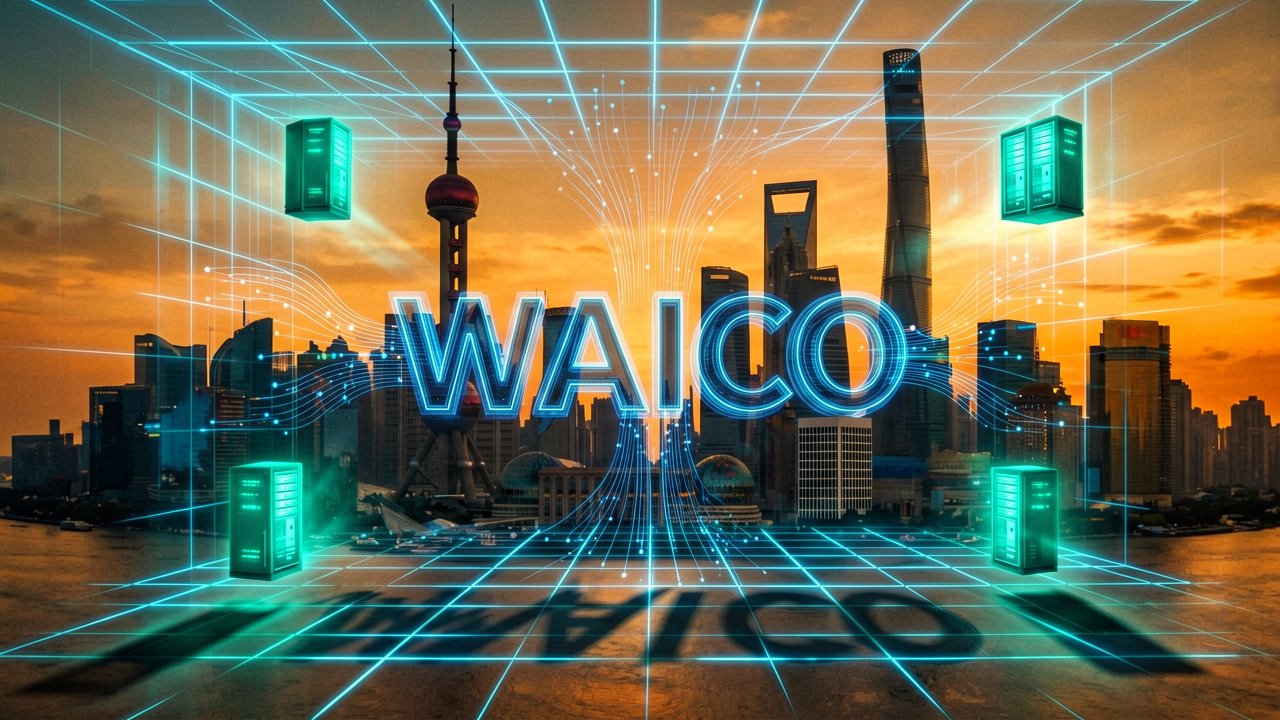
The geopolitical arena for artificial intelligence has shifted from localized chip sanctions to a structural battle for global institutional standard-setting. Chinese President Xi Jinping officially formalized this pivot at the World Artificial Intelligence Conference (WAIC) in Shanghai by announcing the creation of the World Artificial Intelligence Cooperation Organization (WAICO), according to CTech. Backed by 29 founding member states, this new intergovernmental body establishes its headquarters in Shanghai, positioning China as the primary architect of a non-Western, development-first framework for civilian AI.
Rather than chasing the commercial, proprietary software rails popularized by American tech giants, Beijing is intentionally positioning open-source technology as a global public good. By emphasizing the free exchange of open-weight models, China is directly appealing to nations that feel excluded by the strict computational guardrails and export controls imposed by Washington. This institutional architecture is specifically tailored to appeal to the Global South, offering an inclusive alternative to Western-led governance coalitions that prioritize human rights criteria and strict risk mitigation over raw developmental access.
The establishment of WAICO represents a long-term strategy of selective shaping, allowing China to export its domestic technology standards under an egalitarian banner. While leading American laboratories guard their algorithmic weights behind enterprise APIs, domestic Chinese entities have released highly competitive open-weight architectures, such as Moonshot AI’s Kimi K3, as reported by CTech. Proponents argue that spreading these models creates a massive ecosystem dependent on Chinese tech standards, allowing Beijing to bypass trade barriers and cultivate deep technological integration across Latin America, Africa, and Southeast Asia.
The Architecture of China’s New AI Diplomacy
The founding charter of WAICO establishes an independent intergovernmental organization designed without the values-based thresholds characteristic of Western tech clubs. According to an analytical review from the Observer Research Foundation, decisions within the organization will be driven by diplomatic consensus or a two-thirds majority, giving every sovereign member state an equal vote. This structure provides a stark institutional contrast to the OECD’s Global Partnership on AI or the U.S. State Department’s Pax Silica initiative, both of which require strict alignment on supply chain security and export compliance before granting access to advanced systems.

To incentivize participation among developing countries, Beijing has paired the launch of WAICO with substantial material commitments. President Xi announced that China will provide 5,000 AI training and seminar opportunities to Global South nations over the next five years, alongside developing joint international application centers, as detailed by CNBC. By pairing structural model sharing with physical capacity-building, Beijing aims to resolve what its state media characterizes as an artificial "AI divide," neutralizing Western tech monopolies through widespread systemic dependency.
The Open-Source Gambit as a Geopolitical Wedge
By transforming open-source AI diffusion into a pillar of foreign policy, China addresses its lack of access to cutting-edge compute infrastructure by moving the goalposts of international competition. While American developers retain an edge in frontier compute, the rapid maturation of open-source models allows smaller states to run advanced workflows locally on accessible hardware. This strategy undermines Washington’s ability to isolate foreign tech ecosystems through compute caps, as nations can deploy Chinese open-weight architectures directly within their domestic networks.
However, this strategy reveals a deep internal tension between Beijing's foreign policy of openness and its domestic regulatory regime. While President Xi campaigns against "overstretching the national security concept" to push back against U.S. chip controls, Chinese authorities continue to deliberate restrictions on overseas access to certain highly specialized domestic algorithms, per CTech. Managing an open-source movement designed for geopolitical reach while enforcing strict domestic data oversight represents a complex policy challenge that will test the boundaries of WAICO's cooperative framework.
Market Impact and the Fragmentation of Tech Governance
The long-term consequence of WAICO will not likely be a hard binary split in the global market, but rather a highly fragmented regulatory landscape. Most middle-tier powers and developing economies are poised to play both sides, utilizing Western enterprise clouds for corporate infrastructure while deploying Chinese open-source architectures to build public utility frameworks. By offering sovereign states an institutional home that asks only for their participation rather than their political alignment, China is successfully rewriting the rulebook of international technology governance.

Behind the Scenes: The Structural Realities of Beijing's Algorithmic Diplomacy
The institutional design of the World Artificial Intelligence Cooperation Organization represents a calculated departure from traditional multilateral tech forums, masking deep regional rivalries beneath a veneer of collaborative development. Western analysts often view open-source software as a tool for engineering democratization, but within the context of Chinese foreign policy, it serves as a highly effective countermeasure against containment. By establishing the headquarters in Shanghai, Beijing ensures that the administrative machinery, data repositories, and architectural standards of this new framework remain firmly tethered to its domestic tech infrastructure, regardless of its decentralized rhetoric.
This approach introduces a stark operational paradox between China's international posturing and its rigid domestic censorship apparatus. While state media promotes WAICO as a champion of unfettered algorithmic access, domestic labs operating within the Chinese mainland remain tightly regulated by the Cyberspace Administration of China. This requires a delicate dual-track engineering strategy, where open-weight models exported to the Global South are stripped of domestic political constraints, while retaining structural dependencies on Chinese hardware ecosystems and cloud providers like Alibaba and Huawei.
For member nations in Southeast Asia and Latin America, the appeal of this alliance is driven by immediate economic necessities rather than ideological alignment with Beijing. Developing economies frequently face cost barriers when attempting to license proprietary enterprise APIs from American tech giants, or they find themselves structurally locked out due to strict hardware export controls. WAICO’s promise of infrastructure subsidies, combined with localized training initiatives, offers these nations a practical pathway to digital modernization without requiring the immense capital expenditures typically demanded by Western tech paradigms.
Ultimately, this strategic pivot highlights the accelerating fragmentation of global technology governance into competing hemispheric blocs. Washington continues to rely on restrictive mechanisms, including export controls, investment screenings, and plurilateral coalitions like the G7 to maintain its technological edge. In contrast, Beijing is leveraging WAICO to construct an alternative ecosystem where volume, institutional inclusivity, and open-source diffusion serve as the primary benchmarks for global technological dominance.
Reading Between the Lines: The Friction in Free Software Diplomacy
The strategic deployment of open-source artificial intelligence by an authoritarian state presents a fascinating ideological contradiction. Open-source philosophy has historically been rooted in decentralized, anti-bureaucratic, and Western libertarian ideals, championing transparency and absolute individual autonomy. Beijing’s attempt to institutionalize this movement through a highly centralized, intergovernmental body like WAICO reveals a fundamental friction. The state is essentially trying to govern a fundamentally ungovernable, open-ended medium, using top-down diplomatic mechanisms to steer a developer culture that naturally thrives on organic, bottom-up chaos.
Furthermore, the economic premise of China's open-weight offensive rests on an unstable financial foundation. Giving away highly advanced foundational models for free is an excellent way to capture market share and establish technical standards across the Global South, but it does not inherently solve the compute bottleneck. Developing nations utilizing these open-source architectures still require massive data centers and specialized silicon to fine-tune and run them at scale. Consequently, WAICO's altruistic framing obscures a pragmatic commercial reality, as participating nations will likely find that "free" software merely serves as a gateway to long-term hardware leasing contracts and cloud infrastructure dependencies managed by Chinese state-backed telecom giants.
This strategy also exposes a deep vulnerability regarding intellectual property and model alignment. By distributing weights to a decentralized global network, Beijing surrenders strict control over how these models are modified, fine-tuned, or repurposed by foreign entities. A foreign developer could easily strip away the safety guardrails painstakingly mandated by Chinese regulators, repurposing the core architecture for applications that run entirely counter to Beijing’s geopolitical interests. Managing an international tech alliance while simultaneously attempting to police the downstream modifications of millions of independent developers is a regulatory tightrope that may ultimately prove impossible to walk.
In the long run, the success of WAICO will not be measured by the idealism of its charter, but by the technical parity of its software. If American proprietary labs continue to widen the capabilities gap between closed-source frontier models and open-source alternatives, WAICO risks becoming a secondary tier of technology governance, catering exclusively to a digital underclass. However, if open-source models continue to close the performance gap with proprietary software, China’s institutional framework will have successfully transformed the global tech landscape, rendering unilateral Western export controls increasingly obsolete.
Building a global tech empire on free, unrestricted code is a brilliant way to outmaneuver Western trade walls, provided one conveniently forgets that open-source software is notoriously difficult to micromanage once it leaves the lab. In the end, Beijing may find that the only thing harder than controlling the global flow of information is trying to run a decentralized revolution strictly by the book.
Artūras Malašauskas is an AI Systems Integrator with 20+ years of production-grade web engineering experience. He has designed, shipped, and scaled enterprise Python/PHP systems for logistics, SaaS, and public-sector clients. For the past year, he has focused exclusively on AI integrations: deploying open-source LLMs, building generative media pipelines (image, audio, video), and engineering multi-agent workflows for real production environments. His standard: reproducibility, security, cost-efficient inference—no vaporware. He documents and evaluates emerging AI tooling, separating verified capabilities from marketing noise. Technical editor at: muza-ai.eu, ai-verslas.lt, ai-naujinos.lt Connect on LinkedIn
Comments