Alibaba Open-Sources SAIL and Deploys Zhenwu Cloud Supernodes to Disrupt Nvidia's Silicon Monopoly

Alibaba Group's chip design subsidiary, T-Head, has officially open-sourced its proprietary software architecture for AI chips, named the Software Architecture Innovation Layer (SAIL), while simultaneously introducing its Zhenwu cloud supernode infrastructure. This synchronized release transitions Alibaba's silicon strategy from individual accelerators into fully integrated, rack-scale public cloud computing services. By providing open access to its software stack, the company aims to accelerate enterprise machine learning workloads and dismantle the deep market lock-in enjoyed by Western hardware providers.
The strategic release of SAIL directly targets Nvidia’s dominant CUDA ecosystem, which serves as the global standard for artificial intelligence programming and effectively mandates the use of Nvidia hardware. According to details reported by the South China Morning Post, Alibaba’s new software stack enables international and domestic developers to adapt their existing AI workloads to T-Head hardware in under seven days. This approach allows engineers to seamlessly migrate and execute their code on alternative silicon with minimal modifications, undermining the technical friction that historically prevented enterprise migration away from Western chip designs.
This infrastructure expansion builds directly upon Alibaba's rapidly growing proprietary hardware footprint, including its latest agent-focused Zhenwu M890 processor. As detailed by DIGITIMES, extending this ecosystem into public cloud supernodes allows enterprise clients to bypass strict Western export regulations by leveraging high-performance, decentralized compute clusters natively. By establishing a robust, collaborative software layer, Alibaba is fostering a localized, sovereign AI supply chain capable of sustaining advanced machine learning workloads independently of foreign developer toolkits.
Neutralizing CUDA Dependency via Open-Source Collaboration
The core challenge for alternative silicon manufacturers has long been habitual rather than purely architectural, given Nvidia’s massive library ecosystem. By open-sourcing SAIL, Alibaba allows developers to freely modify and deploy over 260 training and inference tools, lowering the barrier to entry for global enterprise applications. This collaborative tactic mirrors industry-wide pushes for self-sufficiency, offering an architectural alternative that keeps developers connected to mainstream frameworks like PyTorch without relying on proprietary Western software layers.
Commercial Scalability of the Zhenwu Supernode Architecture
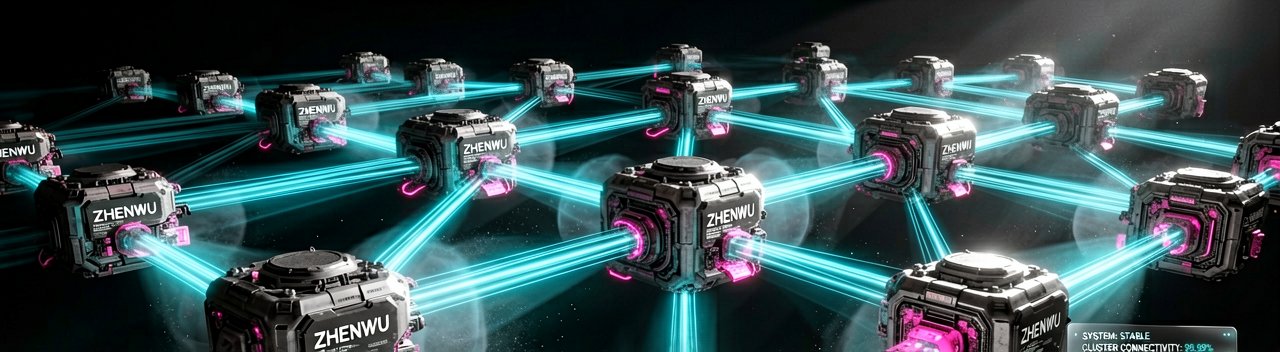
Deploying the Zhenwu processors as interconnected cloud supernodes resolves the critical issue of scaling raw hardware to meet enterprise-grade LLM demands. With massive volumes of Zhenwu chips already distributed across corporate clients spanning multiple industries, the introduction of rack-scale public cloud configurations offers scalable computational density. This paradigm shift provides enterprises with a viable infrastructure pipeline to train and run complex AI agents without facing hardware availability bottlenecks or geopolitical compliance risks.
Behind the Scenes of the Silicon Counter-Offensive
A Quiet Revolution in the Data Center: For nearly a decade, the primary barrier preventing cloud providers from moving away from Nvidia's hardware was not the silicon itself, but the massive, developer-entrenched software ecosystem surrounding it. Alibaba's decision to open-source the Software Architecture Innovation Layer (SAIL) represents a tactical acknowledgement that matching raw flops is meaningless without software parity. By making the compilation tools and runtime libraries freely accessible, the company is attempting to lower the switching costs that have traditionally kept global enterprises bound to a single vendor's architecture.
The roll-out of the Zhenwu cloud supernodes marks a significant departure from standard public cloud scaling methodologies. Instead of simply packing individual chips into commodity servers, this architecture abstracts entire data center racks into cohesive, hyper-connected computational nodes. Internal engineering priorities at Alibaba indicate this design was explicitly optimized to mitigate inter-node latency bottlenecks, which typically plague distributed training across non-homogenous hardware clusters. The resulting system presents a unified memory and compute footprint tailored for the massive context windows required by modern agentic workflows.
From a macroeconomic perspective, this dual infrastructure release serves as a domestic safety valve and a blueprint for global technology export. As tightening international trade restrictions limit the physical distribution of high-end GPUs, providing a highly scalable, software-compatible alternative allows local enterprise clients to maintain their AI deployment timelines. Simultaneously, by deploying these solutions through public cloud nodes, Alibaba circumvents supply-chain friction, offering international developers a highly competitive, plug-and-play machine learning environment that bypasses geopolitical bottlenecks entirely.

The long-term success of this initiative hinges on organic developer adoption rather than top-down corporate mandates. Tech journalists and industry analysts note that open-sourcing the software stack invites global contributions to optimization libraries, effectively crowdsourcing the refinement of the SAIL ecosystem. If developer momentum builds, it could systematically erode the proprietary software advantages currently holding the global cloud infrastructure market captive, shifting the industry toward a multi-polar, commodity-silicon future.
Reading Between the Lines: The Friction of Open-Source Sovereignty
The Realities of the Software Moat: While the open-sourcing of the Software Architecture Innovation Layer (SAIL) is framed as a democratic victory for the global developer community, a profound architectural contradiction remains unaddressed. Open-source software is only as valuable as the hardware ecosystem it supports, and Alibaba’s T-Head silicon remains tightly bound to specific fabrication limitations and regional supply chains. Eradicating Nvidia’s software lock-in on paper does not magically manufacture advanced nodes or solve the underlying yield-rate challenges facing next-generation domestic lithography.
Furthermore, the claim that enterprise developers can fully transition complex machine learning workloads to the Zhenwu architecture in under seven days deserves measured skepticism. Historically, cross-platform compilation layers introduce optimization penalties that degrade hardware efficiency during massive distributed training runs. Enterprise engineering teams may find that while code runs without throwing errors, the real-world compute costs and energy overhead required to match native performance on standard architectures negate the initial savings of a cheaper cloud node.
The deployment of Zhenwu cloud supernodes also exposes a strategic paradox for Alibaba's international cloud ambitions. By heavily optimizing infrastructure around local workloads to bypass Western trade restrictions, Alibaba risks creating a highly localized ecosystem that operates in a silo. Global enterprises operating across fragmented compliance frameworks face the daunting task of maintaining split codebases—one optimized for standard international hardware, and another heavily tailored for Alibaba's proprietary cluster architecture.
Ultimately, a silicon monopoly cannot be dismantled solely by making the blueprint public; it requires sustained infrastructure investments that few enterprises outside hyperscalers can comfortably absorb. Open-sourcing code distributes the engineering burden, but it also shifts the responsibility of troubleshooting and stability onto the community. Until Alibaba can prove that its cloud supernodes can run multi-month training jobs without hardware failure or severe compiler degradation, the enterprise market will likely view this release as a highly sophisticated hedging strategy rather than an immediate replacement for the industry standard.
Breaking a silicon monopoly by giving away the instructions is a bit like giving out free recipes for gourmet meals while the other guy still owns the only grocery store in town; you can write all the cookbooks you want, but at some point, you still have to figure out where to buy the ingredients.
Artūras Malašauskas is an AI Systems Integrator with 20+ years of production-grade web engineering experience. He has designed, shipped, and scaled enterprise Python/PHP systems for logistics, SaaS, and public-sector clients. For the past year, he has focused exclusively on AI integrations: deploying open-source LLMs, building generative media pipelines (image, audio, video), and engineering multi-agent workflows for real production environments. His standard: reproducibility, security, cost-efficient inference—no vaporware. He documents and evaluates emerging AI tooling, separating verified capabilities from marketing noise. Technical editor at: muza-ai.eu, ai-verslas.lt, ai-naujinos.lt Connect on LinkedIn
Comments