Samsung SDS and FuriosaAI Pioneer South Korea's First Sovereign AI Cloud with NPU-as-a-Service Debut
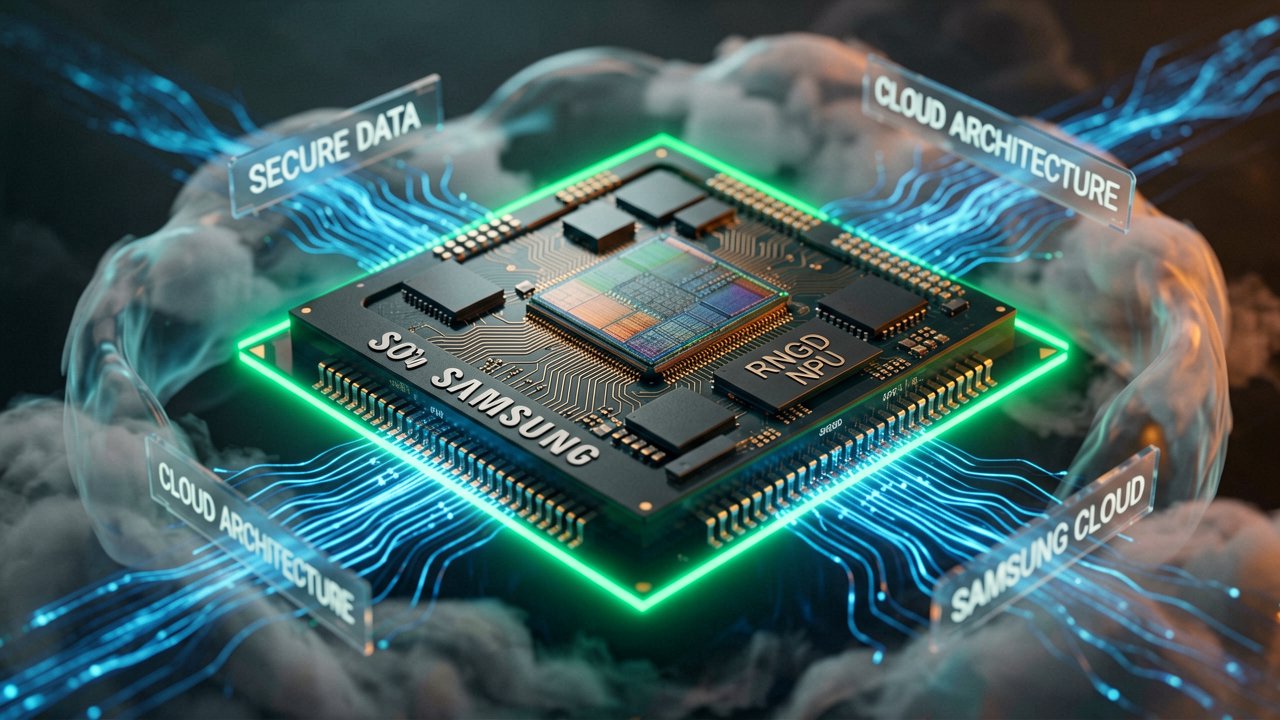
Samsung SDS has officially launched South Korea’s first commercial Neural Processing Unit as a Service (NPUaaS) on the Samsung Cloud Platform (SCP), marking a decisive step forward for the nation's domestic AI ecosystem. Developed in close strategic partnership with local hardware innovator FuriosaAI, this flexible subscription model deploys the startup's second-generation "RNGD" (Renegade) NPU to deliver high-performance, cost-effective inference capabilities. By enabling enterprise clients to scale specialized workloads without the capital expenditure of building proprietary data centers, Samsung SDS is positioning itself as a vanguard of specialized silicon in an era defined by hardware constraints and escalating operation costs.
The introduction of NPUaaS represents a broader strategic shift in the cloud industry as providers seek to overcome the pricing and availability bottlenecks associated with traditional Graphics Processing Units (GPUs). Optimized explicitly for deep learning inference tasks—such as live text generation, complex document analysis, and rapid image classification—FuriosaAI’s RNGD architecture yields superior energy efficiency and price-to-performance metrics compared to traditional hyperscale accelerators. By complementing its existing GPU-as-a-Service (GPUaaS) infrastructure with custom silicon, Samsung SDS provides enterprise customers, ranging from agile tech startups to mature conglomerates, with highly granular scaling options of one, two, four, or eight NPU configurations integrated seamlessly with high-speed networking and storage.
Crucially, Samsung SDS is anchoring this roll-out within its secure sovereign cloud architecture to target public sector organizations and heavily regulated industries. By insulating critical AI operations from foreign data infrastructure risks and ensuring compliance with stringent domestic regulatory frameworks, the partnership builds an essential foundational layer for South Korea's independent data sovereignty. This commercial deployment establishes a clear roadmap for localized AI infrastructure, proving that domestic hardware and cloud platforms can collaboratively challenge global hyperscale monopolies while simultaneously securing local public-sector workloads.
Breaking the GPU Monopoly via Inference Optimization
The macroeconomic backdrop of the AI sector is characterized by an unsustainable reliance on mainstream GPU clusters, which face prolonged supply delays and astronomical power requirements. This NPUaaS framework circumvents these bottlenecks by decoupling the inference phase of machine learning from training-optimized accelerators. Because the vast majority of enterprise AI operating expenditures are swallowed by running already-trained models in live production environments, deploying an NPU like the RNGD—tailored exclusively for high-throughput, low-latency inference—drastically lowers total cost of ownership. The underlying scalability ensures that companies can avoid over-provisioning infrastructure, a critical financial advantage as enterprise corporate budgets face stricter scrutiny regarding AI returns on investment.
Sovereign Cloud as a Catalyst for Public Sector AI Adoption
Beyond pure performance metrics, the deployment of this service within the sovereign cloud layer of the Samsung Cloud Platform addresses a long-standing roadblock for government and public-sector cloud transformation. Public institutions subject to rigorous national security data mandates have historically been hesitant to leverage public cloud frameworks for processing proprietary institutional information. Offering hardware-accelerated deep learning capabilities inside a strictly localized compliance boundary unlocks a massive, previously restricted market. According to statements detailing the launch featured by Chosunbiz, this sovereign framework serves as a major turning point for nationwide AI proliferation, ensuring that essential public infrastructure can capitalize on modern transformer models securely.
A Benchmark Model for Domestic Silicon Ecosystems
The collaborative milestone achieved by Samsung SDS and FuriosaAI provides a vital blueprint for secondary technology markets striving to establish semiconductor independence. While design firms can create competitive architecture on paper, true market disruption requires deep integration into reliable, enterprise-grade cloud platforms. As documented by Pulse News, this alliance bridges the gap between hardware fabrication and practical cloud accessibility, allowing enterprise clients to bypass server procurement entirely. Ultimately, this structural evolution validates South Korea's localized supply chain capability, creating a robust framework where domestic chip architecture directly fuels national cloud infrastructure, reducing dependency on external chip supply chains.
Behind the Scenes of South Korea’s Silicon Sovereignty
The transition from abstract semiconductor designs to a fully scalable cloud architecture requires overcoming a major, often invisible industry bottleneck: software stack readiness. While many emerging hardware developers can manufacture high-performance silicon on paper, they frequently falter when trying to build the robust software environments required by modern cloud providers. This deployment underscores how FuriosaAI bypassed this historical pitfall by engineering its software stack to fully support standard machine learning frameworks right out of the gate. By ensuring seamless compatibility with dominant enterprise tools like PyTorch and Hugging Face, Samsung SDS succeeded in integrating the RNGD chip into its existing Samsung Cloud Platform environment without forcing corporate clients to extensively rewrite their legacy AI codebases.
From a stakeholder perspective, this partnership serves as a high-stakes validation of South Korea’s aggressive K-Cloud initiative. For years, the Ministry of Science and ICT has funneled strategic investments into the domestic semiconductor sector, aiming to foster viable local alternatives to global hardware monopolies. By choosing FuriosaAI as a key infrastructure provider, Samsung SDS has elevated the startup from an ambitious fabless design house to a verified enterprise-grade vendor. This validation is critical for the broader domestic ecosystem, as it proves to skeptical corporate boards that locally produced neural processing units can reliably handle continuous, heavy enterprise data center workloads without unexpected downtime or systemic integration failures.
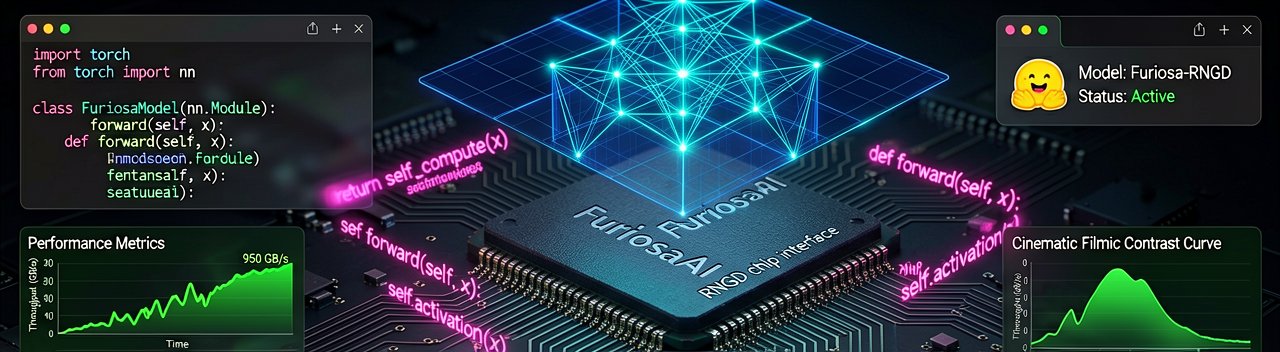
Historically, hyperscale data centers have been restricted by the massive, unsustainable power requirements of traditional graphics processors, which frequently push local electrical grids to their absolute limits. The deployment of this specialized NPU service tackles this environmental and economic crisis by focusing strictly on energy efficiency per watt during deep learning inference tasks. Enterprise early adopters are finding that they can run large language models and complex computer vision workloads at a fraction of the power consumption typically demanded by legacy clusters. This drastic reduction in overhead allows Samsung SDS to offer highly competitive, predictable subscription rates, shielding corporate clients from the volatile, unpredictable pricing spikes currently plaguing the global GPU rental market.
Looking ahead, the long-term impact of this infrastructure roll-out extends far beyond the immediate boundaries of the domestic tech market. By establishing a fully localized, vertically integrated AI pipeline—spanning from FuriosaAI’s custom architecture to Samsung’s sovereign cloud hosting—South Korea is building a resilient blueprint for technological self-reliance. This framework offers a reliable safety valve against geopolitical supply chain disruptions and international export restrictions, ensuring that the nation's critical public services, financial networks, and industrial sectors can continue to innovate safely on an entirely independent technical foundation.
Reading Between the Lines of the Local Silicon Surge
While the marketing narrative surrounding South Korea’s NPU-as-a-Service emphasizes immediate independence from the global GPU duopoly, the financial reality of cloud infrastructure demands a more pragmatic assessment. Hyperscale clouds thrive on broad, multi-tenant utility, whereas specialized neural processing units like the RNGD chip are fundamentally constrained by their architectural focus. By optimizing purely for deep learning inference, Samsung SDS is placing a significant bet that enterprise clients are ready to decouple their machine learning pipelines, splitting training workloads from live production runs. If corporate developers resist this bifurcated workflow due to the added operational friction of managing distinct hardware ecosystems, the commercial viability of this sovereign NPU cluster could face underutilization challenges.
Furthermore, an inherent contradiction exists between the pursuit of absolute technological sovereignty and the global realities of the semiconductor supply chain. Fabricating an advanced NPU requires utilizing overseas foundries and integrating international high-bandwidth memory standards, meaning that true local isolation remains an engineering impossibility. Labeling a cloud platform as entirely sovereign provides regulatory comfort to public sector agencies, yet it does little to shield the underlying physical infrastructure from global macroeconomic shocks or foreign component bottlenecks. This interdependence underscores that while software integration and data storage can be legally ring-fenced within South Korean borders, the physical hardware layer remains deeply tethered to the global technology supply network.
The long-term success of this initiative will ultimately be decided not by raw teraflops or government subsidies, but by developer inertia. For nearly a decade, the global AI engineering talent pool has been deeply entrenched in proprietary GPU software ecosystems, making the migration to alternative NPU runtimes a costly human-capital calculation. Samsung SDS and FuriosaAI must convince engineering teams to look past their familiar optimization routines and embrace a new architectural stack. If the cost-to-performance savings do not drastically outweigh the engineering hours required to adapt, port, and continuously test enterprise models on localized silicon, this sovereign cloud offering risks becoming a highly specialized niche tool rather than a mass-market catalyst.
Building a completely sovereign AI infrastructure is remarkably similar to brewing your own craft beer at home: it is undeniably a triumph of local independence, an impressive technical feat, and an excellent way to avoid paying premium global prices—right up until you calculate the sheer volume of labor required to make it taste exactly like the mainstream alternative everyone is already used to.
Artūras Malašauskas is an AI Systems Integrator with 20+ years of production-grade web engineering experience. He has designed, shipped, and scaled enterprise Python/PHP systems for logistics, SaaS, and public-sector clients. For the past year, he has focused exclusively on AI integrations: deploying open-source LLMs, building generative media pipelines (image, audio, video), and engineering multi-agent workflows for real production environments. His standard: reproducibility, security, cost-efficient inference—no vaporware. He documents and evaluates emerging AI tooling, separating verified capabilities from marketing noise. Technical editor at: muza-ai.eu, ai-verslas.lt, ai-naujinos.lt Connect on LinkedIn
Comments