ProtoPie’s Native MCP Support Bridges the Chasm Between Human Design Precision and AI ‘Vibe-Coding’
The rapid rise of AI-driven generation has fundamentally changed how software products are conceptualized, giving birth to an era of "vibe-coding" where natural language prompts instantly yield interactive elements. However, this shift has also introduced a critical friction point: while artificial intelligence can generate layouts in seconds, it frequently struggles with precise interaction logic, micro-interactions, and preserving exact brand intent. In an ambitious strategic move to address this gap, ProtoPie has announced native integration for the open-source Anthropic Model Context Protocol (MCP), creating a bidirectional standard that merges automated velocity with absolute human design control.
This integration marks a vital infrastructure evolution for digital product design. Instead of forcing AI agents to guess interaction rules from superficial pixel screenshots or vague text documentation, the native protocol exposes a structured, highly predictable representation of the prototype’s internal mechanics directly to the model. Software development tools and coder agents can now query, understand, and refine complex behaviors without breaking the core system architecture, establishing a definitive framework where designers dictate systemic boundaries while AI handles iterative engineering tasks.
The Structural Shift from Approximation to Protocol-Driven Logic
Historically, the handoff between design environments and engineering has been plagued by translation errors. In the current market, tools like Figma Make, Cursor, and v0 have successfully popularized rapid, generative front-end prototyping, but scaling those models into production-grade systems often results in endless review cycles. ProtoPie’s deployment of MCP alters this dynamic by establishing what the company terms a "lower floor and higher ceiling" for design teams. By operating as a standardized contextual gateway, the integration ensures that an AI agent reads the true interactive model of a prototype, preserving granular human-engineered triggers and responses rather than generating detached approximations.
Studio MCP and the Rise of the Hybrid Design Ecosystem
The operational framework of this release introduces a "Bring Your Own Model" (BYOM) workflow divided into distinct architectural pillars. Through Studio MCP, designers can link their preferred external development environments—including Claude Code, Cursor, and Codex—directly into the prototyping workspace. This allows teams to instantly scaffold intricate micro-interactions through conversational syntax while retaining direct override privileges over the resulting code. By decoupling the generative engine from rigid, proprietary AI environments, the platform secures specialized flexibility, allowing organizations to substitute foundational large language models as the underlying technology market matures without rewriting their integration layers.
Market Impact on Frontend Handoff and Engineering Velocity
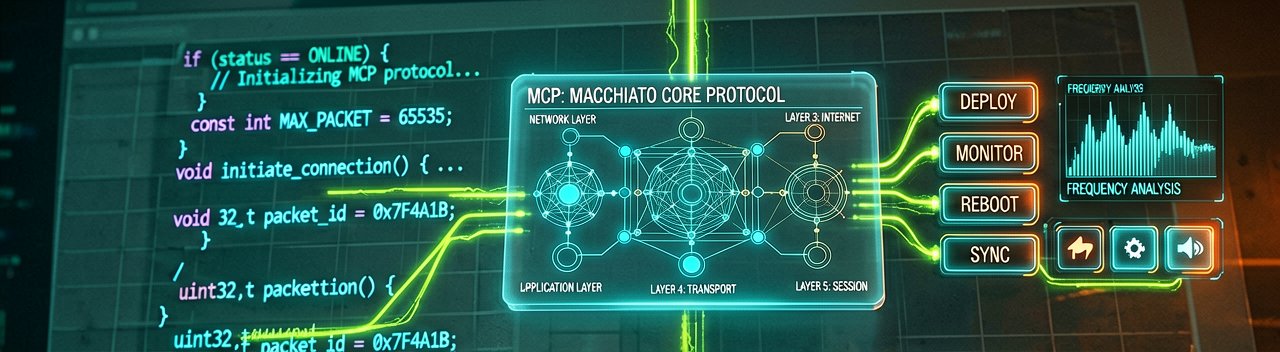
From a broader market perspective, this deployment moves design operations away from isolated files toward interconnected data ecosystems. By leveraging MCP’s standardized client-server pattern, product teams eliminate the need to write custom integration APIs for every distinct generative tool introduced to their workflow. Production-ready logic can be fed directly to engineering agents, significantly shrinking the engineering timeline from weeks to hours. Ultimately, this integration proves that the future of design tooling does not belong to completely automated, unchecked AI generation, but rather to unified protocols that amplify human precision with machine speed.
Deep-Dive: Protocol-Driven Design vs. Generative Chaos
What Most Reports Miss: The integration of the Model Context Protocol (MCP) into design tooling is not merely a feature release; it is a defensive fortification for the design profession itself. As generative AI models began outputting functional code from simple prompts, a growing anxiety permeated design departments that pixel-perfect precision was being traded for sheer speed. Silicon Valley's recent infatuation with "vibe-coding" often results in applications that look acceptable at first glance but fail fundamentally on UX edge cases, accessibility standards, and state management. ProtoPie's shift toward a protocol-driven framework acknowledges that while AI is an exceptional copilot for generating variations, it lacks the contextual empathy required to map complex human interactions without a rigid source of truth.
From an architectural standpoint, the traditional handoff process has always been the weakest link in product development. Designers build micro-interactions in a sandbox, engineers approximate those animations in code, and product managers audit the delta between the two. When generative AI agents are inserted into this broken pipeline, they amplify the chaos by introducing non-standard code structures that human developers must later untangle. By establishing an open client-server data channel via MCP, ProtoPie transforms the prototype from an isolated visual artifact into a live, queryable database. AI models no longer guess what a "swipe-to-delete" action should feel like; they read the precise mathematical velocity and spring dynamics directly from the protocol layer.
Engineering leaders are viewing this development as a critical step toward true deterministic AI assistance. In typical enterprise workflows, introducing an LLM to a codebase introduces regression risks, as the model cannot easily map visual design intent to structural code logic. Early feedback from engineering teams utilizing the new protocol highlights a drastic reduction in alignment meetings. Because the AI is bound by the parameters exposed through ProtoPie’s MCP server, it acts as a stabilizing force rather than an unpredictable agent, generating frontend code that natively respects the design tokens, conditional logic, and variables established by the human designer.
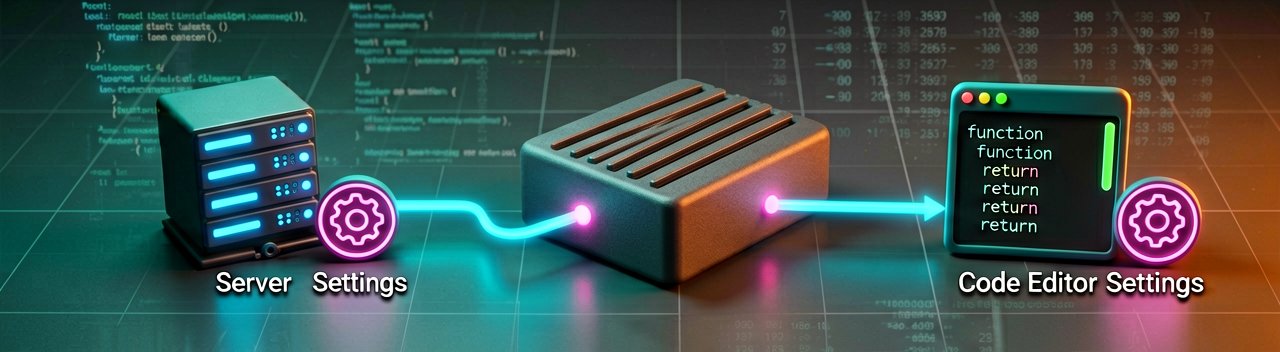
Looking at the broader historical trajectory of design software, the industry has spent decades oscillating between visual-first tools and code-first environments. The arrival of native MCP support represents a synthesis of these two philosophies. It respects the visual intuition of the designer while providing the structured API surface that modern AI models require to be genuinely useful. By shifting the focus from text-to-image prompts to protocol-driven logic editing, the industry is moving away from the superficial "vibe" of AI generation and entering a mature phase of deterministic, AI-assisted product engineering.
The Friction of Standardization and the Illusion of Autonomy
Reading Between the Lines: The industry’s rush to adopt the Model Context Protocol (MCP) masks a fundamental paradox: we are building highly sophisticated infrastructure to help AI understand design systems, yet the ultimate goal of "vibe-coding" is to bypass rigid systems altogether. Proponents argue that native protocols will liberatingly free designers from tedious handoff documentation. However, this assumption collapses if the underlying large language models remain prone to semantic drift. An AI agent might perfectly parse ProtoPie's structural data channel, but interpreting a designer’s subtle micro-interaction intent still relies on probabilistic guesswork, threatening to replace traditional engineering handoff friction with a new era of prompt-debugging fatigue.
Furthermore, this integration exposes a glaring contradiction in how modern product teams define velocity versus quality. By establishing a bidirectional gateway, ProtoPie assumes that engineering teams and AI agents are ready to treat prototypes as production-grade state machines. In reality, most enterprise development pipelines treat high-fidelity prototypes as throwaway design artifacts. Forcing an AI model to maintain absolute fidelity to a prototype's internal logic could inadvertently reintroduce the very development bottlenecks that generative tools were supposed to eliminate, shackling rapid code generation to the speed of deliberate, human design cycles.
Projecting the long-term market implications reveals a precarious shift in professional leverage. While this protocol-driven ecosystem safeguards design precision in the short term, it simultaneously creates a highly structured training loop for the next generation of software models. By cleanly mapping visual interactions to deterministic logic layers, design teams are actively providing the clean, contextual data that AI vendors need to automate increasingly complex UX decisions. The very tools built to protect human control may ultimately optimize the algorithms that make independent human design oversight a luxury rather than a necessity.
The supreme irony of the generative era is that in our frantic race to let AI design and code everything with a simple 'vibe,' we have ended up inventing stricter protocols, tighter guardrails, and more rigorous documentation standards than the human teams ever bothered to follow in the first place.
Artūras Malašauskas is an AI Systems Integrator with 20+ years of production-grade web engineering experience. He has designed, shipped, and scaled enterprise Python/PHP systems for logistics, SaaS, and public-sector clients. For the past year, he has focused exclusively on AI integrations: deploying open-source LLMs, building generative media pipelines (image, audio, video), and engineering multi-agent workflows for real production environments. His standard: reproducibility, security, cost-efficient inference—no vaporware. He documents and evaluates emerging AI tooling, separating verified capabilities from marketing noise. Technical editor at: muza-ai.eu, ai-verslas.lt, ai-naujinos.lt Connect on LinkedIn
Comments