A New Gravity: How the Shanghai Accord is Redrawing the Map of Global AI Governance
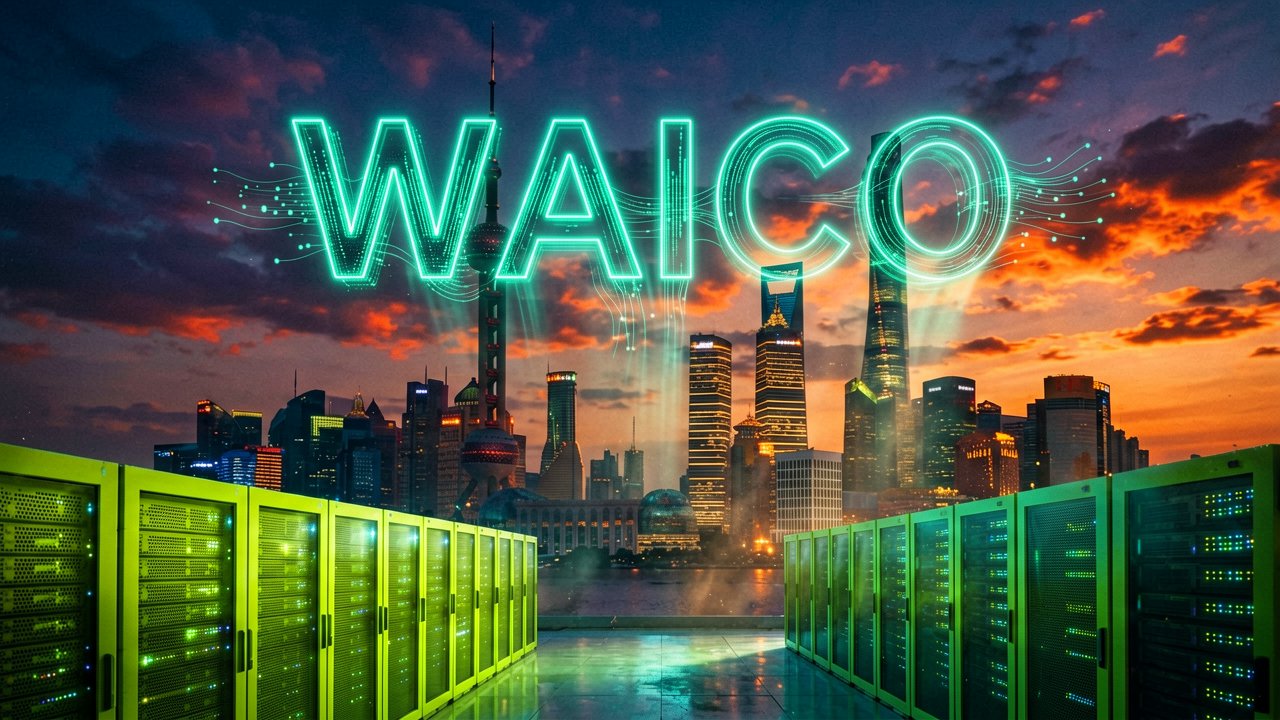
The geopolitical race to govern artificial intelligence just took a massive leap outside Western corridors. In Shanghai, 29 nations officially signed an agreement to establish the World Artificial Intelligence Cooperation Organisation (WAICO), a brand-new, independent intergovernmental body dedicated to rewriting how the world manages thinking machines. By anchoring this permanent institution in China's tech capital, the treaty effectively challenges the traditional monopoly Western coalitions have held over technology standard-setting.
The formal signing ceremony took place on July 16, 2026, strategically timed on the eve of the annual World Artificial Intelligence Conference. Chinese Foreign Minister Wang Yi signed the accord alongside high-ranking delegates from across the Global South and the Eurasian hemisphere, including representatives from Russia, Pakistan, Indonesia, Brazil, and Kazakhstan. Even United Nations Secretary-General António Guterres was present at the signing, underscoring the serious multilateral weight this new organization intends to carry.
Flipping the Script from Risk to Development
For the past few years, Western-led governance frameworks have behaved like exclusive clubs. They focus heavily on containment, strict risk mitigation, and ideological values tests before anyone can get a seat at the table. WAICO is intentionally designed as the mirror image. According to analysis published by the arXiv / Cornell University repository, the organization operates without a values test at the door, choosing instead to focus entirely on technology transfer, capacity building, and closing the massive digital divide plaguing developing nations.
This approach flips the narrative for countries that feel left behind by Silicon Valley's dominance. Rather than being mere "rule-takers" bound by external laws, members are being courted as "co-creators" of a sovereign-first digital ecosystem. As reported by Al Jazeera , analysts anticipate that Beijing will leverage this 29-nation caucus to build unified voting blocs, directly shaping how future artificial intelligence policies and ethical frameworks are voted on inside the United Nations.
A Symphony of Institutional Diplomacy
This is not just another toothless international committee or a temporary talking shop. This represents a highly coordinated transition from merely broadcasting high-minded principles to constructing physical, permanent infrastructure. The founding charter establishes a fully functional, standing international body complete with a dedicated Council, a permanent Secretariat, and a network of specialized technical cooperation centers.
As detailed by the Global Times, the organization's charter explicitly aligns itself with the principles of the UN Charter, leaning on a mechanism of extensive consultation and a "people-centered approach." However, the real test of its power lies in the voting mechanics. Rather than allowing a single powerful nation to wield an absolute veto, decisions within the organization will be decided by consensus or a two-thirds majority vote, ensuring its members feel a sense of genuine, equal equity.
By bypassing the usual Western tech regulatory channels, these 29 founding nations have established a secondary center of gravity for global technology policy. The creation of this block signals that the future of computing will no longer be dictated by a single hemisphere.
Behind the Curtain of the Digital Non-Aligned Movement
Beneath the Strategic Surface: The formation of the World Artificial Intelligence Cooperation Organisation is far more than a reactionary geopolitical maneuver; it represents the structural codification of a Digital Non-Aligned Movement. For nearly a decade, middle powers across Southeast Asia, Latin America, and Central Asia have voiced quiet frustration over the bipolar tech hegemony exerted by Washington and Beijing. However, as Western regulatory frameworks like the European Union’s AI Act grew increasingly extraterritorial and restrictive, the calculus shifted. Developing nations realized that compliance with Western ethical mandates often meant trading away their own domestic technological self-determination, forcing them to seek an alternative institutional umbrella.

This institutional shift exposes a fundamental divergence in how the Global North and Global South view the immediate threats of the algorithmic age. While Washington and Brussels remain hyper-focused on existential risks, copyright protections, and the theoretical dangers of artificial general intelligence, the founding members of WAICO face immediate, material challenges. For a country like Indonesia or Kazakhstan, the pressing issues are data sovereignty, localized large language models that reflect regional cultures, and affordable access to advanced compute infrastructure. Shanghai successfully capitalized on this gap by framing its new organization not as a restrictive police force for algorithms, but as a practical clearinghouse for technology transfer.
The Compute Diplomacy Dilemma
By establishing a permanent Secretariat and technical cooperation centers, China is essentially operationalizing "compute diplomacy." Member nations are betting that this alliance will grant them preferred access to manufacturing pipelines, open-source models, and cloud infrastructure that are increasingly choked off by Western sanctions and export controls. For Beijing, the benefit is equally tangible. By anchoring 29 economies to a Chinese-standardized technological baseline, it creates a massive, unified market for its own hardware and enterprise software, effectively neutralizing Western containment strategies through sheer market scale.
Yet, maintaining cohesion among 29 disparate nations with vastly different economic priorities will test the limits of this new diplomatic architecture. While the charter guarantees equal voting equity and rejects unilateral vetoes, the asymmetrical economic reality remains inescapable. Smaller member states will have to walk a razor-thin tightrope, balancing their participation in Shanghai’s ecosystem with their ongoing commercial dependencies on Silicon Valley tech giants. If the organization leans too heavily toward ideological posturing rather than practical engineering support, it risks fracturing before its specialized technical centers can even log their first server hours.
Ultimately, this treaty marks a point of no return for the fragmentation of the global internet. The era of a single, universally accepted framework for technological governance is drawing to a close, replaced by regional spheres of computational influence. As these 29 nations begin setting up their administrative offices in Shanghai, they are drawing a clear line in the sand, proving that the rules of the next industrial revolution will be written in more than one language and enforced from more than one hemisphere.
The Friction Between Consensus and Sovereign Reality
Reading Between the Lines: The lofty rhetoric of a democratic, "sovereign-first" digital alliance inevitably collides with the messy realities of asymmetric power. While the founding charter proudly champions equal voting equity and a consensus-driven approach, a glaring contradiction sits right at the heart of the organization. A bloc comprising nations with vastly divergent computational capabilities cannot truly operate as an alliance of equals. When the servers are spinning, the country providing the underlying hardware, the underwater cables, and the multi-billion-dollar foundation models will always hold the real veto, regardless of what the official rulebook says about two-thirds majorities.
This dynamic exposes a calculated gamble by the smaller signatories, who are effectively trading one form of technological dependency for another. For years, the Global South criticized Silicon Valley for practicing a form of digital colonialism—extracting local data while exporting locked down, Western-centric applications. Yet, by tethering their national AI strategies to an infrastructure heavily subsidized by Beijing, these nations risk locking themselves into a different, but equally restrictive, proprietary pipeline. The promise of open technology transfer looks remarkably different when the core compute infrastructure remains concentrated in a single capital city.
A Fragmented World of Fragmented Weights
Furthermore, the organization's explicit rejection of Western style "values tests" is a double-edged sword that could easily dull its global effectiveness. While skipping ideological alignment makes it remarkably easy to sign up 29 members quickly, it creates a fragile foundation for long-term policy making. An international body that tries to harmonize data-sharing and deployment standards across democracies, autocracies, and varying economic models will inevitably face internal paralysis. When it comes to sensitive deployments like facial recognition, algorithmic labor management, or cross-border data flows, the consensus mechanism is far more likely to produce watered-down, lowest-common-denominator guidelines than actual, actionable standards.
The true test of this new geopolitical bloc will not be its ability to pass grand resolutions at the United Nations, but its capacity to withstand the compounding pressures of global trade restrictions. As Washington watches a massive trading bloc unify around a non-Western tech architecture, the temptation to expand export controls, semiconductor embargoes, and financial sanctions will only grow. The member states of this new organization may soon find that their pursuit of digital neutrality carries a heavy premium, forcing them to choose sides in a technological cold war that they explicitly joined this organization to escape.
Building an international tech alliance to escape Silicon Valley's monopoly is a bit like switching cell phone carriers mid-contract: the marketing promises total freedom, the new network still drops calls in the exact same spots, and deep down, everyone knows you're just paying a different landlord for the exact same data plan.
Artūras Malašauskas is an AI Systems Integrator with 20+ years of production-grade web engineering experience. He has designed, shipped, and scaled enterprise Python/PHP systems for logistics, SaaS, and public-sector clients. For the past year, he has focused exclusively on AI integrations: deploying open-source LLMs, building generative media pipelines (image, audio, video), and engineering multi-agent workflows for real production environments. His standard: reproducibility, security, cost-efficient inference—no vaporware. He documents and evaluates emerging AI tooling, separating verified capabilities from marketing noise. Technical editor at: muza-ai.eu, ai-verslas.lt, ai-naujinos.lt Connect on LinkedIn
Comments