Beyond Static Audits: Why Military AI Demands Continual Governance Frameworks
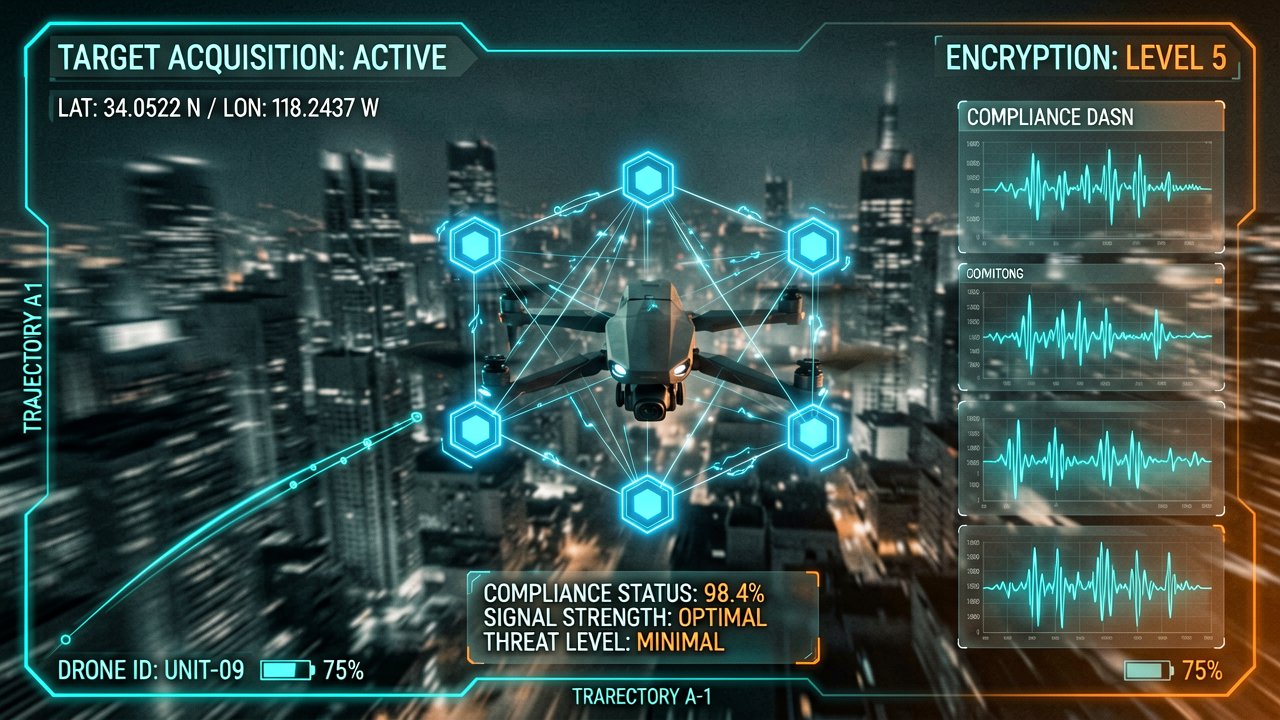
The global defense sector is experiencing an unprecedented surge in algorithmic deployment, with global spending on military artificial intelligence accelerating dramatically from roughly USD 4.6 billion in 2022 to more than USD 10 billion in 2025. This massive capital influx is funding the integration of machine learning into critical command infrastructures, ranging from predictive target generation systems to autonomous cyber capabilities. However, a significant gap is emerging between rapid market commercialization and existing legal compliance systems. Traditional regulatory protocols are proving fundamentally unequipped to manage the fluid, iterative nature of deep learning technologies on the modern battlefield.
At the center of this systemic friction is the traditional Article 36 weapon review protocol mandated by the Geneva Conventions. legal scholars participating in a recent symposium hosted by point out that while these pre-employment legal reviews remain essential, they are entirely insufficient on their own. Conventional military hardware undergoes a static evaluation prior to manufacturing, but software-driven assets evolve continuously through code refactoring, iterative optimization, and shifting operational data profiles. Consequently, a single, upfront legal sign-off cannot predict algorithmic drift or unexpected behavioral anomalies when a system is introduced to an unpredictable theater of war.
To resolve this structural vulnerability, defense analysts and legal experts urge a paradigm shift away from one-off compliance checks and toward comprehensive lifecycle governance. Analysts argue that the broader positive due diligence requirements found within Common Article 1 of the Geneva Conventions offer a more agile, permanent framework for state accountability. This change requires defense contractors and sovereign states to adopt active monitoring mechanisms, continuous training simulations, and real-time oversight pipelines that track a system's target recommendations and security compliance from initial design to active tactical operations.
The Limitations of Article 36 in Algorithmic Warfare
Article 36 reviews were natively designed for static, predictable kinetic weapons like munitions or physical platforms. When applied to machine learning models, pre-fielding reviews fail to account for neural network adaptations or variations in performance caused by environmental friction. Non-signatory nations, such as the United States, often conduct internal legal weapon assessments as a matter of policy rather than treaty obligation, which minimizes global procedural consistency.

Leveraging Common Article 1 for Continuous Compliance
Unlike restrictive weapon clauses, Common Article 1 creates an active, ongoing obligation for states to ensure total respect for international humanitarian law under all conditions. Legal scholars note on that this particular legal foundation provides a natural mandate for regulating software assets that do not fit into conventional weapon definitions. A lifecycle governance model driven by Common Article 1 establishes a framework for continuous data auditing, active bias mitigation, and regular software retraining to eliminate civilian risk.
Market Impact on Autonomous Procurement and Development
As state militaries begin acknowledging that static legal clearance is an insufficient baseline, procurement mandates will shift toward explainable, auditable architectures. Defense technology companies must move beyond proprietary, "black-box" codebases to implement open logging pipelines and transparent validation protocols. Contractors who proactively implement continuous telemetry and automated compliance monitoring will hold a distinct competitive edge as international defense organizations tighten accountability standards.
The Hidden Fault Lines in Algorithmic Procurement
Beneath the Defense Procurement Surface: The push toward comprehensive military AI governance is colliding with the entrenched operational habits of the global military-industrial complex. For decades, defense procurement has relied on a linear model: design a system to rigid government specifications, build a physical prototype, subject it to isolated testing, and sign off on its deployment for a lifecycle that often spans decades. Introducing machine learning into this apparatus shatters that workflow entirely. Because deep learning models rely on continuous data feedback loops to optimize performance, their underlying software logic can shift after a routine security patch or exposure to novel battlefield telemetry, effectively invalidating any static certification achieved at the factory gate.
This dynamic creates a profound disconnect between commercial tech developers and military legal teams. Private sector firms, driven by commercial software engineering practices, prioritize rapid deployment and continuous integration pipelines. They frequently treat their codebases as proprietary black boxes to protect their intellectual property and market advantages. However, military lawyers conducting international humanitarian law assessments require deep transparency to evaluate how a targeting algorithm weighs civilian proximity against military advantage. When tech vendors refuse to expose their training data or neural network weights, state legal reviews are reduced to guesswork, forcing commanders to trust unverified commercial metrics rather than objective legal validation.

Historical precedent reveals that failing to govern adaptive technologies leads to systemic failure in high-friction environments. During the initial deployments of early automated counter-mortar and air defense systems in the late twentieth century, unexpected environmental clutter regularly caused targeting anomalies that required rapid, real-time doctrine modifications. With modern generative and predictive AI, the stakes are exponentially higher because the failure modes are less visible than a physical tracking error. Algorithmic drift can subtly alter a system's probability thresholds over weeks of operational use, gradually introducing biases that a static review could never anticipate or prevent.
Consequently, the call to pivot toward a Common Article 1 governance framework is as much a technical necessity as it is a legal obligation. By establishing continuous data auditing pipelines and automated telemetry logging, state militaries can create a permanent digital audit trail of algorithmic behavior. This approach forces defense contractors to pivot away from monolithic, unalterable software deliveries and toward long-term service agreements focused on continuous verification. Only by treating AI safety as a dynamic, lifelong engineering and legal requirement can sovereign nations meet their humanitarian obligations while adopting next-generation battlefield technologies.
The Accountability Mirage in Autonomous Warfare
Reading Between the Lines: The institutional enthusiasm for building continuous lifecycle governance frameworks frequently ignores a glaring geopolitical contradiction. Sovereign nations routinely pledge adherence to international humanitarian law while simultaneously racing to strip human operators out of the decision-making loop to achieve tactical velocity. Proponents of dynamic auditing argue that continuous data pipelines will guarantee algorithmic compliance with Common Article 1. However, this assumption relies on the idealized premise that state actors will willingly throttle or deactivate an unverified, drifting targeting asset in the middle of a high-intensity peer conflict when doing so means ceding immediate operational supremacy to an adversary.
Furthermore, the defense establishment’s insistence that algorithmic transparency can be engineered into modern warfare overlooks the fundamental nature of neural networks. Western defense departments frequently mandate explainable AI architectures in their procurement guidelines, yet the most capable deep learning models remain inherently probabilistic and opaque. Forcing an enterprise targeting system to operate within rigid, perfectly predictable logical guardrails often degrades the exact adaptive capabilities that make the software valuable to military commanders. This trade-off creates a cynical ecosystem where states can design hyper-transparent systems that are functionally useless, or deploy highly capable black boxes while using superficial compliance telemetry as legal cover.
The geopolitical reality suggests that the transition from static legal reviews to permanent lifecycle oversight will likely fragment international accountability rather than unify it. While a handful of highly regulated democratic states will burden their domestic defense contractors with expensive, continuous compliance frameworks, competing powers are explicitly prioritizing unencumbered algorithmic deployment. This asymmetry disincentivizes genuine adherence to persistent auditing standards, as defense planners fear that stringent, real-time legal interventions will create an operational bottleneck, leaving their forces vulnerable to fully automated, unrestricted adversarial systems.
Ultimately, shifting the legal focus from pre-deployment weapon reviews to ongoing governance risks transforming international law into a reactive post-mortem exercise. Without enforceable, treaty-based constraints on autonomous capabilities, continuous monitoring simply turns legal departments into passive chroniclers of algorithmic errors. The market will undoubtedly deliver sophisticated tracking software and beautifully formatted compliance dashboards to defense ministries, but these tools will merely document the speed of automated warfare rather than constrain its structural excesses.
Militaries around the world are discovering that regulating an evolving neural network is remarkably similar to retrofitting a jet engine mid-flight, except the engine is rewriting its own physics manual every five minutes while the mechanics argue over who holds the liability insurance.
Artūras Malašauskas is an AI Systems Integrator with 20+ years of production-grade web engineering experience. He has designed, shipped, and scaled enterprise Python/PHP systems for logistics, SaaS, and public-sector clients. For the past year, he has focused exclusively on AI integrations: deploying open-source LLMs, building generative media pipelines (image, audio, video), and engineering multi-agent workflows for real production environments. His standard: reproducibility, security, cost-efficient inference—no vaporware. He documents and evaluates emerging AI tooling, separating verified capabilities from marketing noise. Technical editor at: muza-ai.eu, ai-verslas.lt, ai-naujinos.lt Connect on LinkedIn
Comments