The Conversational Paradigm Shift: How SoulVid Translates Casual Chat Into Cinematic Reality
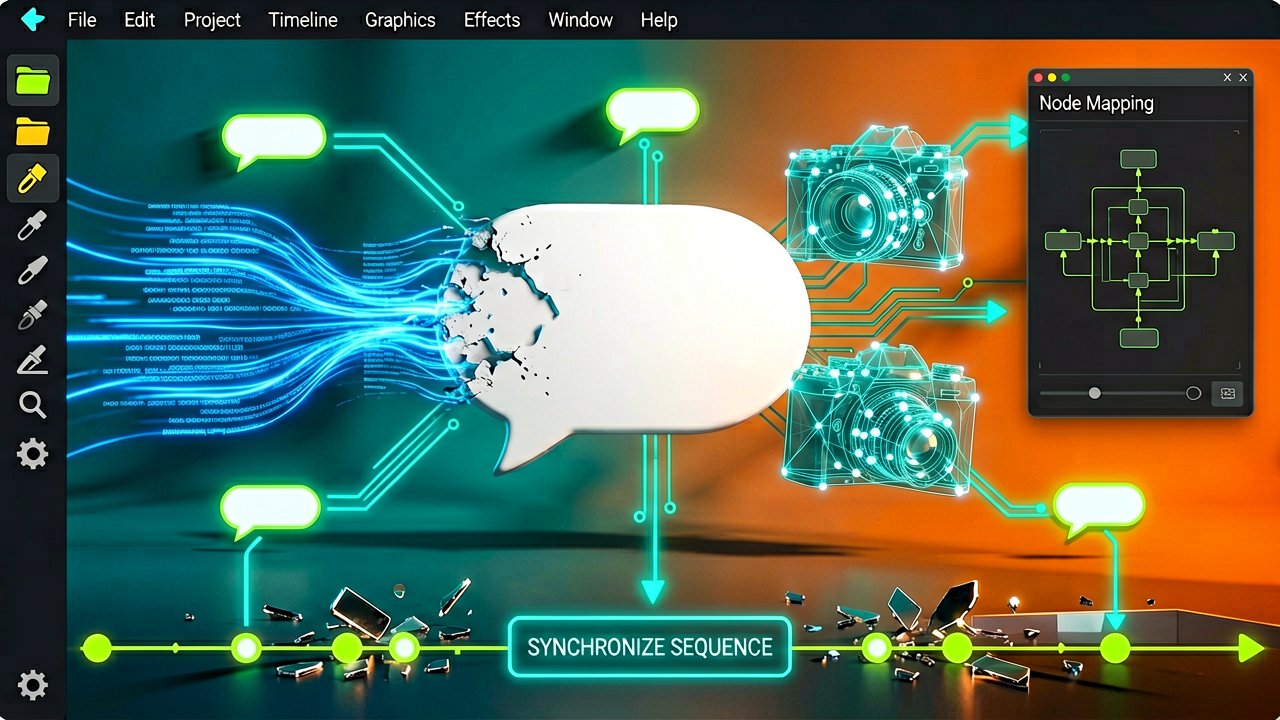
The generative media landscape is undergoing a critical evolution, moving away from hyper-specific prompting systems toward natural human workflows. The official launch of SoulVid represents a significant milestone in this transition. By unifying an entire production crew into a single chat box, the text-to-video artificial intelligence platform successfully bridges the gap between casual dialogue and high-fidelity audiovisual storytelling. Users can transform everyday conversations and simple text chats directly into fully produced short dramas and music videos without managing fragmented creative assets.
This strategic milestone reflects a broader trend documented by industry analytics on platforms like openPR, where end-to-end production tools are quickly becoming foundational components of the digital creator ecosystem. Rather than requiring users to manually coordinate independent AI models for scripts, voices, storyboards, and editing, the current wave of market innovation prioritizes streamlined execution. SoulVid capitalizes on this demand by offering a comprehensive canvas that automates intricate media pipelines into unified, accessible outputs.
Automating Technical Artistry in Generative Video
The core technological disruption lies in the software's ability to interpret casual sentiment and narrative arcs natively. According to feature breakdowns recorded on the App Store, the ecosystem automates complex cinematic decisions, including scene transitions, contextual audio sync, and dynamic camera movements. By lowering the technical barrier to zero skills for polished aesthetics, the tool redirects creator energy away from manual timelines and directly toward foundational concepts and character interactions.
Market Impact and the Democratization of Short-Form Entertainment
As consumer demand for micro-dramas and localized streaming content accelerates globally, platforms that minimize production overhead hold a distinct competitive advantage. By condensing the multi-stage rendering process into a singular conversational workflow, this model challenges traditional software editing paradigms and establishes a new benchmark for speed-to-market. The rapid proliferation of these specialized video generators signals an ecosystem shift where continuous text interaction, rather than complex timeline manipulation, dictates the future of visual content creation.
The Architectural Evolution of Narrative Intelligence
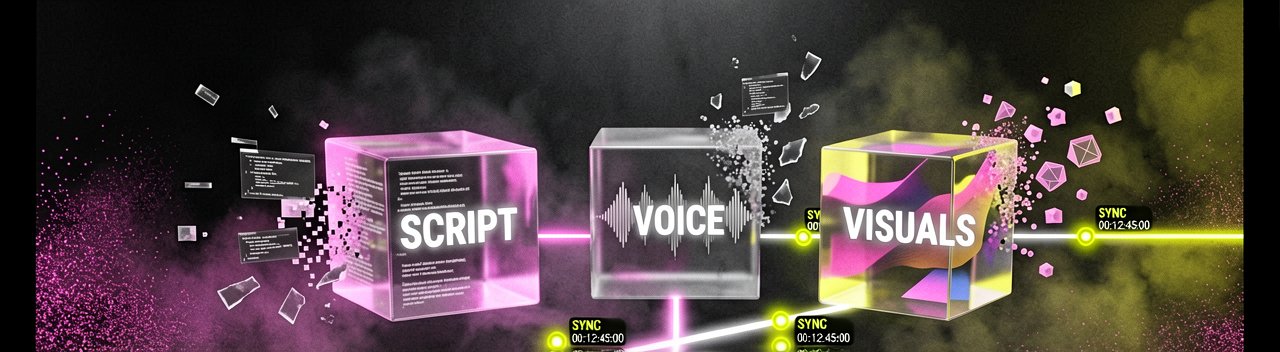
Peeling Back the Interface: The rapid ascent of SoulVid underscores a foundational reallocation of compute power within the generative media sector. For years, the industry remained bottlenecked by the "prompt engineering" paradox, where creating a coherent video required users to possess an intimate knowledge of camera lenses, lighting jargon, and structural timing. By mapping natural, conversational text directly to multi-layered cinematic logic, the platform removes this friction point. This shift represents a transition from superficial pixel generation to deep contextual understanding, allowing the underlying models to infer implicit emotional subtext and pacing without explicit user direction.
This automated synchronization solves a historical pain point that has frustrated independent creators and studio veterans alike. In traditional AI workflows, generating a single scene required jumping between isolated models—one for scriptwriting, another for voice clones, a third for visual assets, and a final suite for sound design. Independent digital entertainment analysts note that this fragmentation caused massive narrative drift, where the visual tone rarely matched the emotional weight of the dialogue. SoulVid circumvents this by treating audio, dialogue rhythm, and visual cinematography as interconnected variables within a singular rendering pipeline.
The implications for the booming micro-drama and short-form entertainment markets are immediate and disruptive. Independent production houses across regions like North America and East Asia are already leveraging these unified pipelines to stress-test scripts and concepts in real-time, bypassing costly storyboard phases. By transforming a casual writers' room chat directly into a rough cut, creators can gauge character chemistry and narrative pacing within minutes rather than weeks. This hyper-acceleration of the pre-production lifecycle is forcing traditional media firms to re-examine their long-term infrastructure investments.
However, this level of automation introduces fresh debates surrounding creative ownership and the homogenizing of digital aesthetics. As the technical barriers to entry dissolve, the digital ecosystem faces a potential deluge of algorithmically optimized content that risks saturating consumer attention spans. Veteran directors observe that while these platforms excel at mimicking established cinematic tropes, the true test of conversational AI will be its capacity to handle unconventional storytelling structures that deliberately break conventional industry rules. The ongoing stabilization of these toolsets marks a distinct era where unique conceptual vision, rather than technical budget, becomes the primary differentiator in digital media.
The Friction Between Automated Scale and Artistic Friction
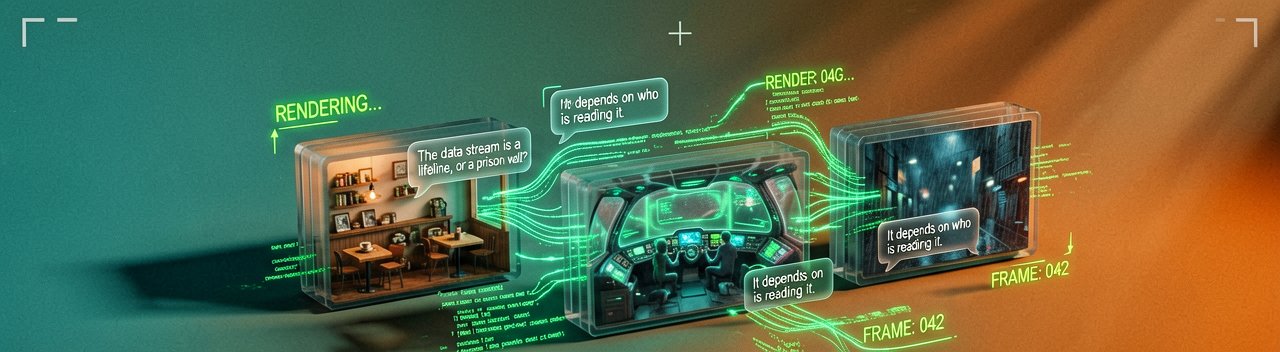
Reading Between the Lines: The celebration surrounding conversational video synthesis routinely overlooks a fundamental paradox of the creative process: art relies on friction, while software optimization demands its total elimination. By converting casual text chats instantly into polished short dramas, platforms like SoulVid operate on the assumption that production bottlenecks are the only things standing between the average user and cinematic brilliance. This framework confuses technical execution with narrative depth, operating on a philosophy where speed and accessibility are treated as identical to quality.
This structural efficiency creates a striking economic contradiction for the creator economy. As the marginal cost of producing a high-fidelity music video or short drama drops to near zero, the market value of the resulting content inevitably experiences a corresponding decline. When anyone can generate a visually flawless sequence using a casual chat interface, visual polish ceases to function as a competitive differentiator. The industry faces an imminent irony where the democratization of cinematic tools leads to a hyper-saturation of hyper-polished, yet emotionally hollow, digital noise that struggles to secure meaningful audience retention.
Furthermore, the long-term viability of this paradigm hinges on a delicate legal and technical tightrope regarding the dataset foundations of generative media. The seamless ability of these systems to mimic established genres, directorial pacing, and complex audio syncing is built entirely on the historical patterns of human artists who spent lifetimes mastering their craft. As copyright frameworks tighten globally, the reliance on automated cinematic logic will require strict compliance standards that could restrict the creative spontaneity these platforms promise, limiting them to safe, heavily recycled corporate aesthetics.
The true disruptive potential of conversational media generation will not be realized by replacing professional production crews, but by rewriting the boundaries of interactive entertainment. The logical evolution of this technology points toward a near-future where passive viewership is replaced by responsive, real-time narrative engines. Audiences will no longer merely watch a pre-rendered drama; instead, their active dialogue with a platform will dynamically spin up bespoke cinematic worlds on the fly, fundamentally altering the relationship between the consumer and the screen.
"We are rapidly approaching an era of absolute democratic cinema, where everyone possesses the power to be a visionary director, which unfortunately means we must also prepare to sit through millions of flawlessly rendered, utterly unwatchable home movies."
Artūras Malašauskas is an AI Systems Integrator with 20+ years of production-grade web engineering experience. He has designed, shipped, and scaled enterprise Python/PHP systems for logistics, SaaS, and public-sector clients. For the past year, he has focused exclusively on AI integrations: deploying open-source LLMs, building generative media pipelines (image, audio, video), and engineering multi-agent workflows for real production environments. His standard: reproducibility, security, cost-efficient inference—no vaporware. He documents and evaluates emerging AI tooling, separating verified capabilities from marketing noise. Technical editor at: muza-ai.eu, ai-verslas.lt, ai-naujinos.lt Connect on LinkedIn
Comments