LumeFlow AI Cracks the Commercial Code with Seedance 2.0 Mini and Native 4K Workflows

The fragmented landscape of synthetic media just took a massive hit, and it is safe to say that workflows will not look the same after this. In a bid to capture both agile social media creators and heavy-duty agency developers, LumeFlow AI has rolled out an expansive platform update centered around ByteDance's formidable video generation technology. By embedding Seedance 2.0 Mini, introducing native 4K video rendering, and deploying a bespoke Marketing Studio, the platform bridges the awkward gap between quick conceptual testing and final-cut commercial production.
Under the hood, the system relies on a unified multimodal audio-video joint generation architecture that handles text, images, and audio clues in a single computing pass. Developers are no longer restricted to linear prompt parsing; the underlying network treats multiple reference inputs with equal weight, synthesizing up to nine images, three video clips, and three audio tracks simultaneously to dictate spatial composition. The technical wizardry translates to massive rendering improvements, with an optimized processing pipeline that spits out hyper-realistic motion paths and synchronized audio up to three times faster than previous frameworks.
From Speed Runs to Cinema Grade
For high-volume pipelines where burn rate and credit conservation matter, Seedance 2.0 Mini acts as the definitive utility tool. It maintains crucial character appearance locks and structural scene consistency across multi-shot sequences without swallowing the computing resources typical of full-scale raw generations. It is an ideal framework for rapid prototyping, social media managers hammering out daily TikTok content, or developers testing immediate prompt mechanics without choking the server queue.
When the workflow demands cinematic scale rather than raw speed, the upgrade to native 4K output transforms the entire production value. According to technical documentation shared by StreetInsider, the upgraded engine records in cinematic 10-bit color depth, delivering granular lighting transitions and shadow preservation that hold up under heavy professional color grading. Fine visual accents—like the specific weave of clothing textures, ambient lighting reflections, and organic hair movement—remain sharp and steady, avoiding the muddy artifacting that routinely plagues upscaled artificial video. Because the native resolution remains pristine, editors can easily crop widescreen compositions into a vertical 9:16 aspect ratio without losing clarity on destination feeds like Instagram Reels or YouTube Shorts.
Automating the Agency Pipeline
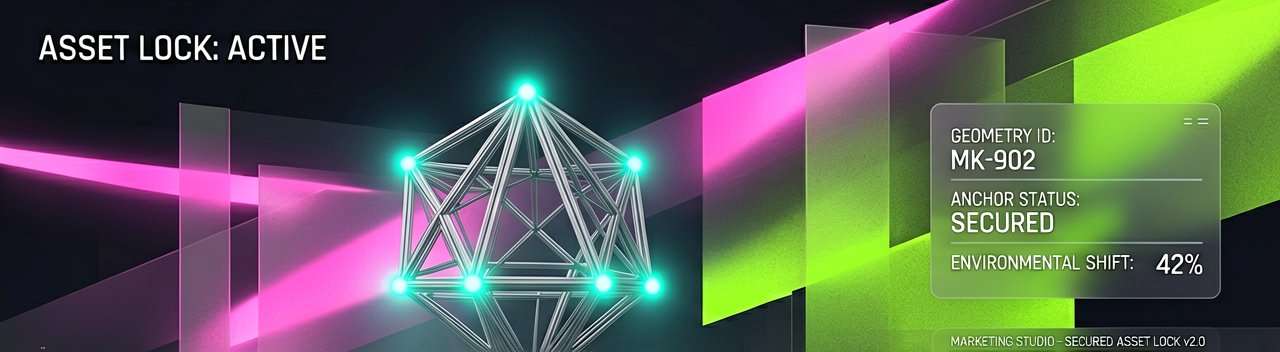
The most functional commercial layer of this release sits inside the new Marketing Studio, which treats physical products as persistent, reusable digital assets. Rather than generating random creative items from scratch with every single run, companies can lock down product geometry and systematically drop it into a variety of user-generated content styles, unboxing simulations, or traditional TV-style commercials. It streamlines the endless, expensive loop of back-and-forth creative testing by allowing developers to anchor structural assets while altering the surrounding narrative with simple prompt adjustments.
Behind the Scenes: The real triumph of this update lies not in the user interface, but in how the platform resolves the staggering compute demands of multi-modal rendering at scale. Standard transformer-based video networks typically choke on memory overhead when handling text, imagery, and multi-channel audio simultaneously, largely due to the quadratic complexity of traditional self-attention mechanisms. LumeFlow mitigates this bottleneck by deploying a decoupled attention architecture within the latent space, processing spatial layout, temporal motion, and auditory signals through parallelized sub-networks before cross-attending them. This keeps the memory footprint linear, allowing the system to digest multiple reference assets without experiencing the catastrophic cache thrashing that normally degrades server performance.
To sustain native 4K processing without causing massive pipeline latency, the engineering team overhauled their diffusion model's latent space decoding. Instead of running a single, massive frame-by-frame VAE decoding pass at the end of the generation cycle, the architecture utilizes a tiled temporal decoder that processes chunks of the video cube concurrently across shared GPU clusters. The engine splits the spatial dimensions into overlapping patches while maintaining a continuous temporal stride, applying a specialized blending kernel that erases boundary seams. This micro-architectural shift prevents VRAM spikes, allowing developers to maintain consistent frame rates and avoid the standard out-of-memory errors that routinely plague heavy commercial rendering jobs.
On the data ingestion side, the platform introduced an intelligent frame-skipping and keyframe-caching layer specifically tuned for the Seedance 2.0 Mini workflow. When processing rapid prototypes, the pipeline dynamically identifies high-motion zones using optical flow vectors, allocating full compute budgets exclusively to complex transitions while using low-cost latent interpolations for static backgrounds. For enterprise applications running through the Marketing Studio, this mechanism acts as a persistent anchor; it locks down the precise structural geometry of a product, allowing the surrounding environmental lighting and camera trajectories to iterate independently without requiring a complete re-calculation of the core asset's voxels.
Optimizing for Edge and Cloud Concurrency
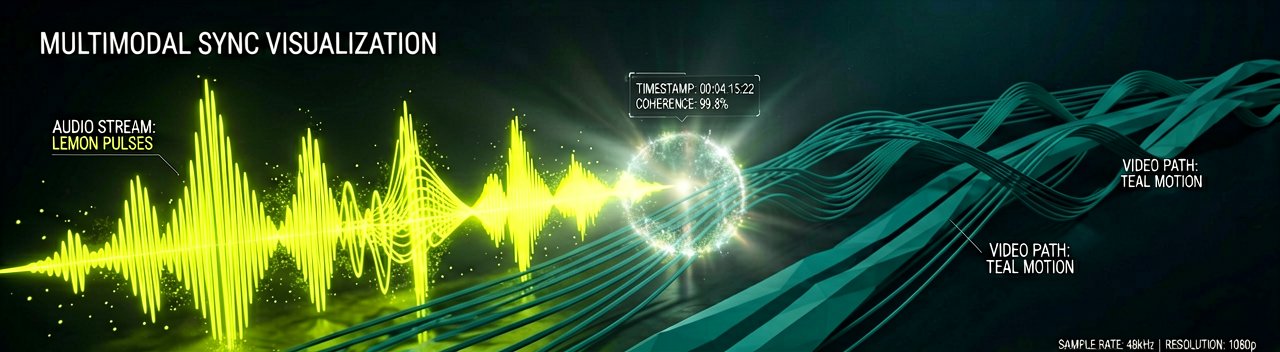
The system also solves the age-old problem of audio-visual drift by moving away from post-generation synchronization methods. Traditional pipelines render video first and then slap audio on top, frequently resulting in a jarring mismatch between on-screen action and background sound effects. LumeFlow forces audio and video tokens to share a unified temporal positional embedding from the very first denoising step, meaning a sudden visual impact and its corresponding acoustic transient are generated as a singular, cohesive event. This deep cross-modal binding ensures that when a product drops onto a surface in a generated commercial, the audio cue snaps to the exact millisecond of impact automatically.
Finally, the backend is built to maximize heterogeneous compute environments, seamlessly shifting workloads between distributed cloud instances and local developer environments. Through an aggressive tensor-slicing framework, heavy FP32 precision calculations are reserved strictly for critical facial mapping and text legibility zones, while the broader environmental geometry utilizes INT8 quantization to accelerate throughput. This balance allows studios to scale their generation pipelines horizontally across cheaper, multi-GPU nodes without sacrificing the pristine, artifact-free visual quality demanded by modern digital distribution networks.
Reading Between the Lines: The industry’s rush to crown this update as an unmitigated victory for democratized production ignores a glaring operational paradox. While engineering breakthroughs like tiled temporal decoding and token-level synchronization look stellar on a technical whitepaper, they inevitably run headfirst into the cold reality of enterprise cloud economics. LumeFlow promises high-efficiency, multi-modal generation that allegedly saves compute overhead, yet native 4K processing remains an absolute resource hog that demands specialized, high-tier GPU clusters. For independent developers and mid-sized agencies, the cost savings of eliminating a physical film crew could easily be cannibalized by soaring API usage fees and subscription tiers required to access these premium rendering nodes.
There is also a fascinating philosophical contradiction at play within the Marketing Studio's core value proposition. The platform explicitly markets its ability to lock down a physical product's geometry while endlessly iterating the surrounding "unboxing" or user-generated content narratives. This attempts to systematically manufacture authenticity—the very quality that makes UGC valuable to consumer audiences in the first place. By turning organic, messy, real-world interactions into automated, mathematically optimized asset injections, brands risk creating an uncanny valley of advertising where everything looks pristine, yet feels entirely hollow to a media-literate public.
Furthermore, relying on a unified multi-modal architecture derived from ByteDance's foundations introduces a quiet undercurrent of platform volatility. As regulatory bodies worldwide continue to tighten oversight on data provenance and algorithmic generation models, enterprise developers risk building their entire content pipeline on shifting geopolitical sands. A studio that restructures its daily output around the Seedance ecosystem could find its infrastructure compromised overnight by sudden policy shifts, compliance mandates, or licensing disputes, proving that in the modern tech stack, architectural elegance means very little without predictable long-term stability.
The Realities of Automated Aesthetics
Beyond economics and geopolitics, the technical reliance on INT8 quantization for background geometry introduces a subtle visual compromise that marketing materials conveniently gloss over. While saving compute by down-sampling environmental details is a clever engineering shortcut, it assumes that the human eye only focuses on the primary product asset. In practice, seasoned creative directors will quickly spot the contrast between a hyper-realistic, precision-rendered product and an ambient background that occasionally suffers from the minor shimmering and texture flattening typical of lower-precision quantization. It creates a tier of content that is perfectly acceptable for a fleeting smartphone screen, but still a long way off from true cinematic parity.
Ultimately, this update shifts the developer's primary bottleneck from technical execution to creative curation. When generating a dozen variations of a commercial takes mere minutes, the real labor moves to sifting through hours of synthetic footage to catch micro-artifacts, warped frames, or off-key audio transients. LumeFlow AI has undeniably built a faster engine, but it has also built a much larger firehose of content that teams must now figure out how to manage, edit, and sanitize before it ever reaches a consumer's feed.
"We are rapidly approaching a future where a single developer can generate an entire global advertising campaign before lunch, leaving them with a pristine 4K video, perfectly synced audio, and the existential dread of spending the rest of the afternoon realizing that the algorithm still cannot quite figure out how a human hand opens a cardboard box."
Artūras Malašauskas is an AI Systems Integrator with 20+ years of production-grade web engineering experience. He has designed, shipped, and scaled enterprise Python/PHP systems for logistics, SaaS, and public-sector clients. For the past year, he has focused exclusively on AI integrations: deploying open-source LLMs, building generative media pipelines (image, audio, video), and engineering multi-agent workflows for real production environments. His standard: reproducibility, security, cost-efficient inference—no vaporware. He documents and evaluates emerging AI tooling, separating verified capabilities from marketing noise. Technical editor at: muza-ai.eu, ai-verslas.lt, ai-naujinos.lt Connect on LinkedIn
Comments