ShengShu Technology Drops Vidu S1: Real-Time Interactive AI Video Shakes Up Consumer GPUs
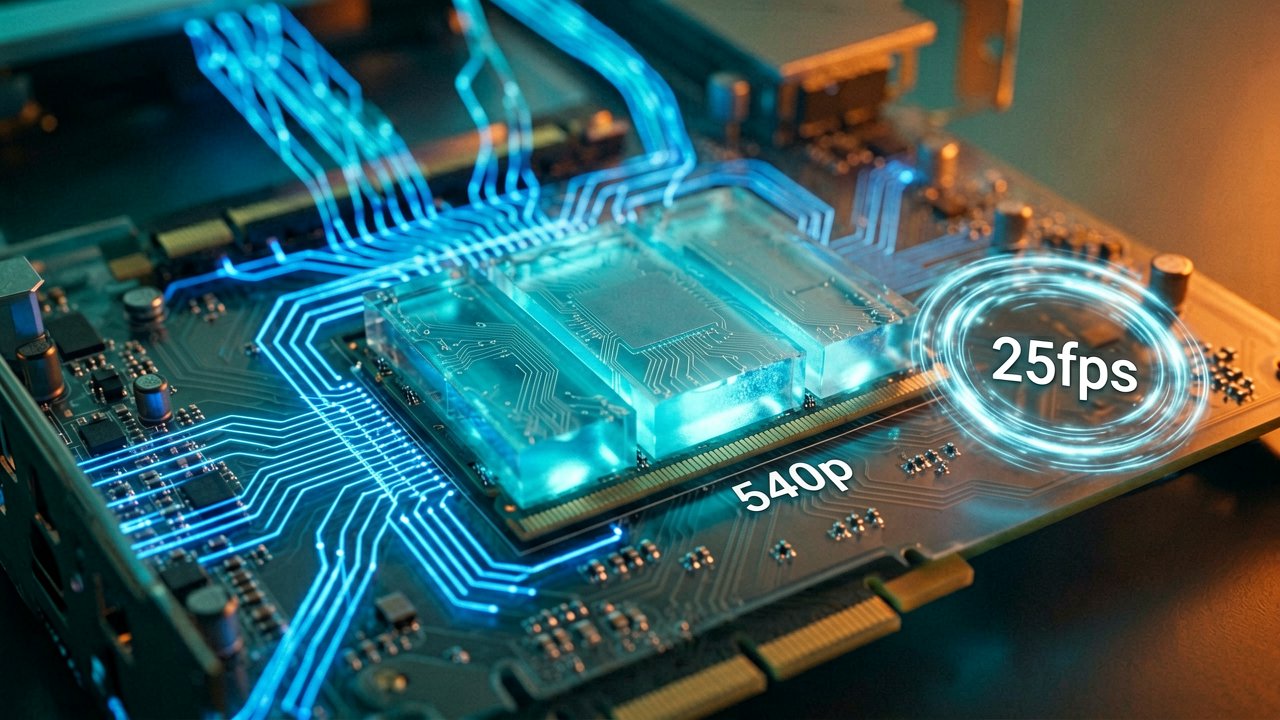
Artificial intelligence has spent the last few years conditioning us to wait. You type a prompt, you stretch your legs, and you hope the server cluster finishes cooking your clip before you lose interest. However, ShengShu Technology is completely flipping that script today. By officially launching its new Vidu S1 model on July 3, 2026, the company is bringing real-time, interactive AI video generation straight to consumer-grade graphics cards, bypassing the usual reliance on massive enterprise hardware.
This is a massive shift away from traditional offline workflows. Usually, once an AI video is rendered, its content remains completely locked. If you want an avatar to change its posture or react to a new plot point, you have to burn more compute on a completely new generation. Vidu S1 dismantles this boundary by introducing a continuous, two-way conversational framework. It handles ongoing voice commands and contextual clues simultaneously, updating visual outputs on the fly while you speak.
Under the Hood: How Consumer Tech Pulls Off Enterprise Workloads
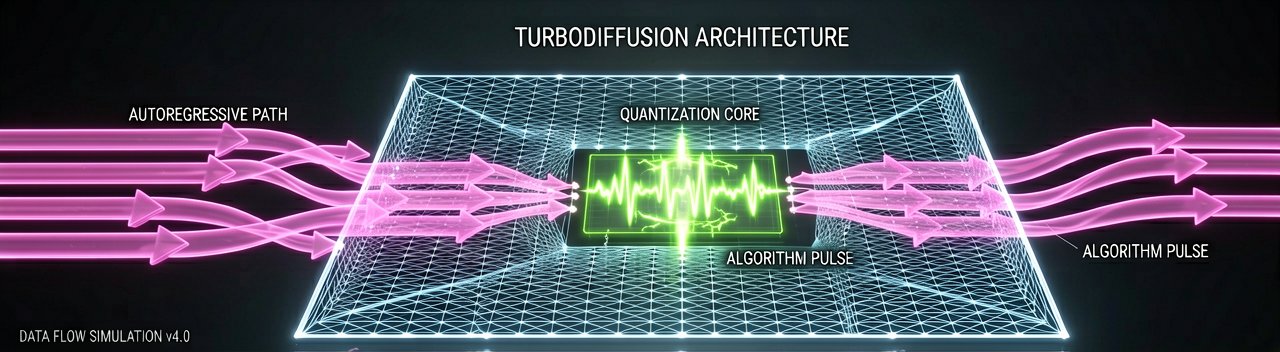
Running high-fidelity, streaming video pipelines without a server farm sounds like a pipe dream, but ShengShu manages it through some clever engineering. The system utilizes an autoregressive diffusion architecture. Instead of generating the entire clip from scratch, the model constantly predicts upcoming frames based on previous context and real-time audio inputs. This allows for an infinite generation loop where characters stay visually consistent over extended sessions.
To make this viable for everyday PCs, the developers deployed a suite of internal optimizations. The model achieves smooth 540p video-call resolution at 25 frames per second—and can even push up to 42 frames per second—by leveraging their proprietary TurboDiffusion framework alongside low-bit SageAttention. By slashing the computational tax per frame through quantization and smart scheduling via their TurboServe engine, real-time feedback loops finally become affordable for independent creators.
From One Image to Full Body Control
The practical implications for digital storytelling are vast. Traditional digital puppetry requires complex pipelines involving multi-angle photo captures, rigorous 3D rigging, and specialized lip-sync training. Vidu S1 cuts through that red tape entirely, letting creators upload a single image to establish a fully responsive avatar. The model interprets the underlying emotional intent and semantic meaning of a voice prompt, translating it into natural body language, shifting eye movements, and complex gestures.
Whether it is an anime asset, a real human face, or a stylized illustration, the platform generates cohesive full-body motion instantly. This approach significantly lowers the barrier to entry for video game developers building dynamic NPCs, streamers looking for interactive digital avatars, and creators designing responsive virtual companions. By putting this kind of power directly on local graphics cards, the tech moves AI video from a passive viewing medium into a highly malleable, responsive sandbox.
The Architectural Breakthrough That Smashed the Latency Barrier
Behind the Server Room Curtain: The race for real-time AI video has long been bottlenecked not by a lack of creative ideas, but by the brutal physics of computing latency. Up until now, generating high-quality video required diffusion models to process a massive batch of frames all at once, creating a massive lag spike between user input and visual output. ShengShu Technology bypassed this traditional roadblock by marrying autoregressive forecasting with diffusion processing. Instead of forcing a computer to rethink an entire universe frame by frame, Vidu S1 essentially predicts the next fraction of a second based on what just happened and what the user is currently saying, dropping communication latency to a point that mimics human conversation.
This structural change marks a massive philosophical shift in AI development. By focusing heavily on extreme optimization rather than just scaling up parameter counts, engineers are successfully squeezing enterprise-level workflows into consumer hardware. The implementation of SageAttention and custom quantization algorithms means the model requires a fraction of the memory bandwidth typically demanded by video generators. For independent developers who have spent years paying exorbitant hourly rates for cloud-based GPU clusters, this architecture represents a declaration of independence that keeps both data and processing local.

Shifting the Power Dynamics of Digital Production
Industry insiders are already pointing out that the true disruption here lies in the radical democratic shift of production tools. For decades, the type of real-time digital puppetry seen in Hollywood blockbusters required dedicated motion-capture stages, specialized software suites, and an army of technical animators. By reducing that entire pipeline down to a single reference image and a microphone feed running on a local desktop PC, Vidu S1 alters the economic realities for indie game studios and solo content creators. The barrier to entry has not just been lowered; it has been completely dismantled.
However, this rapid democratization is triggering an intense debate among digital artists and industry watchdogs regarding the future of commercial voice and likeness acting. When creating a fully interactive, emotionally nuanced digital clone requires only a handful of consumer components, the legal and ethical frameworks surrounding intellectual property face immense pressure. Regulators and creators alike are scrambling to establish where fair use ends and infringement begins, especially as these real-time avatars become indistinguishable from live actors during broadcast streams and interactive media sessions.
Looking ahead, the long-term success of this consumer-grade paradigm will depend heavily on hardware ecosystem compatibility and community adoption. While the initial benchmarks show immense promise for immediate, on-the-fly rendering, scaling this technology to handle complex multi-character interactions and highly intricate environments remains the next major frontier. As developers begin experimenting with the framework, the industry is moving away from static, linear video consumption and stepping into an era of fully fluid, infinitely customizable digital experiences.
The Reality Check: Squeezing Infinite Video into Finite Silicon
Reading Between the Lines: While the promise of real-time, interactive AI video running on a local desktop sounds like a liberating breakthrough for independent creators, a sober look at the hardware realities reveals a more complicated picture. ShengShu's achievement rests on heavily optimizing resolution and frame rates down to a modest 540p streaming target. In an era where audiences demand 4K clarity and flawless visual fidelity, a low-resolution stream presents a distinct bottleneck. Scaling this architecture up to modern broadcast or gaming standards without melting a consumer graphics card remains an unproven milestone, raising the distinct possibility that "real-time" will remain synonymous with "highly compressed" for the foreseeable future.
There is also an inherent contradiction between the marketing of infinite, unscripted interactivity and the actual constraints of local compute power. An autoregressive diffusion framework relies on predicting upcoming frames based on immediate context, meaning the system is constantly walking a razor-thin tightrope between speed and visual coherence. Over extended interactive sessions, local memory caches inevitably fill up, risking sudden hallucinations where character limbs detach or backgrounds dissolve into digital soup. Independent creators expecting flawless, hours-long streams without enterprise-grade stability may find that local processing trades financial costs for predictable technical headaches.
Furthermore, pushing hardware to its absolute limit creates a hidden economic trade-off that rarely makes the promotional headlines. Running a high-end consumer GPU at maximum utilization for hours on end generates immense heat and demands considerable electricity, shifting the financial burden from cloud subscription fees directly onto the user's monthly utility bill and hardware lifespan. Until independent benchmarks confirm how these models behave under prolonged, chaotic real-world workloads, it is wise to view the era of completely decentralized, friction-free AI video production with a healthy dose of editorial skepticism.
We were promised a future where independent artists could effortlessly conjure cinematic universes from their bedrooms, but for now, it seems the revolution will be broadcast in standard definition while our graphics cards quietly pray for liquid cooling.
Artūras Malašauskas is an AI Systems Integrator with 20+ years of production-grade web engineering experience. He has designed, shipped, and scaled enterprise Python/PHP systems for logistics, SaaS, and public-sector clients. For the past year, he has focused exclusively on AI integrations: deploying open-source LLMs, building generative media pipelines (image, audio, video), and engineering multi-agent workflows for real production environments. His standard: reproducibility, security, cost-efficient inference—no vaporware. He documents and evaluates emerging AI tooling, separating verified capabilities from marketing noise. Technical editor at: muza-ai.eu, ai-verslas.lt, ai-naujinos.lt Connect on LinkedIn
Comments