IBM Pivots to Lightwell AI to Counter Software Slump and Recalibrate Market Momentum

Following a second-quarter financial shortfall that triggered a sharp decline in its share price, International Business Machines Corporation is positioning its newly scaled Lightwell AI enterprise security ecosystem as the primary lever to restore investor confidence. Tech sector clients have rapidly redirected capital budgets toward high-performance AI compute infrastructure, hardware servers, and memory storage, triggering an unexpected drop in traditional software expenditures. According to reporting from Reuters, this structural shift squeezed enterprise software budgets across the industry, resulting in preliminary second-quarter revenues of $17.2 billion for IBM that missed broader consensus estimates on Wall Street.
In response to these mixed financial results and a 7% decline in infrastructure segment revenues, IBM Chief Executive Officer Arvind Krishna confirmed that the company is leaning aggressively into high-margin emerging technologies to stabilize forward-looking market performance. As detailed in the , the tech giant is heavily backing its massive $5 billion Lightwell initiative, a joint venture engineered alongside Red Hat. The strategic platform leverages specialized frontier artificial intelligence models and a global engineering force to build a secure, AI-era trust infrastructure tailored to the modern software supply chain.
Market analysts view the accelerated commercialization of Lightwell as a vital defensive maneuver to insulate IBM's software portfolio from the broader cyclical slowdown in corporate IT spending. By establishing an automated, private clearinghouse to detect and fix open-source vulnerabilities before they reach live production environments, IBM intends to convert ongoing enterprise security anxieties into a predictable, recurring subscription revenue stream. Initial traction remains a bright spot for the firm, as elite financial institutions including Bank of America, Citi, Goldman Sachs, JPMorgan Chase, and Morgan Stanley have already signed on as early adopters of the platform.
Decoding the Lightwell Architecture
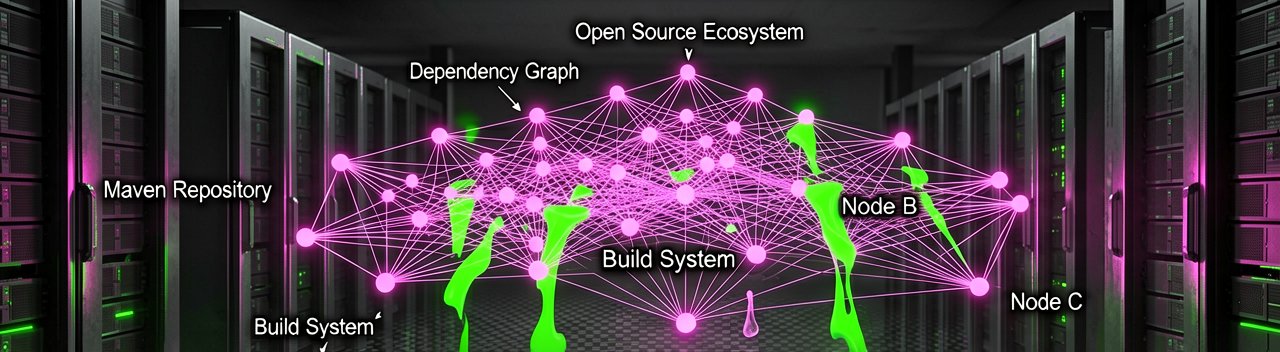
Project Lightwell departs from conventional patch-management models by operating a hybrid, enterprise-grade clearinghouse framework that actively pairs advanced AI agents with over 20,000 human engineers. According to technical specifications shared by Red Hat, corporations can report highly sensitive vulnerabilities within a private, controlled architecture prior to any public disclosure. The specialized AI models then ingest large-scale dependency graphs and source code repositories to generate candidate security patches, which are rigorously tested against real enterprise environment simulation frameworks before upstream distribution.
Securing the Open-Source Supply Chain
The strategic focus on open-source ecosystems addresses a profound systemic vulnerability in global corporate IT, where open-source packages form the baseline architecture for over 90% of Fortune 500 applications. Documentation from IBM notes that the Lightwell initiative will initially prioritize the heavily regulated Maven and Java ecosystems, where enterprises face immense compliance friction regarding pinned-version security remediations. Subsequent rollouts are structured to extend comprehensive, full-stack coverage across alternative major language repositories, including PyPI, npm, and Go.
Ecosystem Partnerships and Enterprise Integration
To ensure frictionless market penetration and combat deployment friction, IBM has surrounded the Lightwell platform with a massive coalition of strategic hyperscalers, silicon providers, and global system integrators. As announced via the official IBM Newsroom, technology industry leaders such as Amazon Web Services, NVIDIA, Microsoft, Intel, and AMD are actively collaborating to orchestrate simultaneous multi-environment security updates across cloud fabrics. Additionally, elite consultancy firms like Accenture and Deloitte have been deployed to assist corporate clients in mapping software bills of materials (SBOMs) and integrating secure Lightwell registries into automated development pipelines.
The Hidden Architecture of Trust
What Most Reports Miss: The launch of Lightwell AI is not a reactive pivot to a single disappointing quarter, but the culmination of a multi-year ideological struggle within IBM regarding the monetization of open-source ecosystems. Following the $34 billion acquisition of Red Hat, IBM found itself walking a delicate tightrope between maintaining open-source neutrality and meeting Wall Street's demands for proprietary enterprise software growth. Lightwell AI effectively bridges this divide by transforming abstract open-source compliance liabilities into a highly automated, premium security product that enterprise legal teams are eager to fund.
Industry insiders note that the true value proposition lies in how IBM is treating the modern software supply chain as a critical infrastructure problem. For years, major financial institutions and government contractors have operated under a cloud of anxiety regarding deep-seated vulnerabilities in low-level dependencies. By creating a private, AI-driven clearinghouse, IBM is positioning itself as the ultimate arbiter of code safety, essentially acting as an automated digital insurance policy for legacy enterprise applications that cannot easily be rewritten or replaced.
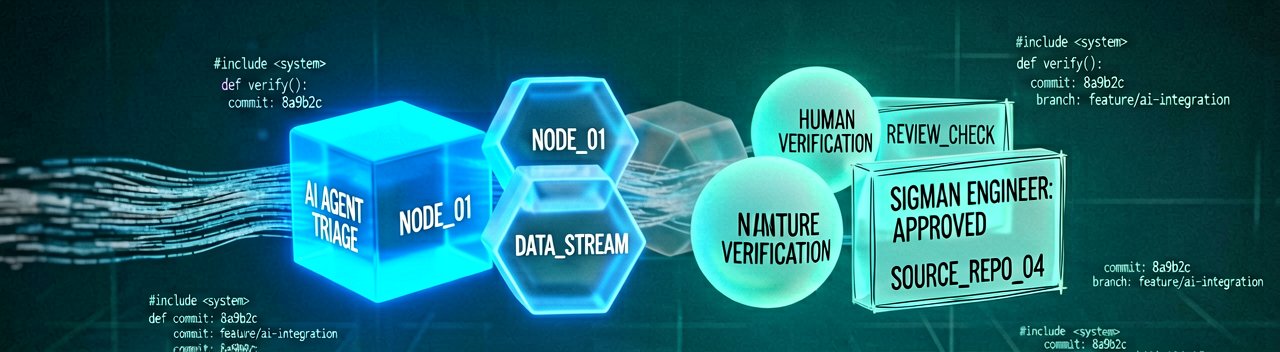
This initiative also marks a profound operational evolution for IBM's global workforce. Instead of deploying armies of consultants to manually audit codebase compliance, the company is leveraging specialized frontier AI models to handle the initial triage and patch generation, leaving human engineers to focus solely on high-level architecture verification. This shift drastically improves IBM's operating margins per client engagement, providing a structurally sound counterweight to the cyclical dips seen in traditional, capital-intensive hardware and infrastructure spending cycles.
The geopolitical dimension of this launch further underscores its strategic necessity for the company's long-term market momentum. With impending regulatory frameworks like the European Union's Cyber Resilience Act demanding rigorous software bills of materials (SBOMs) and rapid vulnerability remediation, multinational corporations can no longer afford informal patch management. By securing early validation from Wall Street's largest financial entities, IBM has effectively established Lightwell AI as the baseline standard for regulatory compliance in the AI era, forcing competitors to play catch-up in a market segment IBM now uniquely commands.
The Friction Between Automation and Open-Source Reality
Reading Between the Lines: IBM’s aggressive $5 billion pivot to Lightwell AI assumes that enterprise software vulnerabilities are fundamentally a mechanical problem solvable by sheer computational scale and automated patching. This premise ignores the messy, socio-technical reality of the open-source community upon which IBM and Red Hat rely. Software security is rarely as simple as deploying an AI agent to rewrite a flawed dependency; it involves navigating fragmented maintainer networks, political pushback within developer communities, and the chronic risk of automated patches introducing silent, cascading architectural regressions into live production environments.
Furthermore, an uncomfortable contradiction sits at the heart of this strategy. IBM is simultaneously blaming its mixed quarterly earnings on clients diverting their budgets toward high-performance AI compute infrastructure, while claiming that those same cash-strapped enterprise software budgets will enthusiastically absorb a premium, multi-million-dollar subscription for Lightwell AI. If corporate tech spend is indeed consolidating around raw hardware and large language model training, pitching an expensive, AI-powered compliance layer to risk-averse Chief Information Officers may prove a far tougher sell than current executive optimism suggests.
There is also the unresolved question of liability in the automated era. By positioning Lightwell AI as a trusted clearinghouse that validates and deploys patches across major ecosystems like Java and Python, IBM is moving perilously close to accepting structural responsibility for the integrity of its clients' applications. Should an AI-generated patch bypass automated simulation testing and inadvertently trigger an outage at a major financial institution, the resulting finger-pointing between corporate IT, independent open-source maintainers, and IBM will test the legal limits of modern software licensing agreements.
Ultimately, Lightwell AI serves as a fascinating case study in corporate asset re-engineering. IBM is effectively repackaging Red Hat’s massive open-source footprint as a proprietary security moat to insulate itself from the cyclical volatility of its legacy business lines. Whether Wall Street accepts this transformation as genuine innovation or treats it as a costly, public relations-heavy defensive maneuver will depend entirely on how fast IBM can convert those initial banking partnerships into scalable, predictable recurring revenue.
"In the grand theater of corporate tech, nothing says 'quarterly financial recovery' quite like a multi-billion-dollar artificial intelligence initiative designed to fix software that was supposed to be free in the first place."
Artūras Malašauskas is an AI Systems Integrator with 20+ years of production-grade web engineering experience. He has designed, shipped, and scaled enterprise Python/PHP systems for logistics, SaaS, and public-sector clients. For the past year, he has focused exclusively on AI integrations: deploying open-source LLMs, building generative media pipelines (image, audio, video), and engineering multi-agent workflows for real production environments. His standard: reproducibility, security, cost-efficient inference—no vaporware. He documents and evaluates emerging AI tooling, separating verified capabilities from marketing noise. Technical editor at: muza-ai.eu, ai-verslas.lt, ai-naujinos.lt Connect on LinkedIn
Comments