The Non-Stop Concierge: How Agentic AI Is Rewriting the Rules of the Vacation
There is a distinct, panic-induced sweat that only hits you when you are trying to book a last-minute tour of a sun-drenched city while your phone battery hovers at four percent. You know the drill: the endless redirects, the "please wait while we confirm availability" spinners, and the inevitable drop-off when the mobile checkout page crashes. It is a friction-filled dance that has defined modern tourism for over a decade. But that old dance is quickly running out of rhythm.
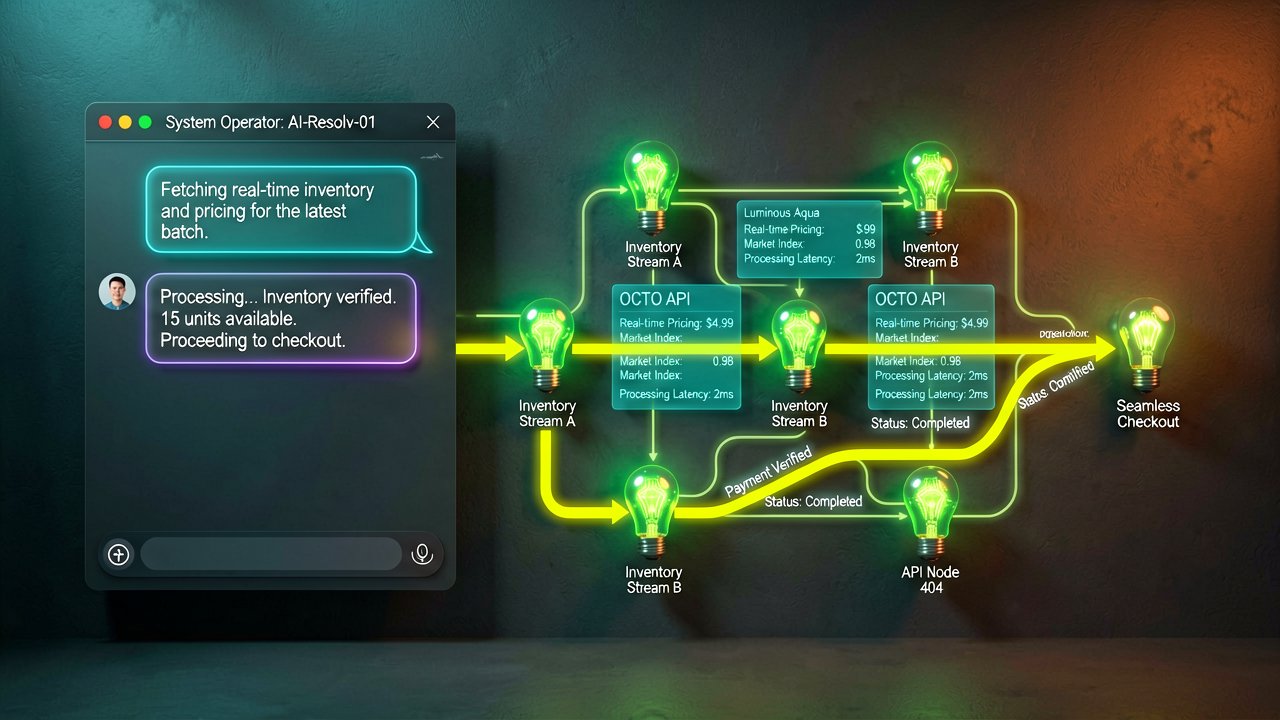
Thanks to a global partnership between conversational powerhouse Satisfi Labs and ticketing infrastructure specialist Ventrata, the friction is being ironed out by autonomous digital workers. The duo has rolled out a specialized, agentic AI ticketing agent built to handle customer interactions from discovery to direct checkout without ever needing a coffee break. By embedding live inventory, real-time pricing, and transactional capabilities directly into a single chat window, they are quietly shifting the travel paradigm from manual hunting to seamless, automated conversation.
The Death of the Redirect
Most AI chatbots in travel have historically acted like glorified FAQ pages, giving you an answer and then deflecting you to an external website to finish the job. This new integration relies on Open Connectivity for Tourism (OCTO) standards to fix that exact flaw. Because Ventrata is a founding member of the OCTO open API specification, the AI agent connects directly to an attraction's real-time inventory. When you ask for a ticket, you buy the ticket right there in the chat window, completely eliminating the drop-offs that plague traditional travel booking funnels.
The numbers trickling in from early pilots suggest this isn't just a win for convenience; it is a massive revenue lever. For instance, data published by PR Newswire reveals that New Orleans' City Sightseeing pilot saw over 1,800 ticket interactions through the AI agent, with an overwhelming 90 percent of those discovery-and-purchase journeys taking place entirely on mobile devices. Meanwhile, New York's One World Observatory watched its weekly in-chat revenue multiply by two and a half times over an eight-week span. It turns out that when you make it impossibly simple for people to spend money, they gladly do.

Automated Revenue, Human Relief
For travel operators battered by years of persistent seasonal staffing shortages and unpredictable tourism surges, this automation acts like a much-needed operational release valve. Instead of tying up human staff with repetitive late-night inquiries about ticket pricing or operating hours, the AI handles the bulk of the conversational heavy lifting. This allows physical guest relations teams to focus on the visitors standing right in front of them, turning chaotic front desks into organized environments.
We are watching the dawn of an ecosystem where your vacation plans are efficiently handled by machines that understand live availability across multiple independent regional attractions. As these agentic platforms scale up, the traditional, fragmented online travel agency model looks increasingly antiquated. The future of travel isn't a complex web of open browser tabs; it's a single, frictionless conversation that closes the deal before your phone can even warn you about a low battery.
The real magic of this shift isn’t just about making transactions disappear into the digital ether; it is about how we surrender our leisure time to the algorithm. For generations, travel was defined by its friction—the serendipitous mistakes, the missed trains that turned into unforgettable afternoons, and the human conversations with local ticket sellers who told you where to get the best espresso. When an artificial intelligence ticketing agent streamlines the process, it swaps chaos for pure, unadulterated efficiency. It is a trade-off most travelers are eager to make, trading the frustration of a broken booking link for an instant digital pass. Yet, as booking becomes an instantaneous afterthought, the very nature of how we plan our journeys begins to shift from intentional curation to conversational impulse.
This transformation relies entirely on the invisible networks operating beneath the surface. Systems like the one deployed on the Satisfi Labs Platform are trained on millions of hyper-specific destination data points, allowing them to decipher the nuance behind a vague query like "something historical but fun for teenagers." It does not just pull up a static URL; it negotiates availability and processes the transaction on the fly. By taking the friction out of the transaction, travel operators are capturing an audience that traditionally walks away out of sheer frustration. It is no longer about waiting for a customer to navigate a complex site architecture; it is about answering a thought the exact second it crosses the traveler's mind.

The Rise of the Frictionless Horizon
As agentic platforms like these expand their reach across the globe, they are quietly dismantling the old empires of third-party booking sites. Instead of bouncing between aggregators and comparison charts, the consumer is pulled into a hyper-localized ecosystem where the attraction speaks directly to the wallet. This structural shift, championed by infrastructure protocols detailed by the Ventrata Support Network, ensures that small, independent operators can compete on the same digital playing field as massive global entertainment conglomerates. The technical democratization of the ticketing queue means that a localized boat tour or a regional museum can capture impulse spending just as effectively as a massive theme park.
Ultimately, the non-stop digital concierge changes the psychological relationship we have with our own itineraries. When pulling off a flawless day of sightseeing requires nothing more than a few casual texts, our expectations for the rest of the world skyrocket. We begin to demand the same instantaneous, mind-reading responsiveness from hotels, airlines, and restaurants. The robot that never sleeps has officially set a new baseline for hospitality, leaving human operators with a fascinating challenge: finding new ways to inject authentic, irreplaceable human warmth into a journey that has otherwise been perfectly optimized by a machine.
Efficiency is the ultimate narcotic of the modern consumer, and the travel industry has just taken its biggest dose yet. By turning the messy, multi-tabbed headache of booking a vacation into a singular, fluid dialogue, agentic AI is not just upgrading customer service; it is fundamentally altering consumer psychology. When an AI ticketing agent eliminates the gap between wanting an experience and paying for it, it removes the critical pause where a traveler might reconsider their budget. This instantaneous conversion mechanism turns the casual browser into a confirmed visitor in less time than it takes to order a cup of coffee, forever changing how tourism operators forecast and capture revenue.
This structural evolution also signals a massive shift in how data is weaponized in the hospitality tech stack. In traditional systems, user intent was pieced together from fragmented tracking cookies, abandoned shopping carts, and site analytics. Today, the direct integration of conversational AI with live, open-API booking infrastructure allows operators to capture raw, unvarnished human intent in real time. Platforms built on these advanced standards do not guess what a traveler wants based on where they click; they listen to exactly what they ask for, refining the pricing and availability pipeline on a minute-by-minute basis.
The Real Value of the Human Touch
As this flawless automation spreads across global destinations, the hospitality sector faces an interesting paradox regarding human labor. With machines seamlessly handling the transactional heavy lifting—the booking changes, the refund processing, and the late-night scheduling queries—the human workers left on the ground are being recast in entirely new roles. They are no longer administrative gatekeepers or living ticket dispensers. Instead, their value is heavily concentrated in their ability to deliver genuine empathy, cultural storytelling, and the kind of spontaneous hospitality that a server cluster simply cannot replicate.
The long-term winners in this automated landscape will not be the companies that completely replace humans with algorithms, but those that understand exactly where the machine should stop and where the human should begin. A perfectly optimized digital journey means absolutely nothing if the physical experience at the destination feels cold and mechanical. The true victory for travel operators lies in using AI to eliminate operational noise so that their human staff can finally focus on making guests feel truly welcome, rather than just processed.
The iron-clad irony of the fully automated vacation is that by outsourcing our itineraries to flawless digital minds, we are finally buying ourselves the freedom to be beautifully, unpredictably human.
Artūras Malašauskas is an AI Systems Integrator with 20+ years of production-grade web engineering experience. He has designed, shipped, and scaled enterprise Python/PHP systems for logistics, SaaS, and public-sector clients. For the past year, he has focused exclusively on AI integrations: deploying open-source LLMs, building generative media pipelines (image, audio, video), and engineering multi-agent workflows for real production environments. His standard: reproducibility, security, cost-efficient inference—no vaporware. He documents and evaluates emerging AI tooling, separating verified capabilities from marketing noise. Technical editor at: muza-ai.eu, ai-verslas.lt, ai-naujinos.lt Connect on LinkedIn
Comments