The Automation of Adoration: Suno’s Spark Incubator and the High Price of Paid Silence
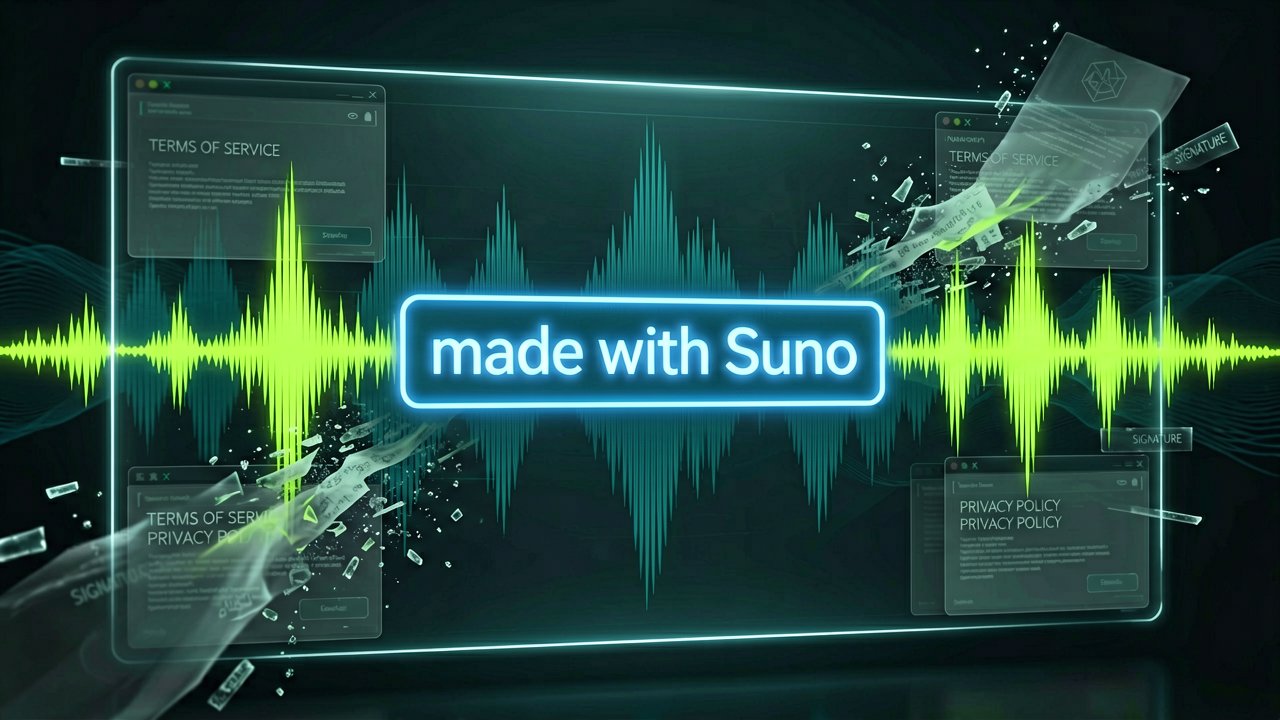
Fresh off securing a staggering $5.4 billion valuation in a massive funding round, the AI music heavyweight Variety announced its shiny new artist incubator program, Spark. On the surface, the initiative looks like a dream setup for struggling indie creators, dangling cash grants ranging up to tens of thousands of dollars alongside professional mentorship and dedicated marketing dollars. You get to keep your commercial rights, choose your own distributor, and collect funding to bring your passion projects to life. It feels like an unprecedented olive branch from a tech giant to the very flesh-and-blood creators who have spent the last year accusing generative AI platforms of cannibalizing their livelihoods. But as with everything in Silicon Valley's gold rush, the devil is not just in the details; he is running the legal department.
Peel back the glossy marketing veneer, and the fine print reveals a permanent muzzle wrapped in a velvet bow. Digging into the official contractual terms, independent industry watchdogs quickly spotted a strict non-disparagement clause that reads like corporate fanfiction. Under the agreement, participating artists must promise never to make any statement—directly or indirectly, verbally or in writing, during the program or at any point thereafter—that portrays Suno, its tools, or its staff in a negative light. Essentially, Suno is buying lifelong compliance, offering cash to independent musicians in exchange for a mandatory, perpetual public relations shield.
When Compliance Costs More Than Equity
The tech industry has always loved a good non-disclosure agreement, but extending an aggressive silence pact to independent artists under the guise of "community incubation" crosses a new, bizarre frontier. In traditional record deals, label contracts are notoriously predatory, yet they rarely explicitly dictate an artist’s philosophical right to criticize the machine. Suno's contract explicitly demands that any music posted on social media under the program explicitly carry the "made with Suno" tag while completely stripping the artist of their right to voice authenticity if the technology or corporate practices sour. It is an algorithmic spin on the old corporate playbook: if you cannot win over the creative community organically, just write a check big enough to buy their public devotion.
This aggressive posture makes sense when you look at the legal target on Suno's back. The platform is currently navigating fierce pushback and massive class-action copyright lawsuits from thousands of human musicians who allege the company trained its massive models on their intellectual property without consent. By weaponizing its freshly raised venture capital, Suno is building an army of contractually obligated human defenders. For a desperate indie creator trying to pay rent, thousands of dollars in grant money is nearly impossible to turn down, forcing creators into a compromised position where financial survival requires selling off their professional voice.

The Twilight of Authentic Critique
The long-term danger here reaches far beyond a few hand-picked indie tracks. When a tech corporation worth billions can engineer artificial consensus by legally punishing dissent, the line between authentic artistic adoption and corporate propaganda completely dissolves. If the only musicians allowed to participate in the capital-rich AI economy are those who have signed away their right to criticize it, the entire creative conversation becomes engineered and sanitized. We are left with an industry where human artists act as highly paid, contractually muzzled influencers for the digital systems designed to replace them.
Turning creative grants into corporate protection rackets is a dangerous precedent for the future of digital art. Artists have historically been the loudest critics of institutional overreach, but Suno's Spark contract transforms them into passive, compliant partners. As generative models continue to reshape the cultural landscape, the industry must decide whether it wants a musical ecosystem driven by genuine human expression, or a corporate echo chamber where the music plays on, but only the lawyers are allowed to speak.
Silence has always been an expensive commodity in the music business, but tech-driven capital has officially turned it into an infrastructure play. By transforming the traditional creative incubator into a tight corporate non-disparagement apparatus, platforms like Suno are drawing a sharp line through the modern cultural landscape. The message is as clear as a synthesized vocal line: you can have the funding to realize your sonic vision, but it comes at the cost of your critical faculties. It builds a walled garden where cash acts as a strategic buffer, ensuring that the only artists with mic time are those who have legally sworn away their right to point out the glitch in the system.
This dynamic radically shifts how independent artists interact with tech companies. In previous eras, tech disruptions like file-sharing or MP3 compression met with fierce, uncoordinated resistance from musicians who felt systemic exploitation from tech barons. Today, venture capital is working proactively to short-circuit that natural pushback before it can even form a collective front. By targeting indie creators who are desperately trying to survive in a decimated streaming economy, tech platforms can systematically deploy financial lifelines that double as permanent legal gag orders, effectively dissolving future worker movements before the contracts are even signed.
The Architecture of the Algorithmic Echo Chamber
What makes this shift particularly unsettling is how neatly it fits into the broader engineering of online culture. When every participant in a heavily promoted, corporate-funded incubator is legally prohibited from expressing a negative sentiment, the public-facing narrative becomes entirely manufactured. Potential users and casual listeners looking at these initiatives see what appears to be organic enthusiasm and a harmonious marriage between human heart and software. The underlying mechanics of coercion remain buried deep within the legal fine print, masked by glossy promotional campaigns and high-production launch videos.
This structural silencing creates an unprecedented barrier for genuine technological critique. If the most visible, tech-adjacent artists are contractually forced to praise the tools they use, the broader public loses access to an honest assessment of how generative software impacts actual creative workflows. We are left with a dangerous information asymmetry where the only voices allowed to speak publicly on the evolution of music tech are those who have a direct, binding financial incentive to tell the world that everything is perfect.
Ultimately, the commodification of an artist’s perspective signals a deeper crisis for cultural authenticity. Art has historically served as a mirror to societal and industrial overreach, offering a space where creators could openly challenge the frameworks of power and capital that governed their lives. When platforms can use venture wealth to purchase a permanent monopoly on that critical perspective, the mirror breaks. The independent music scene risks mutating into an engineered extension of a silicon marketing department, where human voices are reduced to highly polished telemetry data, designed to legitimize the very algorithms built to replace them.
The true cost of capital in the synthetic age is measured not in interest rates, but in intellectual autonomy. As platforms like Suno attempt to build an ironclad consensus through contractual mandate, they expose a deep vulnerability at the heart of the generative tech boom. For all the talk of democratic creativity and empowering the next generation of bedroom producers, the architectural reliance on aggressive non-disparagement agreements reveals that corporate AI cannot yet survive the unfiltered judgment of the human artistic community. It is a tacit admission that the technology’s public relations armor is fragile enough to be pierced by an honest review from an independent musician.
This dynamic forces an uncomfortable paradigm shift for the creative class, shifting the fight from basic copyright protection to a battle for psychological sovereignty. For decades, musicians wrestled with predatory record deals that sought to own their masters, their publishing, and their likenesses. Yet, even the most notorious label bosses of the vinyl era rarely demanded that artists sign away their right to complain about the industry on social media. By combining the financial leverage of a venture fund with the sweeping legal control of a tech monopoly, the new wave of music incubators is attempting to commercialize the one thing traditional labels never could: the artist's genuine personal perspective.
The Price of Purchased Consensus
As this model replicates across other creative sectors—from generative video to AI-assisted literature—the definition of an independent creator will inevitably undergo a radical, corporate-driven mutation. True independence has never been just about choosing your own distributor or keeping your digital master files; it is fundamentally about the freedom to speak truth to power without fearing a ruinous breach-of-contract lawsuit. When major tech firms can systematically buy out that critical friction, they create a artificial ecosystem where the public can no longer distinguish between a genuine endorsement and a contractually compelled piece of corporate theater.
The survival of authentic artistic subversion now depends entirely on the creators who choose to stay outside the corporate garden walls. While the temptation of easy funding and high-tech tools will understandably draw many struggling artists into these silence pacts, the cultural weight will inevitably shift toward those who refuse to sell their critical voice. The ultimate irony of the algorithmic gold rush is that as forced corporate praise becomes cheap, abundant, and entirely synthesized, the market value of raw, unfiltered human dissent will skyrocket, becoming the most premium asset in the entire cultural economy.
In the end, the ultimate irony of the automated music industry is that while Silicon Valley successfully figured out how to synthesize the human voice, it still had to open its wallet to buy its silence.
Artūras Malašauskas is an AI Systems Integrator with 20+ years of production-grade web engineering experience. He has designed, shipped, and scaled enterprise Python/PHP systems for logistics, SaaS, and public-sector clients. For the past year, he has focused exclusively on AI integrations: deploying open-source LLMs, building generative media pipelines (image, audio, video), and engineering multi-agent workflows for real production environments. His standard: reproducibility, security, cost-efficient inference—no vaporware. He documents and evaluates emerging AI tooling, separating verified capabilities from marketing noise. Technical editor at: muza-ai.eu, ai-verslas.lt, ai-naujinos.lt Connect on LinkedIn
Comments