How Anthropic’s Claude Sonnet 5 Is Rewriting the Enterprise AI Cost Equation

The enterprise AI landscape experienced a major structural shift when Anthropic officially rolled out its highly anticipated Claude Sonnet 5 model. Historically, organizations deploying large-scale autonomous workflows faced a painful choice between high-accuracy flagship intelligence and economical mid-tier models. By engineering near-Opus level capabilities directly into its mid-tier pricing architecture, Anthropic is actively disrupting this paradigm, forcing competitors to rethink how frontier capabilities are monetized for corporate infrastructure.
This deployment strategy directly targets the rapidly expanding demand for reliable, agentic AI. As enterprises transition from basic chatbots to multi-step autonomous agents that navigate browsers and terminals, inference budgets have scaled exponentially. Anthropic’s aggressive pricing mechanics represent a calculated bid to capture this operational workload, making advanced reasoning commercially viable for mainstream software engineering teams and large-scale enterprise data operations.
Disruptive pricing as a market catalyst
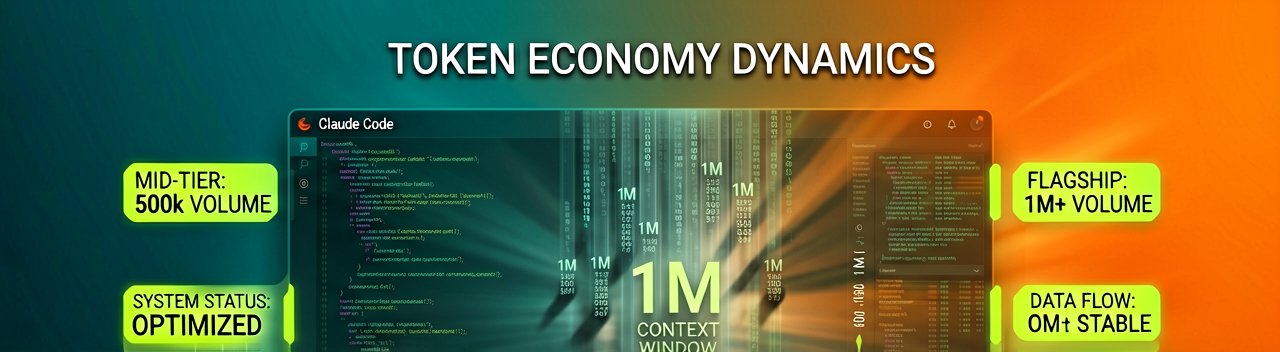
Anthropic launched the model with an introductory API rate of $2 per million input tokens and $10 per million output tokens. This positioning undercuts historical flagship costs while retaining a massive 1,000,000 token context window. According to analysis on TechCrunch, providing a cheaper vehicle for agentic tasks allows developers to scale production deployments without incurring prohibitive infrastructure liabilities. This aggressive pricing pressure forces OpenAI and other frontier foundation model providers to accelerate their own optimization roadmaps or risk losing critical enterprise market share.
The technical nuance of agentic token consumption
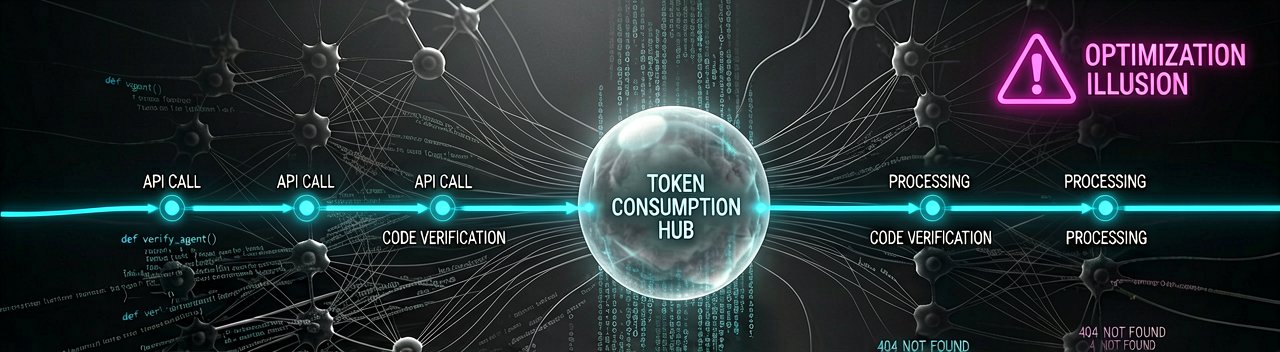
While the per-token price drop presents an immediate marketing advantage, the underlying economics of autonomous agents introduce complex budgeting variables. Because Claude Sonnet 5 is built to independently plan, verify code, and execute multi-step routines, it inherently consumes far more tokens per task than traditional static prompts. Furthermore, a redesigned tokenizer shifts the volume of text-to-token translations. Early market evaluations indicate that heavy agentic workflows can actually drive overall monthly invoices higher if enterprise engineering teams fail to carefully monitor loop boundaries and token limits.
Strategic realignments across the enterprise ecosystem
By establishing Sonnet 5 as the baseline standard across its ecosystem, Anthropic is aiming to secure long-term developer loyalty. The model serves as the primary engine within Claude Code, delivering a competitive edge on rigorous coding benchmarks. This rapid democratization of high-end capabilities signifies that the AI industry is moving past raw parameter scale as a primary selling point. The new competitive baseline is measured in practical, cost-effective autonomy that can be deployed at scale without destabilizing corporate bottom lines.
Behind the strategic shift in foundation model economics
What most reports miss: The real battleground for enterprise AI supremacy is no longer defined by raw parameter counts, but by the brutal mathematics of developer margins. When Anthropic engineered this specific pricing tier, they were solving a systemic friction point within corporate research and development departments. For the past two years, chief technology officers have routinely built advanced prototypes using flagship models, only to find the token costs entirely prohibitive when trying to scale those applications to thousands of concurrent enterprise users. This forced downgrade to cheaper, less capable models frequently broke the underlying application logic, stalling deployments in a perpetual proof-of-concept phase.
By flattening the cost delta between mid-tier economics and top-tier execution, Anthropic effectively eliminated this friction point. Independent enterprise software developers are reporting that workflows requiring continuous, iterative prompting—such as automated code refactoring or large-scale document parsing—can now operate natively within production budgets. This shift structurally alters the competitive landscape by targeting the highly lucrative business-to-business sector, forcing major hyperscalers and competing labs to defend their developer mindshare through pricing concessions rather than mere benchmark claims.
The enterprise response reveals a deep divide in how organizations approach model integration. Large financial services and healthcare enterprises, which typically operate under strict compliance and regulatory guidelines, are prioritizing predictability over raw savings. While startups have rapidly migrated their API endpoints to capitalize on the lower rates, conservative corporate legal and procurement teams are focusing heavily on data governance and long-term contract stability. For these institutional buyers, the financial relief is welcome, but it must be accompanied by ironclad guarantees regarding data privacy and model persistence over multi-year operational life cycles.
This economic recalibration also hints at a broader industry trend toward targeted algorithmic efficiency over brute-force scaling. Industry analysts suggest that Anthropic achieved this performance-to-cost ratio through substantial innovations in post-training optimization and specialized hardware utilization rather than simply subsidizing the API out of pocket. By optimizing the model to run on fewer computational resources while maintaining deep contextual reasoning, the company has set a new baseline for the true cost of intelligence. This shift signals that the future of enterprise software dominance belongs to the providers who can most efficiently orchestrate compute infrastructure, rather than those who simply build the largest clusters.
Reading between the lines of the frontier model race
The optimization illusion: The prevailing industry consensus celebrates this new era of mid-tier pricing as an unalloyed victory for enterprise budgets, yet this narrative glosses over a fundamental structural contradiction. While a lower cost per token lowers the barrier to entry, it simultaneously incentivizes developers to build hyper-complex, looping agentic architectures that consume compute at an exponential rate. When an autonomous system is granted the freedom to continuously self-correct, test code in real-time, and call external APIs across a multi-hour lifecycle, the net volume of token consumption often negates the nominal discount. Enterprises may find that instead of cutting their AI infrastructure spend, they are simply processing vastly more data for the exact same monthly invoice.
This dynamic exposes a deeper strategic tension between foundation model providers and the enterprise ecosystem. Anthropic’s aggressive pricing structure is designed to capture structural lock-in during a critical window of software development history. By embedding its architecture into the foundational layers of corporate dev-ops tools and internal enterprise agents, the company creates a high switching cost for organizations that build custom logic tailored to this specific model's behavior. If the cost of computing resources or hardware constraints forces an industry-wide pricing correction in the coming years, corporate buyers who migrated prematurely may find themselves bound to an ecosystem that is no longer as cheap as advertised.
Furthermore, the race to the bottom on pricing challenges the long-term venture capital thesis undergirding the entire generative AI boom. If frontier-class intelligence can be commoditized and sold at mid-tier margins within months of its discovery, the capital expenditure required to train the next generation of models becomes increasingly difficult to amortize. The market is operating under the assumption that efficiency gains will always outpace training costs, but physics and silicon supply chains frequently disrupt linear economic projections. Organizations would be wise to treat current pricing sheets not as permanent structural realities, but as temporary customer-acquisition subsidies in a market that has yet to find its true financial equilibrium.
"We are witnessing a fascinating corporate paradox where technology executives celebrate saving pennies on the token, right before authorizing a fleet of autonomous software agents to enthusiastically burning through millions of dollars worth of compute just to find out why a legacy database won't talk to a modern dashboard."
Artūras Malašauskas is an AI Systems Integrator with 20+ years of production-grade web engineering experience. He has designed, shipped, and scaled enterprise Python/PHP systems for logistics, SaaS, and public-sector clients. For the past year, he has focused exclusively on AI integrations: deploying open-source LLMs, building generative media pipelines (image, audio, video), and engineering multi-agent workflows for real production environments. His standard: reproducibility, security, cost-efficient inference—no vaporware. He documents and evaluates emerging AI tooling, separating verified capabilities from marketing noise. Technical editor at: muza-ai.eu, ai-verslas.lt, ai-naujinos.lt Connect on LinkedIn
Comments