Ghosts in the Machine: Why the Global Patent Office is Unprepared for AI’s Absolute Blitzkrieg
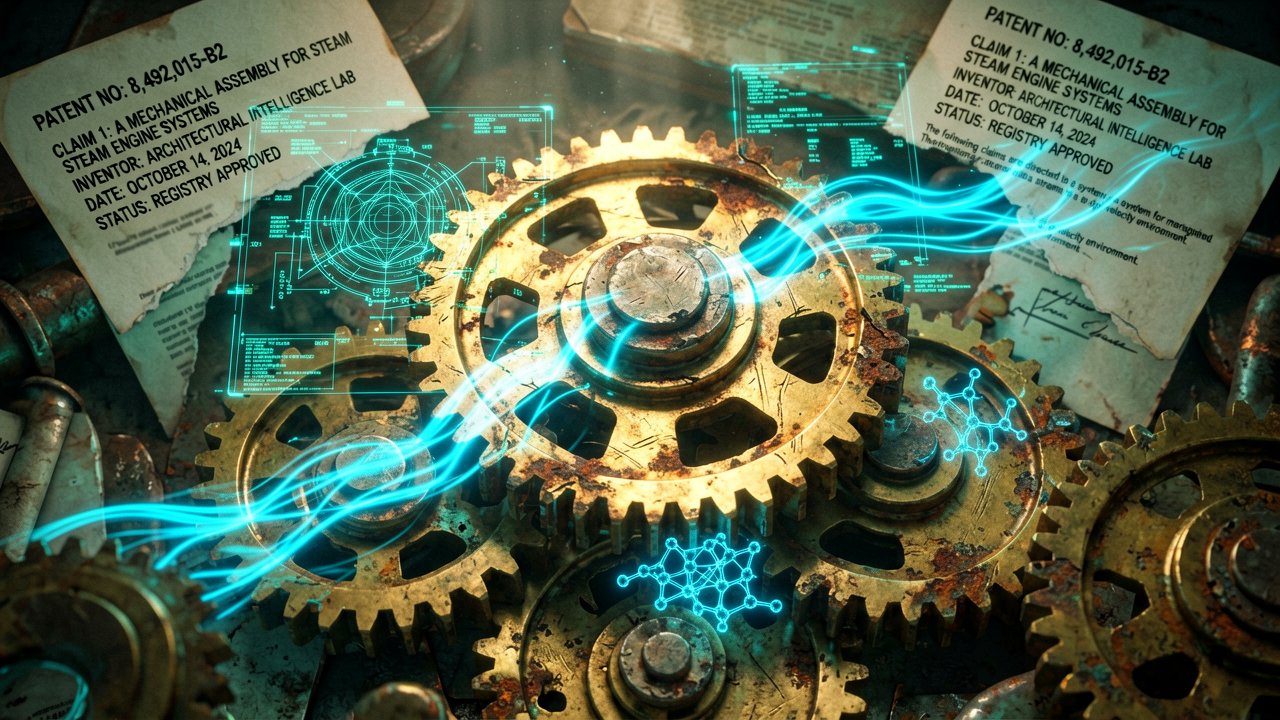
The global intellectual property regime is running on an operating system built for the steam engine, and the gears are beginning to grind. For decades, patent law assumed a comfortable, human-centric truth: someone has a eureka moment, scribbles a blueprint, and gets a temporary monopoly as a reward for their fleshy brilliance. But when code starts iterating at a million computations per second, generating novel molecular structures and mechanical designs without so much as a coffee break, that old playbook doesn't just look outdated—it feels dangerously naive. It is this friction point that has tech circles talking this week as legal frameworks face their biggest reckoning yet.
Stepping directly into this regulatory crossfire is Dr. Raju Narayana Swamy, a formidable legal scholar and prominent Indian Administrative Service officer, whose newly released thirty-seventh book acts as an urgent whistle-blower for the digital age. Launched at an event in Chicago, the text systematically dissects how modern patent misuse and AI-driven innovation are effectively breaking traditional statutes. Swamy, widely recognized across India as an unyielding anti-corruption crusader, balances his bureaucratic heavy-lifting with a hyper-prolific academic output, holding multiple law degrees alongside a deep expertise in cyber law. According to a detailed report by Mathrubhumi English, his new book serves as a vital blueprint for regulatory reform, tackling the intricate legal complexities that emerge when artificial intelligence begins generating proprietary assets on an industrial scale.
The Fiction of the Human Inventor
The core problem lies in our stubborn obsession with the human element. Current frameworks are utterly unequipped to handle the reality of AI-driven research and development, where algorithms don't just assist human engineers but often act as the primary creators. Swamy’s work hits the nail on the head by analyzing patentability criteria across different jurisdictions, highlighting a massive global divergence. While some courts flatly deny patent rights to non-human entities, corporations are quietly leveraging these legal gray zones to engage in blatant patent misuse, building algorithmic moats that stifle genuine competition. As highlighted by Indian Masterminds, the text delves deeply into the interface between AI, blockchain, and intellectual property, analyzing landmark judicial decisions to expose how easily the current system can be gamed.
A Fragmented Global Response
We are left watching an asymmetric war between exponential technology and linear legislation. While Silicon Valley pushes the envelope with generative models that can synthesize code, art, and hardware configurations in seconds, lawmakers are still debating the basic definition of inventorship. This isn't just an academic debate; it has profound economic consequences for global markets. If our intellectual property laws aren't overhauled to account for autonomous machine innovation, we risk entering an era of unprecedented corporate monopolies where the public domain is swallowed whole by automated patent factories. Swamy’s thirty-seventh book delivers a sobering reminder that without immediate, coordinated regulatory intervention, the legal structures built to protect human ingenuity will pave the way for its marginalization.
The chilling reality of this legal vacuum is already playing out in corporate boardrooms and research labs across the globe. Software suites supercharged by machine learning can now spit out hundreds of viable chemical compounds or engineering schematics in the time it takes a human researcher to pour a cup of coffee. When these synthetic creations flood patent registries, they create an impenetrable wall of digital noise. Human inventors find themselves suffocating in a system that was originally designed to champion their unique brilliance, now weaponized by raw processing power.
The Algorithmic Land Grab
Multinational corporations are quietly exploiting these vulnerabilities to engage in defensive patent hoarding on an industrial scale. By training proprietary models to predict future technological iterations, companies can effectively squat on entire fields of science before human scientists even realize those fields exist. Dr. Swamy’s analysis cuts straight through the corporate public relations narrative, exposing how these automated land grabs disproportionately hurt developing economies and independent creators who lack the computing infrastructure to compete in an algorithmic arms race.
This fundamental shift subverts the historic social contract of intellectual property. Historically, patents granted a temporary monopoly to incentivize human risk, labor, and capital investment. When the marginal cost of generating a new design drops to near zero, the ethical justification for a twenty-year market monopoly completely crumbles. We are left protecting the output of machines rather than the spark of human ingenuity, turning a tool meant for public progress into a fortress for corporate gatekeepers.
A Blueprint for Digital Constitutionalism
Reclaiming the balance requires a radical departure from traditional legal doctrine toward a framework of digital constitutionalism. Swamy’s comprehensive text advocates for a multi-tiered regulatory system that handles machine-assisted and purely autonomous innovations differently. One promising path involves introducing shortened protection windows for AI-generated assets, ensuring that automated designs transition rapidly into the public domain where they can spark further human-led innovation.
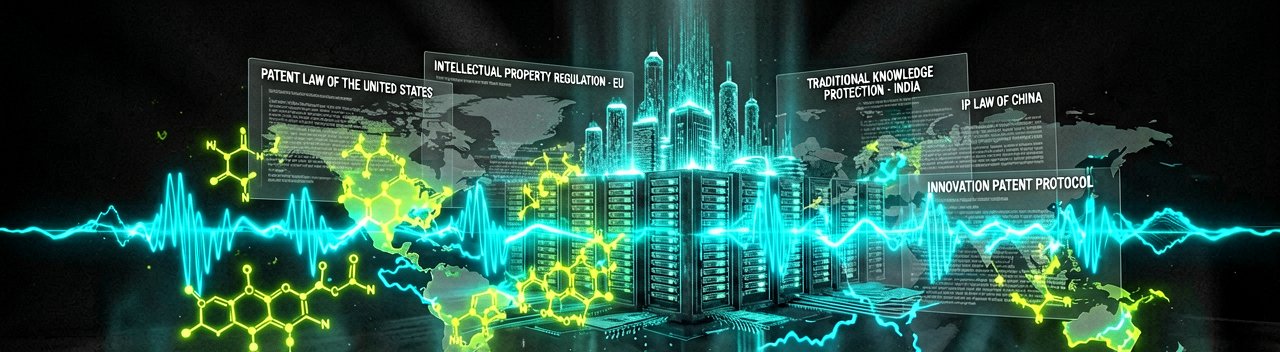
The timeline for implementing these reforms is shrinking by the day as neural networks evolve past static pattern recognition into active, reasoning agents. Lawmakers cannot afford to spend another decade debating definitions while codebases rewrite the rules of global commerce in real time. Reshaping these archaic laws is no longer just a technical necessity for legal clerks; it is a vital safeguard to ensure the future of innovation remains distinctly and unashamedly human.
The ultimate crisis facing contemporary jurisprudence is not that machines are becoming too human, but that our legal structures treat human ingenuity like a slow, predictable algorithm. As artificial intelligence transitions from a novelty tool to a fundamental infrastructure, the fiction that we can regulate it using nineteenth-century statutes is completely unraveling. We are no longer waiting for a distant paradigm shift; the collision between archaic property rights and exponential automation is happening in real time, and the legal framework is losing the fight.
The Trap of the Synthetic Status Quo
Failing to reform these laws risks locking global commerce into a permanent synthetic status quo. If patent offices continue to rubber-stamp monopolies for designs generated in milliseconds by server farms, the incentive to fund genuine, high-risk human research will dry up entirely. Venture capital will naturally flow away from human labs and toward the optimization of corporate neural networks, turning the pursuit of knowledge into a purely algorithmic optimization game designed to exploit legal loopholes rather than solve human problems.
Dr. Swamy’s comprehensive critique serves as a timely warning that the intersection of law and technology requires active, aggressive governance rather than passive observation. The path forward demands a complete philosophical decoupling of invention from ownership, ensuring that the fruits of automated intelligence serve as a public springboard rather than a corporate stranglehold. Only by radically shrinking the shelf-life of automated patents can we hope to level the playing field for human flesh and blood.
Restoring the Human Edge
Ultimately, the defense of intellectual property in the age of automation is a defense of human agency itself. Legal frameworks must adapt to value the messy, expensive, and unpredictable nature of human curiosity over the flawless, hyper-optimized output of a machine. If we fail to establish this boundary, we will find ourselves living in a world where the law protects the machine, and humans are treated as the ultimate system anomaly.
"The supreme irony of the silicon age may well be that in our frantic rush to legally protect the synthetic minds we built, we accidentally outlawed the competitive edge of the human minds that built them."
Artūras Malašauskas is an AI Systems Integrator with 20+ years of production-grade web engineering experience. He has designed, shipped, and scaled enterprise Python/PHP systems for logistics, SaaS, and public-sector clients. For the past year, he has focused exclusively on AI integrations: deploying open-source LLMs, building generative media pipelines (image, audio, video), and engineering multi-agent workflows for real production environments. His standard: reproducibility, security, cost-efficient inference—no vaporware. He documents and evaluates emerging AI tooling, separating verified capabilities from marketing noise. Technical editor at: muza-ai.eu, ai-verslas.lt, ai-naujinos.lt Connect on LinkedIn
Comments