Meta Hits the Brakes: Muse AI Feature Pulled Seventy-Two Hours After Launch Following Privacy Backlash
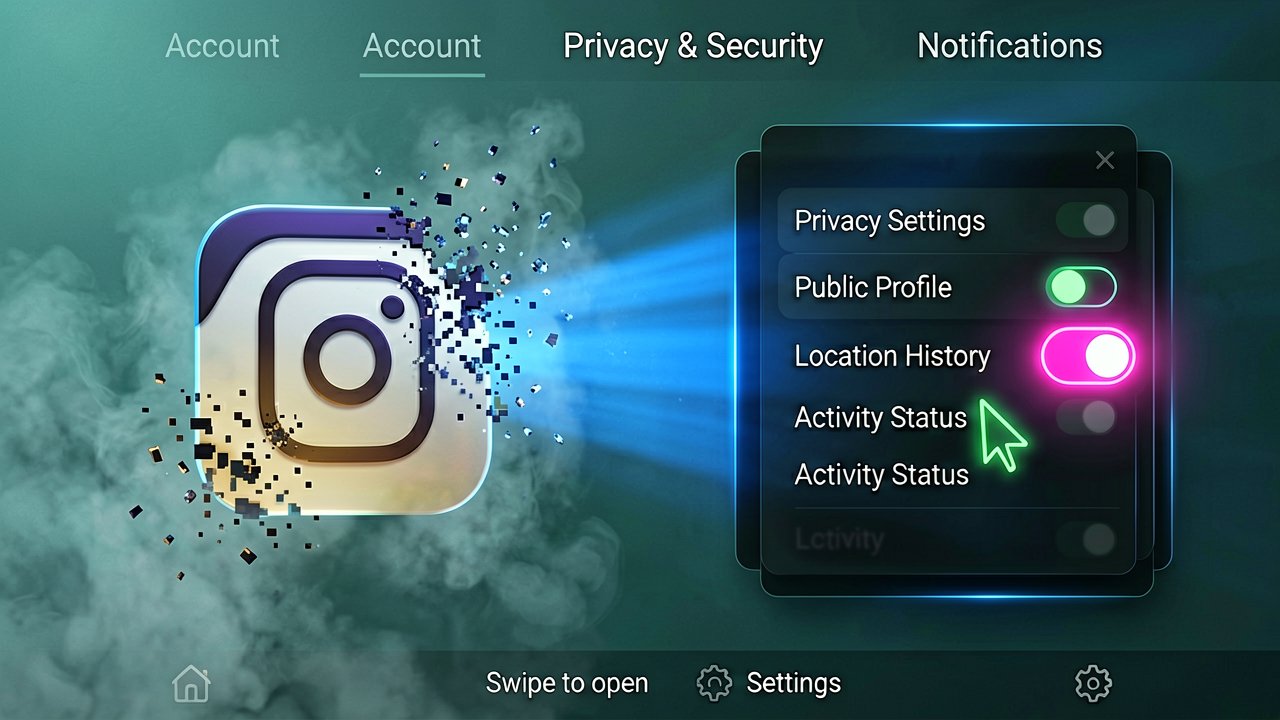
In a stunningly rapid corporate u-turn, Meta completely paused its newly deployed artificial intelligence feature, Muse Image, just three days after its public launch. The tech giant made the dramatic decision to pull the tool from Instagram on Friday following an immediate and intense wave of global user privacy complaints. This swift retreat underscores the accelerating friction between Silicon Valley's aggressive push for AI innovation and a public that is increasingly defensive about data protection and digital consent.
The feature, which was seamlessly integrated into the company's chatbot ecosystem, allowed users to manipulate, sketch over, and generate new images simply by targeting and referencing public Instagram profile pictures and accounts. However, the tool backfired almost immediately due to a controversial automatic opt-in policy. Users logged on to find that strangers could suddenly manipulate their likenesses without explicit authorization, turning standard social media profiles into active playgrounds for generative AI models.
Public Outcry and Celebrity Pushback
The resistance was not just a quiet murmur from privacy advocates. High-profile figures and major industry groups quickly mobilized to voice deep concerns over consent and the creation of nonconsensual digital replicas. Notably, Emmy-winning actor Hannah Einbinder lambasted the automatic configuration on Instagram, instructing her followers to manually hunt down hidden privacy settings. Within hours, the influential Hollywood union SAG-AFTRA issued a public advisory urging its entire membership to opt out, declaring Meta’s reliance on passive consent an utter miscalculation of public sentiment regarding digital safety.
The Realities of the AI Arms Race
A corporate spokesperson explicitly acknowledged the failure, stating that the feature missed the mark and would remain unavailable for the foreseeable future. Tech journalists at Reuters confirmed that while Meta initially intended to build a useful creative tool, they undercalculated the immense anxiety surrounding digital identity protection. Analysts viewing the fallout through reports by The New York Times note that this represents a rare, embarrassing hiccup in Mark Zuckerberg's broader, multi-billion-dollar campaign to dominate the consumer AI sector. For now, the episode serves as a stark reminder that even the biggest tech platforms cannot always force compliance when it comes to the intimate boundaries of personal photography.

What Most Reports Miss: The Muse Image debacle is not merely an isolated PR crisis; it is the inevitable collision of two incompatible corporate philosophies within the tech giant. On one side sits Meta’s aggressive growth engineering team, driven by the mandate to normalize generative AI interactions for its billions of users as quickly as possible. On the other side is the company's fragile trust and safety division, which has spent years trying to rebuild public goodwill following the Cambridge Analytica scandal. By bypassing traditional beta phases and rolling the feature out directly to global accounts via an automatic opt-in, management bet that user convenience would override privacy anxieties. They lost that bet in spectacular fashion.
The core of the issue lies in how the feature commodified personal identity. Unlike standard AI image generators that pull from anonymous scrapings of the open web, Muse Image interacted directly with live, curated personal profiles. An Instagram profile picture is a digital front door—it represents a user’s intentional public face. By allowing strangers to use those specific images as anchors for AI manipulation with a single prompt, Meta effectively transformed an expression of personal identity into a public utility. For many users, particularly women and public figures, this was not viewed as a harmless creative tool, but rather as an authorized engine for harassment and the creation of deepfakes.
A History of Passive Consent
This incident mirrors a long-standing pattern in Silicon Valley where tech platforms launch intrusive features under the guise of default optimization, placing the burden of privacy entirely on the consumer. Internal sources indicate that the toggle to opt out of the Muse feature was buried deep within three layers of the app’s account privacy settings, an interface design choice often criticized as a dark pattern. This historical reliance on user inertia backfired because the output of the AI was immediately visible and highly personal. When people saw how easily their own faces could be warped by strangers in real-time, the abstract concept of data privacy transformed into an immediate, visceral threat.
The pushback from Hollywood and major unions like SAG-AFTRA signals a broader societal shift where organized labor and public figures are no longer passive bystanders in the AI arms race. Having just fought intense contractual battles over digital likeness rights during recent industry strikes, creative professionals were uniquely primed to recognize the dangers of Meta's rollout. By mobilizing their massive followings to demand a boycott of the feature, these groups demonstrated that public figures now possess the collective leverage to force immediate policy changes at the highest levels of Big Tech.
Ultimately, the sudden suspension of Muse Image leaves Meta in a precarious position regarding its long-term AI roadmap. Billions of dollars in infrastructure are currently tied to the premise that consumer platforms can train and deploy models using internal user data ecosystems. If the public continues to successfully revolt against automatic data ingestion and identity manipulation, the data pipeline feeding these hungry AI models could begin to dry up. This seventy-two-hour fiasco has proven that while users may enjoy the novelty of artificial intelligence, they draw a hard, uncompromising line at the nonconsensual use of their own faces.
Reading Between the Lines: The swift withdrawal of Muse Image exposes a fundamental contradiction at the heart of Meta’s current corporate strategy. While executives publicly champion user autonomy and safety, the company’s underlying business model remains ravenous for personal data to feed its ballooning AI infrastructure. Pausing the tool after three days is being framed as an act of corporate responsibility, but it looks much more like a tactical retreat. Meta did not have a sudden change of heart regarding user privacy; they simply miscalculated how much friction the public would tolerate before pushing back against the wholesale automation of their digital likenesses.
This episode also highlights a glaring double standard in how tech monopolies view intellectual property versus personal data. Meta has spent considerable legal resources protecting its own proprietary algorithms and platform code from external scrapers, yet it showed no qualms about transforming its users’ personal photos into raw fuel for a generative AI engine. The assumption that uploading a photo to a social network implies consent for that photo to be disassembled, analyzed, and remixed by artificial intelligence is a dangerous leap in logic. By treating user identities as default training data, the company inadvertently exposed how little it values the concept of digital boundaries when a competitive edge is on the line.
The Illusion of the Opt-Out Option
Furthermore, the reliance on an "opt-out" mechanism rather than an explicit "opt-in" choice reveals the tech industry's persistent reluctance to give up behavioral data. True consumer choice requires clarity and ease of access, yet the settings required to disable Muse Image were deliberately obscured behind complex menus. This design philosophy assumes that if a user is too busy or technologically illiterate to find a hidden toggle, they have implicitly agreed to let an AI manipulate their face. As regulatory bodies globally begin to scrutinize dark patterns and forced consent, Meta's reliance on these outdated tactics suggests they are running out of sophisticated ways to secure user cooperation.
The long-term implications of this blunder will likely ripple across the entire tech sector, forcing competitors to rethink their own aggressive AI deployments. If a platform as ubiquitous as Instagram cannot successfully force an intrusive AI feature onto its user base, smaller companies will face even steeper uphill battles. The incident proves that public anxiety surrounding generative AI is shifting from abstract fears about future job losses to immediate concerns about personal security and digital dignity. Silicon Valley may have to accept a slower, far more heavily regulated path to AI monetization if it hopes to retain the trust of the people funding its ecosystems.
Silicon Valley remains entirely convinced that we all want our digital lives automated, optimized, and reinvented by algorithms, apparently failing to realize that sometimes a profile picture is just a profile picture, and not an open invitation to join Mark Zuckerberg's grand experiment in nonconsensual digital cloning.
Artūras Malašauskas is an AI Systems Integrator with 20+ years of production-grade web engineering experience. He has designed, shipped, and scaled enterprise Python/PHP systems for logistics, SaaS, and public-sector clients. For the past year, he has focused exclusively on AI integrations: deploying open-source LLMs, building generative media pipelines (image, audio, video), and engineering multi-agent workflows for real production environments. His standard: reproducibility, security, cost-efficient inference—no vaporware. He documents and evaluates emerging AI tooling, separating verified capabilities from marketing noise. Technical editor at: muza-ai.eu, ai-verslas.lt, ai-naujinos.lt Connect on LinkedIn
Comments