OpenAI GPT-5.6 Family Reshapes Enterprise AI Strategy with Specialized Sol, Terra, and Luna Models

OpenAI has fundamentally altered the enterprise artificial intelligence landscape with the official unveiling of its GPT-5.6 model family. Moving away from the monolithic release structures of the past, this new generation introduces three distinct, tiered models: Sol, Terra, and Luna. Each model is strategically engineered to address specific computational, financial, and operational requirements, reflecting an industry-wide pivot toward localized efficiency and intent-based routing in corporate workflows.
The strategic deployment of the GPT-5.6 family represents an overt acknowledgment that enterprises require nuanced, multi-tiered intelligence frameworks rather than single, all-purpose models. By segmenting capabilities across three clear tiers, OpenAI addresses the growing corporate demand for cost-optimized AI applications that do not compromise on security or domain expertise. According to details published on the , this multi-model rollout allows companies to deploy tier-specific resources dynamically based on the complexity of the task at hand.
This structural transformation signals a major evolution in how frontier AI labs monetize and deliver intelligence to the enterprise sector. The move establishes a highly competitive paradigm focused on granular infrastructure management, forcing CIOs and technical architects to transition from basic AI experimentation to rigorous, multi-tiered orchestration. This approach optimizes performance metrics while keeping token expenditures under strict control.
The GPT-5.6 Tiers: Sol, Terra, and Luna Breakdown
The portfolio is anchored by GPT-5.6 Sol, the company's flagship tier built explicitly for complex reasoning, advanced coding architectures, scientific research, and specialized cybersecurity engineering. Early documentation reveals that Sol introduces a highly reinforced safety stack designed to pressure-test systems and discover software vulnerabilities while resisting adversarial attacks. The model excels at assisting technical professionals with patch development and code reviews, operating as a high-tier reasoning engine for critical enterprise applications.
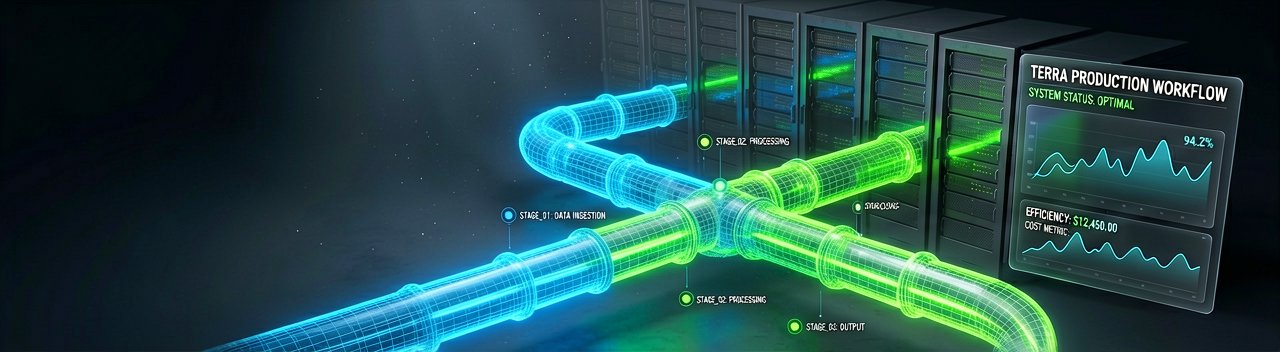
Positioned directly beneath the flagship tier is GPT-5.6 Terra, a mid-tier system designed to serve as a production workhorse for high-frequency corporate tasks. Terra balances cost and capability by delivering performance metrics highly competitive with older frontier systems like GPT-5.5, but at a 2x lower cost structure. This makes it an ideal fit for standard data processing pipelines, automated content systems, and daily operational infrastructure where premium reasoning is unnecessary.
The final tier, GPT-5.6 Luna, represents OpenAI's most cost-efficient and lightweight model to date. Optimized explicitly for raw speed and massive throughput volumes, Luna is built to handle low-latency operations such as large-scale customer service routing, high-volume sales transcript analysis, and basic data classification. This tier gives developers an affordable entry point for embedding rapid, localized intelligence throughout extensive software ecosystems.
Market Impact and the Rise of Intent-Based Model Routing
The architecture of the GPT-5.6 family forces a massive shift in how enterprises design their AI infrastructure. Instead of routing every query through a premium, resource-heavy model, developers can build intent-based routing systems that triage incoming requests automatically. Simple tasks are sent to Luna, standard processes are managed by Terra, and complex, high-stakes reasoning problems are escalated to Sol, optimizing operational budgets and reducing server strain.
Furthermore, OpenAI's coordinated rollout highlights deep entanglements with regulatory frameworks and national security priorities. As noted by the , the initial rollout phase began as a limited preview for a select group of trusted corporate partners following extensive coordination and previewing with the U.S. government. This approach underscores the growing categorization of high-tier frontier AI models, particularly Sol, as critical infrastructure that requires rigorous vetting and a structured deployment cycle before general public availability.
Expert Commentary: The Era of Pragmatic AI Infrastructure
From a journalist's perspective, the GPT-5.6 launch proves that the raw parameter-count arms race is evolving into a more mature race for architectural utility. OpenAI is signaling that the immediate future of enterprise AI lies in flexibility, structured guardrails, and cost management rather than just chasing higher benchmark scores at unsustainable price points. Offering distinct price-performance tiers allows OpenAI to defend its market share against open-source alternatives and specialized enterprise vendors.
For corporate decision-makers, this release changes the evaluation metrics for AI integration. The primary challenge is no longer selecting which vendor's model to use, but rather mastering the orchestration of a diverse family of models. Success will be defined by how effectively an enterprise can integrate Sol, Terra, and Luna into unified workflows, matching the precise cost and capability of the model to the financial and technical reality of the task.
The Fine Print of Tiered Intelligence
Reading Between the Lines: The market's enthusiastic reception of the GPT-5.6 family masks a deeper structural contradiction in the enterprise AI narrative. While OpenAI presents the Sol, Terra, and Luna models as a triumph of consumer choice and cost optimization, this fragmentation is equally a defensive maneuver against the rapidly collapsing margins of raw compute. By slicing its architecture into three distinct operational tiers, the company is effectively shifting the burden of optimization onto corporate development teams, who must now spend significant engineering hours building, testing, and maintaining complex middleware just to route basic queries to the correct endpoint.
Furthermore, the heavily advertised cost savings of the lower-tier Luna model introduce an unacknowledged operational paradox for risk-averse enterprises. In a corporate environment, a low-latency, low-cost model is only economical if its error rate remains negligible; yet, by definition, lightweight models achieve their speed by sacrificing deep contextual reasoning. When a mid-level customer service automation powered by Luna misinterprets a policy and hallucinates a costly commitment, the financial fallout can instantly wipe out the marginal savings gained from cheaper token infrastructure, forcing a retroactive and expensive escalation to the Sol tier.
This tiering strategy also reveals a quiet retreat from the long-held industry dream of a single, generalized artificial intelligence capable of handling any human task natively. Instead of delivering a unified frontier engine that is both infinitely capable and universally affordable, the market is being conditioned to accept a fractured ecosystem of specialized tools. This fragmentation plays directly into the hands of enterprise cloud giants who monetize the very orchestration pipelines, API gateways, and vector databases required to tie these disparate models back together into a coherent corporate strategy.
Looking ahead, the long-term viability of this multi-tier approach will depend entirely on how effectively OpenAI can prevent "model drift" across updates, where a prompt optimized for Terra suddenly requires the reasoning horsepower of Sol after a background patch. For enterprises signing multi-year infrastructure commitments, this unpredictability remains a hidden balance-sheet liability. Technical architects are beginning to realize that navigating OpenAI’s expanding planetary system requires less time marveling at the frontier of intelligence and far more time managing the mundane mechanics of corporate budget containment.
"We were promised a singular, omniscient digital oracle that would rewrite human history; instead, we received a meticulously itemized corporate utility bill and three different flavors of automated customer service routing."
Artūras Malašauskas is an AI Systems Integrator with 20+ years of production-grade web engineering experience. He has designed, shipped, and scaled enterprise Python/PHP systems for logistics, SaaS, and public-sector clients. For the past year, he has focused exclusively on AI integrations: deploying open-source LLMs, building generative media pipelines (image, audio, video), and engineering multi-agent workflows for real production environments. His standard: reproducibility, security, cost-efficient inference—no vaporware. He documents and evaluates emerging AI tooling, separating verified capabilities from marketing noise. Technical editor at: muza-ai.eu, ai-verslas.lt, ai-naujinos.lt Connect on LinkedIn
Comments