The In-House Silicon Shift: How Google and Amazon Are Fracturing Nvidia's AI Monopolization

For several years, Nvidia has maintained an ironclad monopoly over the artificial intelligence hardware ecosystem, dictating industry pricing and leaving hyperscalers vulnerable to acute supply shortages. However, a structural paradigm shift is quietly unfolding within the semiconductor landscape. Google and Amazon Web Services (AWS) are aggressively expanding their custom-engineered Application-Specific Integrated Circuit (ASIC) portfolios, designed specifically to bypass the financial premium and operational bottlenecks of third-party graphics processing units (GPUs). This transition signals a pivot from reactive buyers to proactive infrastructure architects, threatening to permanently diversify the balance of power in enterprise cloud computing.
The scale of this custom hardware deployment is rapidly moving past experimental, niche workloads. Instead of functioning merely as internal optimization tools, these hyper-optimized chip architectures are transforming into formidable public cloud services capable of rivaling Nvidia’s foundational flagship products. This vertical integration addresses the escalating electricity and infrastructure expenses associated with training next-generation large language models. As a result, institutional investors are carefully recalibrating their expectations for sustained merchant silicon dominance, anticipating a deeply segmented marketplace where proprietary cloud chips ingest substantial market share.
Google Elevates Scale via Trillium Architecture
Google’s internal hardware strategy centers on its sixth-generation Tensor Processing Unit, known as Trillium. Announced on the , Trillium introduces a massive 4.7-fold increase in peak compute performance per chip and doubles both High Bandwidth Memory capacity and Interchip Interconnect bandwidth compared to previous iterations. These technical enhancements deliver up to a 2.5-fold improvement in training performance per dollar, offering a critical financial off-ramp for enterprises dealing with tight margins. By decoupling itself from Nvidia’s rigid pricing structures, Google can achieve superior vertical optimization, enabling its infrastructure to run massive foundational models far more cost-effectively than standard commercial accelerators.
Amazon Explores Direct Commercial Distribution of Trainium
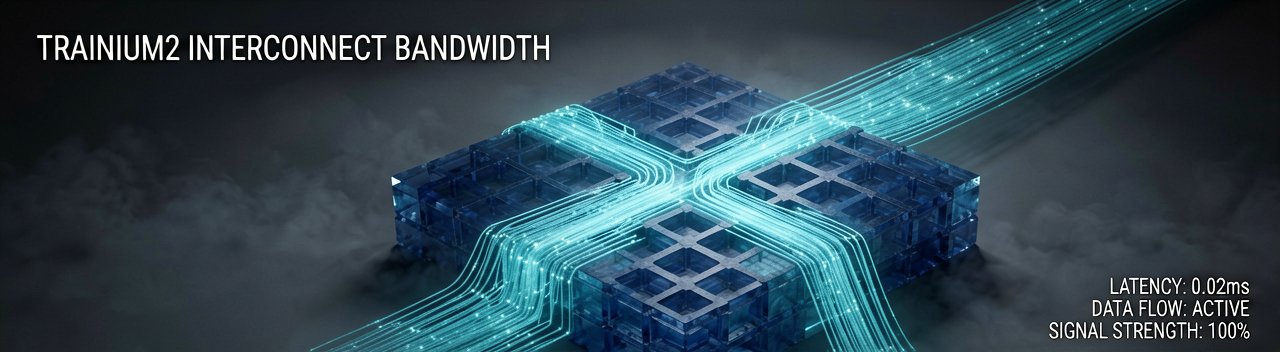
AWS is pursuing an equally disruptive operational trajectory with its Trainium silicon lineup. While AWS has historically kept its custom hardware locked within its proprietary EC2 instances, a reporting paradigm shift documented by TechCrunch indicates that Amazon has entered preliminary discussions to sell its Trainium AI accelerators directly to external data centers. This strategic move directly challenges Nvidia’s core hardware business model by bringing merchant ASICs into alternative hosting environments. Supported by announcements on the official Amazon Press Center regarding the wide deployment of Trainium2, AWS is proving that purpose-built silicon can optimize both training and inference economics at an unprecedented global scale.
The Financial Realignment of AI Capital Expenditures
This massive rise in custom cloud silicon presents an unavoidable challenge to Nvidia’s historic gross margins. While elite, cutting-edge foundation model training still frequently relies on merchant GPUs, everyday commercial inference and mainstream model fine-tuning are migrating toward custom ASICs due to basic financial necessity. Hyperscalers possess the immense capital reserves required to sustain prolonged chip development pipelines, which shields them from supply-chain constraints. Consequently, the semiconductor industry is moving toward a highly fractured ecosystem, where the ultimate winners will be determined by energy efficiency, vertical software integration, and raw price-to-performance metrics rather than pure graphical throughput.
Architecting an Alternative Ecosystem
Behind the Scenes: The corporate scramble to secure high-performance silicon is shifting from a basic resource race into a calculated architectural war. For the past decade, Nvidia’s proprietary Compute Unified Device Architecture (CUDA) platform acted as a massive moat, locking developers into its hardware universe by making software conversion a nightmare. Now, hyperscalers are leveraging their own colossal scales to break those software dependencies. Rather than aiming to entirely replace Nvidia’s top-tier computing architectures overnight, Google and Amazon are aggressively funding unified, open-source compiler frameworks to make processing hardware entirely interchangeable.
This long-term strategy targets the massive, ongoing financial overhead of artificial intelligence deployments: inference. While training massive foundation models captures mainstream headlines, running daily user queries accounts for the vast majority of ongoing enterprise computing expenses. To exploit this vulnerability, Amazon Web Services has consistently updated its specialized Amazon Press Center roadmap for Trainium and Inferentia hardware to prove how highly targeted, purpose-built silicon can drastically undercut standard GPUs on a pure cost-per-query matrix.
Furthermore, the operational dynamics of cloud computing providers allow them to absorb design and initial manufacturing risks that traditional semiconductor startups simply cannot survive. Google’s extensive history with internal processing units provides a perfect blueprint for this transition. As detailed on the official Google Cloud Blog, their sixth-generation architecture integrates directly into pre-optimized liquid-cooled data centers, scaling massive computing power seamlessly without relying on third-party supply-chain lotteries.

The ultimate consequence of this internal silicon shift is a severe disruption to traditional enterprise procurement channels. As reports surfaced via TechCrunch outlining Amazon’s early considerations to market its Trainium hardware directly to private infrastructure companies, the hyper-scaler strategy transformed from a defensive cost-saving measure into an aggressive merchant market expansion. This multi-layered commoditization forces a structural market split, reducing general graphics processors to highly specialized accelerators while proprietary cloud hardware quietly manages the everyday backbone of enterprise artificial intelligence workloads.
The Hidden Fault Lines of Silicon Independence
Reading Between the Lines: The prevailing industry narrative suggests that hyperscale capital expenditures can easily engineering a path away from merchant silicon dominance, yet this assumption glosses over a glaring structural contradiction. Google and Amazon are pitching their custom chip architectures as direct paths to financial independence, but their financial filings reveal that their reliance on Nvidia’s hardware has actually increased alongside their internal chip investments. This paradox stems from a simple reality: building custom hardware does not instantly solve the massive software fragmentation problem that plagues modern machine learning operations.
Furthermore, the long-term cost efficiencies promised by custom application-specific integrated circuits are deeply vulnerable to shifting artificial intelligence architectures. Building a custom chip like Google’s Trillium or Amazon's Trainium takes years of development, leaving the final hardware rigid and locked into specific mathematical formats. If the underlying machine learning models radically pivot toward new attention mechanisms or entirely different neural structures, these multi-billion-dollar custom silicon investments risk becoming highly optimized legacy hardware long before they achieve full economic amortization.
This reality forces tech giants into a delicate balancing act, as they must maintain their massive, high-margin partnerships with Nvidia while quietly trying to undermine them. While AWS claims to offer an independent hardware alternative through its expanded distribution model, its cloud business still heavily relies on being the first to deploy Nvidia’s latest cutting-edge architecture to satisfy elite corporate clients. This dual-track strategy reveals that the silicon revolution is less about an immediate market takeover and more about building a tactical bargaining chip to force future merchant silicon price reductions.
Ultimately, the true friction point in this corporate standoff will not be decided by manufacturing capacity, but by raw engineering talent. Convincing software developers to abandon deeply integrated development environments for a fragmented ecosystem of proprietary cloud compilers remains a monumental hurdle. Until hyperscalers can prove their custom software stacks are as frictionless and universally adaptable as the industry standards, the massive capital poured into custom silicon will yield an expensive corporate insurance policy rather than a clean market victory.
"In the grand theater of artificial intelligence infrastructure, tech giants are spending tens of billions of dollars to build their own custom silicon, only to discover that the most difficult part of escaping a monopoly isn't manufacturing the hardware, but convincing developers to actually read the instruction manual."
Artūras Malašauskas is an AI Systems Integrator with 20+ years of production-grade web engineering experience. He has designed, shipped, and scaled enterprise Python/PHP systems for logistics, SaaS, and public-sector clients. For the past year, he has focused exclusively on AI integrations: deploying open-source LLMs, building generative media pipelines (image, audio, video), and engineering multi-agent workflows for real production environments. His standard: reproducibility, security, cost-efficient inference—no vaporware. He documents and evaluates emerging AI tooling, separating verified capabilities from marketing noise. Technical editor at: muza-ai.eu, ai-verslas.lt, ai-naujinos.lt Connect on LinkedIn
Comments