Nvidia and LangChain Shatter Enterprise AI Barriers with 10x Lower Inference Cost Blueprint

The enterprise artificial intelligence landscape has reached a significant economic turning point. Nvidia has partnered with LangChain to launch the NemoClaw Deep Agents blueprint, an open-source reference architecture engineered to address the skyrocketing operational expenses of agentic workflows. By integrating specific hardware efficiencies with cognitive orchestration, the joint framework cuts AI inference costs by up to tenfold while maintaining benchmark-leading agent execution quality.
According to official benchmark results published on the LangChain Blog, an enterprise agent utilizing the new open stack achieved an aggregate score of 0.86 at a functional cost of just $4.48 per task. In stark contrast, the next closest performing model demanded $43.48 to complete the identical workload. This massive price reduction shifts AI agents from expensive experimental novelties into financially viable, production-scale corporate assets.
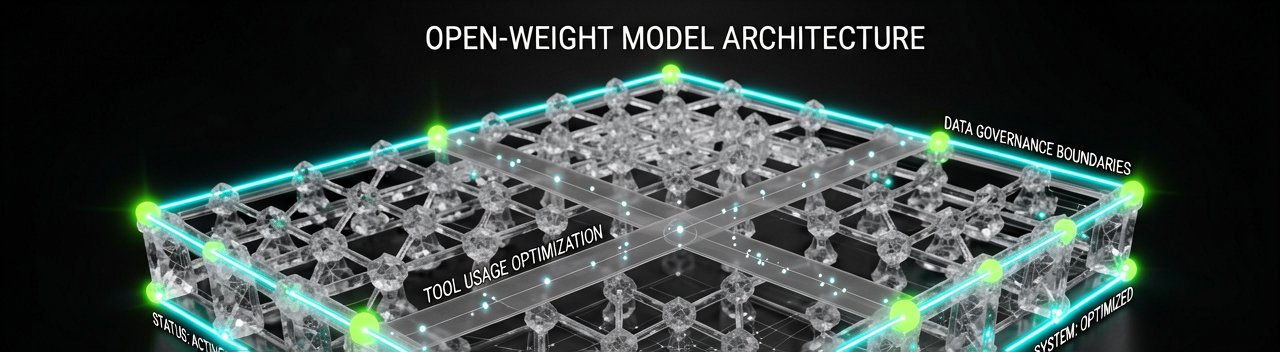
This strategic move allows enterprise IT departments to break away from proprietary, black-box vendor lock-in. By leveraging an open-weight foundation, corporations can fine-tune model weights, customize intermediate reasoning paths, and strictly control data governance. Tech leaders can deploy these systems safely within private cloud or on-premise infrastructure without escalating per-token commercial licensing fees.
The Architecture Behind the Efficiency Gains
The NemoClaw blueprint achieves its dramatic cost reductions by coordinating three separate layers of the modern enterprise software stack. First, Nvidia provides Nemotron 3 Ultra, an open-weight model layer designed specifically for deep domain fine-tuning and specialized industrial intelligence. Second, the orchestration is managed via the PR Newswire announcement of LangChain Deep Agents, a framework that manages long-running agent logic, multi-step planning, tool usage, and memory retention. Finally, the system executes within Nvidia OpenShell, a secure runtime that enforces sandboxed privacy and strict deny-by-default network security policies.
Market Impact and the Rise of Open Ecosystems
Historically, complex autonomous AI agents were restricted by their chatty nature, making numerous model calls per task and accumulating massive infrastructure bills. Industry evaluation from financial analysts at Futu News highlights that this software release completes Nvidia's comprehensive enterprise AI puzzle. By pairing software-level pipeline simplification with the raw token throughput of hardware platforms like Blackwell, the tech giant cements its dominance over both the silicon layer and the operational orchestration layer. Early ecosystem support from major cloud providers and consulting firms signals a rapid shift toward tailored, domain-specific super agents across the global market.
Behind the Economic Transformation of Agentic Workflows
What Most Reports Miss: The true breakthrough of the NemoClaw framework is not simply the raw reduction in computing costs, but how it reshapes the underlying physics of autonomous software engineering. For years, enterprise developers have been trapped in a vicious cycle where increasing an agent's reasoning capabilities exponentially multiplied its runtime costs. Because autonomous agents must constantly query large language models to self-correct, plan, and evaluate their own tool usage, a single automated corporate task could easily trigger dozens of separate API calls. By compressing this cognitive overhead, Nvidia and LangChain have transformed what was once a highly speculative cost center into a predictable, line-item operational expense.
From a technical standpoint, this efficiency is achieved by eliminating the standard "trial-and-error" loops that plague traditional agent frameworks. Standard enterprise agents often waste valuable compute tokens generating suboptimal paths, forcing them to re-read massive context windows multiple times. The NemoClaw blueprint bypasses this waste by using specialized open-weight models that have been pre-trained to anticipate tool requirements and corporate data structures. Consequently, the agent executes complex, multi-step actions with significantly fewer intermediate steps, directly translating to a drastic drop in total cloud infrastructure consumption.
This architectural shift marks a major strategic victory for open-source and open-weight software models over proprietary, closed-source ecosystems. Until recently, CIOs felt forced to rely on massive, general-purpose commercial models to handle intricate reasoning tasks, exposing their corporations to unpredictable pricing hikes and data privacy risks. By optimizing the open-weight Nemotron architecture specifically for agentic orchestration, this blueprint proves that smaller, highly specialized models can outperform monolithic systems at a fraction of the cost, keeping sensitive corporate data securely within a company's private cloud infrastructure.

For systems integrators and enterprise software architects, the financial viability of this framework fundamentally alters the return-on-investment timeline for digital transformation projects. Early corporate experiments with AI agents frequently stalled in the pilot phase because scaling those solutions across global logistics or customer service departments carried a prohibitive price tag. With a tenfold reduction in token expenses, massive deployment across thousands of concurrent corporate workflows becomes immediately justifiable, setting off a quiet race among fortune 500 companies to automate deeply complex back-office operations.
Reading Between the Lines: The Hidden Trade-offs of Ultra-Cheap Inference
The Skeptic's Ledger: While a tenfold reduction in enterprise AI inference costs sounds like an unalloyed victory for corporate balance sheets, experienced infrastructure engineers know that computing efficiency is rarely a free lunch. The headline-grabbing metric of $4.48 per task assumes a static, perfectly optimized environment that ignores the steep upfront capitalization costs required to deploy this architecture. Transitioning from a predictable pay-as-you-go commercial API to a self-hosted open stack requires significant initial investments in engineering talent, private cloud infrastructure, and proprietary data pipeline alignment, potentially shifting expenses from the operational column straight into capital expenditures.
Furthermore, the reliance on specialized, smaller open-weight models introduces an undeniable fragility to complex corporate workflows. Monolithic, closed-source models maintain a massive cushion of general-purpose logic that allows them to gracefully handle unexpected, unformatted edge cases or erratic human inputs. In contrast, highly optimized, hyper-efficient agent blueprints achieve their cost savings by stripping out this cognitive excess. This raises a stark operational contradiction: in pursuing rock-bottom inference costs, enterprises may find themselves building fragile systems that shatter the moment they encounter an outlier scenario not covered during the initial fine-tuning phase.
There is also a profound economic paradox at play, known as Jevons' Paradox, which suggests that increasing the efficiency of a resource often leads to more total consumption, not less. By slashing the cost of an individual agent task by 90%, Nvidia and LangChain are not necessarily lowering an enterprise’s total tech spend. Instead, they are making it financially feasible for corporations to deploy millions of autonomous sub-agents across every single node of their operations. The eventual result could be an overall increase in aggregate enterprise compute demand, playing perfectly into Nvidia's long-term strategy to sell even more silicon infrastructure to power these newly viable, pervasive agent networks.
Ultimately, this framework marks the beginning of an intense consolidation era within the enterprise AI software stack, where hardware vendors and orchestration layers become inseparable. While the blueprint promotes "openness," the deep structural coupling between LangChain's orchestration logic and Nvidia's proprietary hardware accelerators creates a subtle, new form of vendor lock-in. Corporations rushing toward these massive cost-saving measures must realize they are trading the software-level lock-in of proprietary model APIs for a much deeper, more inflexible dependence on specialized enterprise silicon ecosystems.
"We've successfully optimized the artificial intelligence to file corporate expense reports for a mere fraction of a cent, only to discover it requires a half-million-dollar team of specialized engineers just to keep it from hallucinating the receipts."
Artūras Malašauskas is an AI Systems Integrator with 20+ years of production-grade web engineering experience. He has designed, shipped, and scaled enterprise Python/PHP systems for logistics, SaaS, and public-sector clients. For the past year, he has focused exclusively on AI integrations: deploying open-source LLMs, building generative media pipelines (image, audio, video), and engineering multi-agent workflows for real production environments. His standard: reproducibility, security, cost-efficient inference—no vaporware. He documents and evaluates emerging AI tooling, separating verified capabilities from marketing noise. Technical editor at: muza-ai.eu, ai-verslas.lt, ai-naujinos.lt Connect on LinkedIn
Comments