The AI Sector Outpaces Broader Markets in 2026 While Discounted Equities Signal Prime Earnings Season Buys
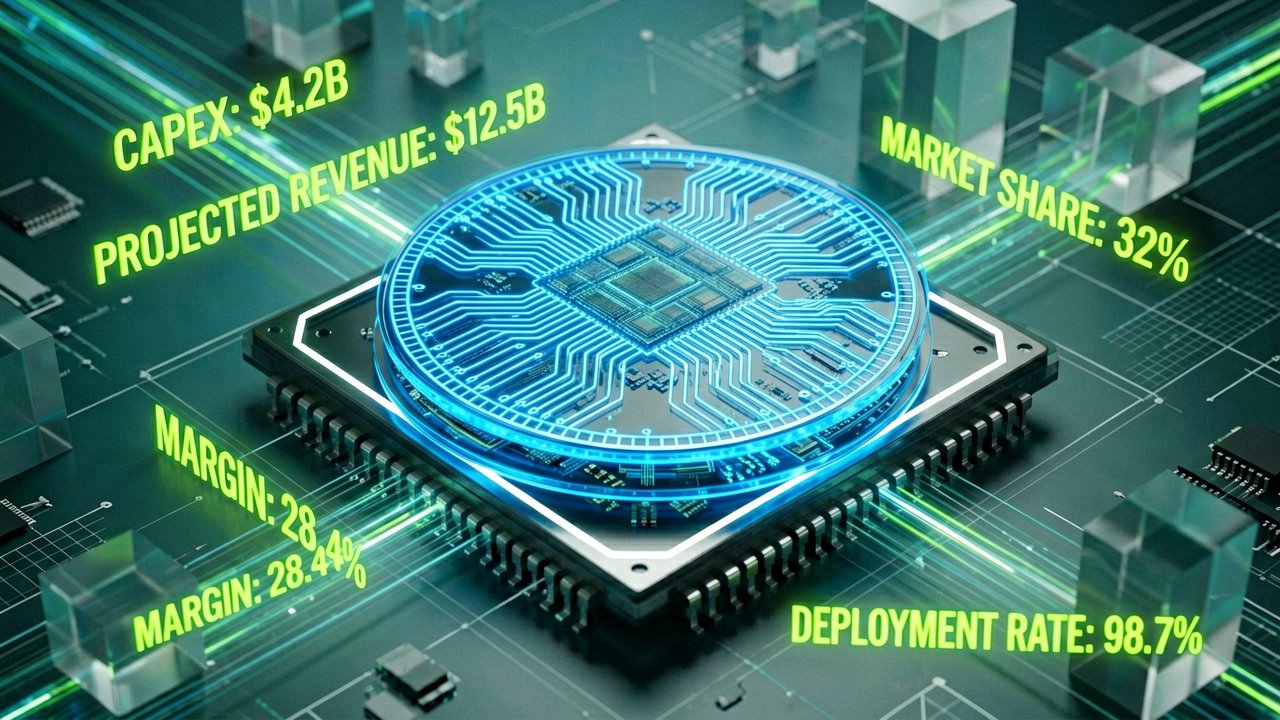
Artificial intelligence equities have decisively outpaced the broader stock market throughout 2026, establishing a dominant trajectory heading into the second-quarter earnings season. This market outperformance remains structurally intact despite periodic bouts of tech sector volatility. Data indicates that the Global X Artificial Intelligence & Technology ETF has clocked an impressive 23% gain this year, substantially outperforming the tech-focused Nasdaq Composite index, which appreciated by 13% over the same period. Financial analysts note that the build-out of physical and digital AI infrastructure continues to serve as the primary locomotive for overall market expansion.
The fundamental catalyst driving this prolonged rally is the unprecedented capital expenditure from major tech conglomerates. Alphabet, Amazon, Meta Platforms, and Microsoft are projected to increase their collective capital spending by 77% to a record $725 billion in 2026, according to analysis shared by The Motley Fool. This aggressive infrastructure spending directly fuels the order books of semiconductor manufacturers and electronics manufacturing service providers. Goldman Sachs equity strategists maintain that AI infrastructure will continue to contribute nearly two-thirds of the projected 22% growth in S&P 500 second-quarter corporate profits, as reported by Barron's .
Recent minor equity pullbacks and macro-driven sell-offs have inadvertently created highly compelling entry points for disciplined investors. Select institutional-grade AI suppliers are currently trading at steep discounts relative to their long-term profit outlooks, signaling prime buying opportunities ahead of summer earnings reports. Industry experts suggest capitalizing on these temporary price contractions, as robust forward guidance from hyperscalers could quickly trigger substantial rebounds across the entire AI ecosystem.
Hyperscale Capital Backlog Validates Core Infrastructure
The contractual health of major cloud platforms provides deep visibility into future tech sector revenues. The combined contractual backlog of industry leaders Google, Microsoft, Amazon, and Oracle stands at a massive $2.1 trillion. This financial runway ensures that data center construction and hardware procurement will sustain momentum regardless of short-term macroeconomic fluctuations. Consequently, supply chain component manufacturers and custom silicon designers are fundamentally positioned to absorb this immense capital allocation over the next several fiscal quarters.

Evaluating Strategic Entry Points in Battered Hardware Equities
Market consolidation has adjusted the forward multiples of several high-performing AI technology firms, making them highly attractive to value-oriented growth investors. Chip dominant players like Nvidia are experiencing heightened institutional demand as forward price-to-earnings multiples stabilize alongside long-term consensus estimates projecting a 50% compound annual earnings growth rate over the next three years. Simultaneously, electronics manufacturing services suppliers such as Celestica have pulled back nearly 24% from their recent 52-week highs despite manufacturing critical custom processors and networking switches for hyperscalers. These compressed valuations present unique opportunities for investors seeking outsized returns as these companies report actual margin acceleration later this month.
What the Mainstream Narrative Misses: The Realities of the AI CapEx Boom
While standard financial headlines track the aggregate trillions flowing into cloud computing infrastructure, the structural reality on the ground highlights an intense shift from generalized data center capacity to specialized, high-density AI clusters. Major tech conglomerates are no longer just expanding square footage; they are completely re-engineering their facilities to accommodate the immense power and cooling requirements of next-generation hardware. This shift is creating a severe bottleneck in the electrical grid and utility sectors, turning energy availability into the true limiting factor for artificial intelligence growth in 2026. Forward-looking institutional investors are increasingly looking past the prominent chipmakers to find deep-value opportunities in the industrial suppliers providing heavy-duty liquid cooling systems, high-voltage transformers, and localized power generation solutions.
This massive infrastructural push mirrors historical technology cycles, reminiscent of the early fiber-optic build-out of the late 1990s and the rapid expansion of mobile networks in the late 2000s. In those previous eras, initial market over-enthusiasm led to sharp valuation corrections, yet the underlying physical architecture remained intact, eventually enabling the consumer software booms that defined the next decade. Industry veterans note that the current AI build-out is fundamentally healthier because it is being fully funded by the record-shattering free cash flows of established big tech players, rather than the speculative debt that characterized the dot-com bubble. This structural cushion means that even if public sentiment fluctuates or software monetization lags behind projections, the hardware foundation will continue to be laid out systematically.
Behind the closed doors of Silicon Valley and Wall Street, a fierce debate is unfolding among enterprise software developers and corporate boards regarding the immediate return on investment for these AI deployments. While hardware procurement remains at an all-time high, enterprise adoption of complex generative AI agents has faced operational hurdles, including strict data privacy regulations, system integration delays, and corporate risk aversion. Consequently, a temporary valuation gap has emerged between the highly visible hardware providers and the underlying software platforms. Sophisticated market analysts view this divergence not as a structural failure, but as a classic implementation lag, suggesting that the recent sell-offs in select AI software equities offer an exceptionally rare, discounted entry window before enterprise deployment scales up efficiently.
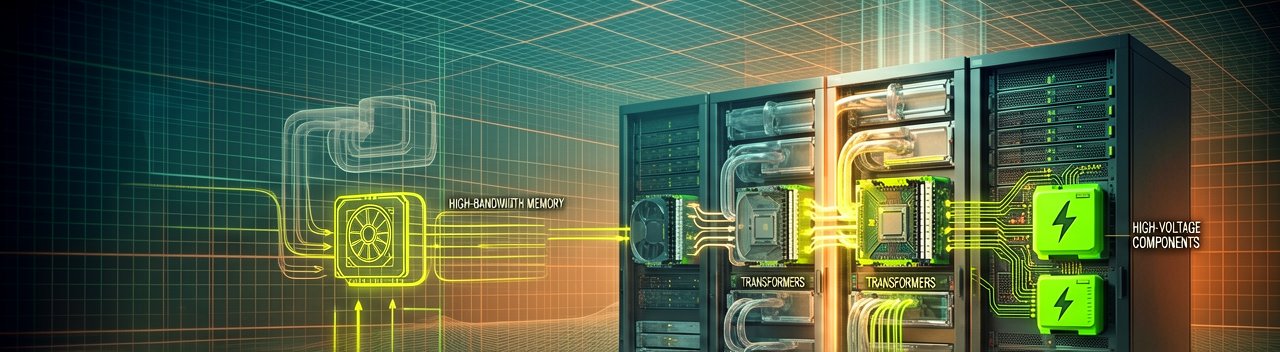
The upcoming earnings season will serve as a critical reality check for the global supply chain, forcing executives to provide transparent timelines on product delivery and capacity constraints. Hardware contract manufacturers are currently navigating complex geopolitical friction points and components shortages, particularly in advanced packaging materials and high-bandwidth memory chips. Companies that have successfully secured diversified, resilient supply lines are poised to significantly outpace their competitors in gross margin expansion. For investors looking past short-term summer volatility, identifying these highly efficient operational managers trading at a discount will likely yield the strongest asymmetric returns as corporate earnings confirm which players are converting capital expenditures into real, sustainable profitability.
Reading Between the Lines: The Friction Between Capital Outlay and Commercial Yield
The prevailing Wall Street consensus rests on the comfortable assumption that corporate capital expenditure can expand indefinitely without severely pressuring operating margins. While hyperscalers comfortably boast massive contractual backlogs, a stark contradiction lies at the heart of the current artificial intelligence boom: the physical cost of computing is declining much slower than the market price of artificial intelligence output. As open-source models narrow the capabilities gap with proprietary frameworks, the pricing power for foundational software APIs is facing intense deflationary pressure. This dynamic forces a structural reality where tech giants must spend exponentially more on advanced hardware simply to defend their existing search, cloud, and productivity software market share from commoditization.
Furthermore, a major disconnect is emerging between institutional expectations for immediate productivity gains and the pragmatic realities of enterprise software deployment. While enterprise software providers frequently tout internal efficiency metrics during quarterly earnings calls, third-party corporate buyers report that integrating generative workflows into legacy infrastructure remains slow, costly, and heavily constrained by data governance frameworks. This lag suggests that the anticipated wave of corporate software spending may arrive much later than the current hardware production cadence implies. Consequently, the sector risks entering a temporary deployment lull, where hardware capacity briefly outpaces enterprise demand, exposing over-leveraged suppliers to sudden inventory adjustments.
The medium-term macro implications also present a notable paradox for the broader markets. The immense energy and capital demands of the tech sector are systematically crowding out capital allocation for other vital industries, including consumer discretionary and non-AI manufacturing sectors. If the Federal Reserve maintains an extended plateau on interest rates, the premium for capital will force a sharper divide between cash-rich hyperscalers and the rest of the corporate ecosystem. For investors, this environment means that navigating the upcoming earnings season requires a strict pivot away from speculative growth metrics toward audited unit economics, ensuring that discounted equity purchases are backed by robust free cash flows rather than mere proximity to the artificial intelligence narrative.
"Investing in AI infrastructure right now is a bit like buying up all the premium real estate in a newly discovered territory; everyone is entirely certain it will eventually be a bustling metropolis, but for the next few financial quarters, the primary economic activity consists entirely of selling shovels and expensive blueprints to each other."
Artūras Malašauskas is an AI Systems Integrator with 20+ years of production-grade web engineering experience. He has designed, shipped, and scaled enterprise Python/PHP systems for logistics, SaaS, and public-sector clients. For the past year, he has focused exclusively on AI integrations: deploying open-source LLMs, building generative media pipelines (image, audio, video), and engineering multi-agent workflows for real production environments. His standard: reproducibility, security, cost-efficient inference—no vaporware. He documents and evaluates emerging AI tooling, separating verified capabilities from marketing noise. Technical editor at: muza-ai.eu, ai-verslas.lt, ai-naujinos.lt Connect on LinkedIn
Comments