Nubia Slashes Through the Noise with a Bold July 17 Date for Its OS-Level AI Smartphone
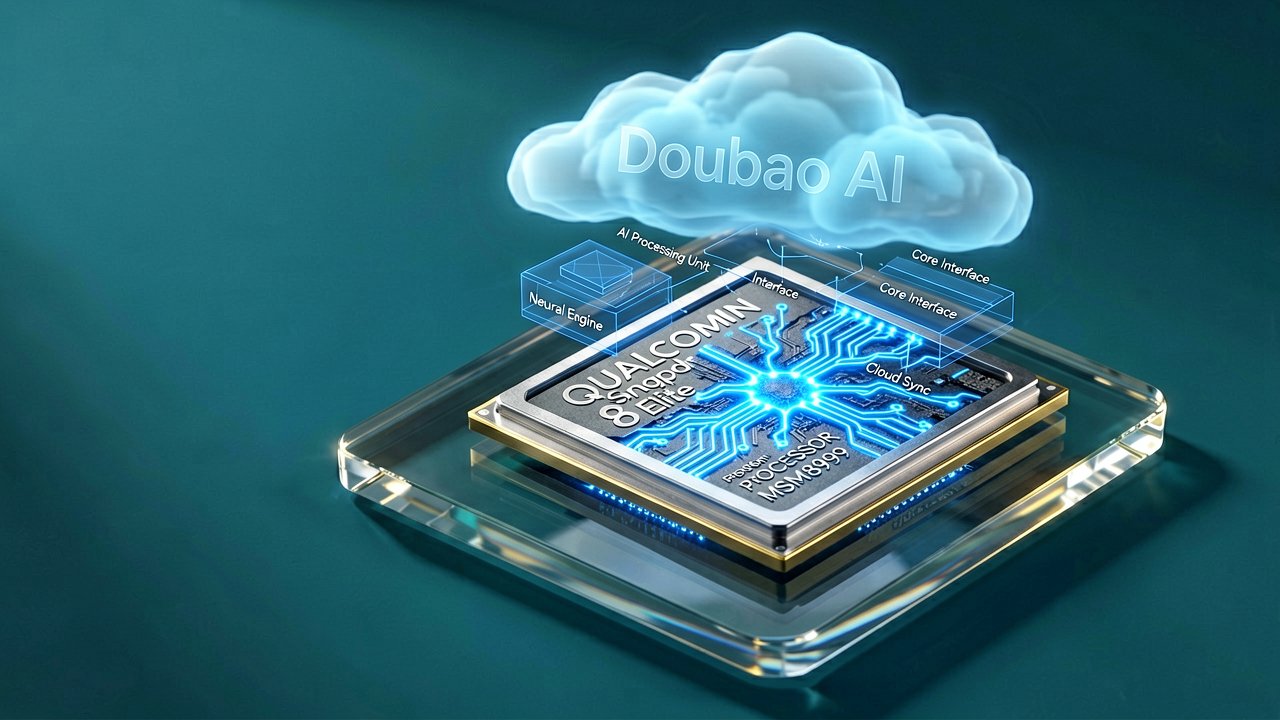
Every smartphone manufacturer on the planet is currently shouting about artificial intelligence, but Nubia Technology wants to prove it is actually doing something different. Company President Ni Fei officially locked in a July 17 global debut for what the brand boldly claims will be the world's first truly mass-produced, system-level AI agent smartphone. Rather than treating artificial intelligence like a shiny software coat of paint or a collection of isolated apps, this upcoming device promises to intertwine machine intelligence straight into the core hardware and software architecture.
The highly anticipated reveal is scheduled to anchor the opening day of the 2026 World Artificial Intelligence Conference in Shanghai, according to details shared via the company's official channels. While big players have mostly introduced AI as a glorified assistant waiting for prompts, this new handset aims to reshape user interaction by acting as an autonomous agent. If the rumor mill holds true, the device is expected to arrive as a refined, production-ready successor to the experimental M153 technical preview, utilizing flagship silicon like Qualcomm’s Snapdragon 8 Elite alongside deep platform-level protocols to prevent the security and app-blocking hiccups that held back early iterations.
A Shift From Gimmick to Architecture
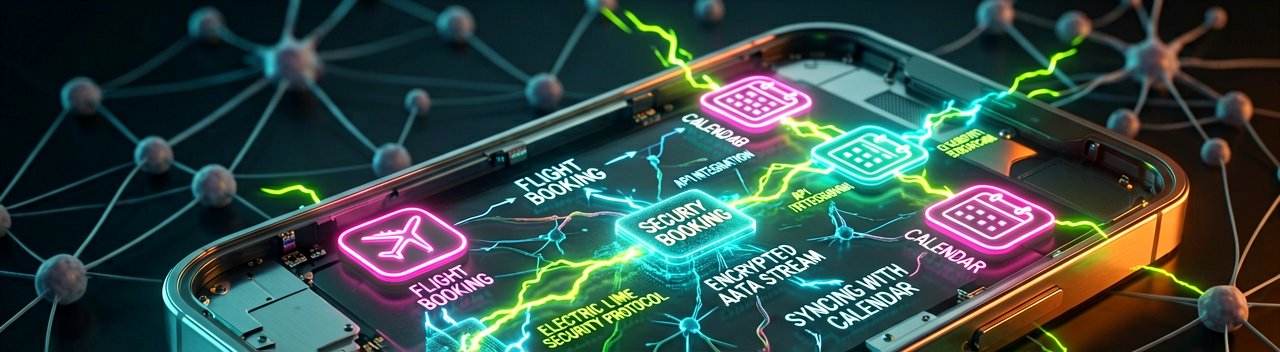
The tech industry's collective exhaustion with basic AI wrappers makes this hardware integration approach incredibly interesting. Reports from GSMArena suggest the smartphone will feature autonomous cross-platform operations, leveraging ByteDance's robust Doubao AI system to seamlessly execute complex multi-app tasks on behalf of the user. Instead of clicking through three separate menus to book a flight and schedule a calendar reminder, the system-level agent handles the background legwork natively.
Of course, claiming a "world first" in the hyper-competitive mobile space always invites plenty of healthy skepticism. Industry observers tracked by gagadget point out that the real test lies in how seamlessly the OS-level agent manages secure transactions and third-party applications without triggering system alarms or violating user privacy. Nubia is taking a massive swing at the future of mobile computing, and we will see exactly how much substance backs up that architecture chatter when the curtains go up in mid-July.
Behind the Corporate Bravado: The race to build a truly autonomous smartphone is less about adding flashy new features and more about escaping a profound industry-wide design rut. For nearly two decades, our relationship with mobile tech has been dictated by the app-store paradigm—a rigid ecosystem where users act as the manual bridge between isolated software silos. Nubia’s aggressive pivot toward an OS-level AI agent represents a high-stakes gamble that consumers are ready to move past the traditional grid of icons and into an era of intent-based computing, where the operating system itself understands and executes complex, multi-step workflows without forcing the user to open a single app.
This architectural shift is precisely where earlier, highly publicized attempts at dedicated AI hardware stumbled. Gadgets like the Humane AI Pin and the Rabbit R1 captured the tech world's imagination by promising an app-free future, but they ultimately cratered under the weight of slow cloud latency, dismal battery life, and a complete lack of deep integration with local hardware. By baking the agent directly into a flagship smartphone architecture, complete with dedicated on-device neural processing units and a massive battery footprint, Nubia is trying to prove that the ideal home for an AI agent isn't a quirky standalone accessory, but the powerful glass-and-metal slab already resting in your pocket.
The Complex Geopolitics of Mobile AI
Achieving this level of native, system-wide automation requires an incredibly intricate web of corporate and regional partnerships that most casual observers overlook. Because a global smartphone launch demands compliance with vastly different regulatory frameworks, Nubia has to navigate a fragmented software landscape. While local models like ByteDance’s Doubao handle the heavy lifting for the domestic market, the international variants will inevitably rely on a completely different backend infrastructure—likely partnering with Western tech giants or relying heavily on open-source local models—to clear strict privacy and data-handling hurdles across Europe and North America.
This duality highlights a growing divide among industry stakeholders regarding where an AI’s "brain" should actually live. Silicon vendors like Qualcomm are fiercely advocating for on-device processing to protect user privacy and eliminate latency, while cloud providers push for massive server-side models capable of handling deeper contextual reasoning. Nubia’s technical strategy appears to split the difference, using beefed-up local hardware to manage immediate, sensitive user actions while leaning on cloud-based APIs for broader web synthesis and cross-platform transactions.
Ultimately, the success of this mid-July launch hinges entirely on developer friction and trust. For an AI agent to truly redefine the user experience, it needs permission to dig deep into third-party applications, read user data, and autonomously make decisions—such as authorized financial transactions—on the owner's behalf. If developers block the agent's access out of competitive fears, or if consumers balk at handing over the keys to their digital lives to an automated system, this ambitious device risks being relegated to a fascinating historical footnote rather than the revolutionary milestone its creators are promising.
Reading Between the Lines: The tech industry’s sudden infatuation with "system-level AI" looks less like a organic technological leap and more like a desperate marketing maneuver to revive stagnant upgrade cycles. For years, hardware manufacturers have struggled to convince consumers that a slightly faster processor or a marginally sharper camera justifies dropping a thousand dollars on a new device. By slapping the "world’s first true AI smartphone" label onto the chassis, Nubia is attempting to manufacture an entirely new product category out of thin air, betting heavily that the sheer novelty of an autonomous agent will overshadow the glaring lack of standardized infrastructure to support it.
This aggressive branding strategy introduces a massive contradiction between corporate rhetoric and practical reality. Nubia’s promotional material promises a revolutionary, frictionless experience where an AI agent seamlessly navigates your digital life, yet the underlying mobile ecosystem remains explicitly designed to prevent exactly that kind of freewheeling cross-app behavior. Security protocols, sandboxed application architectures, and competitive corporate walled gardens are built specifically to stop one app from hijacking or controlling another. Overcoming these deep-seated technical and legal barriers requires industry-wide cooperation that a single, mid-tier hardware manufacturer simply does not possess the market leverage to dictate.
The Real Cost of Autonomy
Even if we assume the software operates flawlessly, the physical toll on the hardware introduces another wave of compromises that tech evangelists conveniently ignore. Running continuous, on-device large language models to power an active AI agent is an absolute resource hog, requiring massive chunks of RAM and keeping the processor in a high-power state. This reality directly clashes with the consumer's fundamental demand for a device that doesn't burn a hole through their pocket or die by lunchtime, suggesting that early adopters may have to trade predictable battery life and device longevity for the privilege of a slightly smarter digital assistant.
Projecting into the near future, the broader implication of this launch is a slippery slope toward an entirely commoditized hardware landscape where the smartphone brand itself becomes irrelevant. If an operating-system-level AI agent successfully handles every interaction, transaction, and piece of content curation, the user’s primary relationship shifts entirely from the phone manufacturer to the AI model provider. In trying to lead the charge into the intelligent future, hardware brands like Nubia might accidentally accelerate their own demotion into becoming mere suppliers of anonymous, interchangeable glass bricks that simply serve as housing for someone else's software.
It turns out the true future of mobile computing isn't a sleek, sci-fi companion that anticipates your every whim; it is an incredibly complex piece of engineering dedicated to saving you the agonizing, existential torment of having to tap your thumb three whole times to order a burrito.
Artūras Malašauskas is an AI Systems Integrator with 20+ years of production-grade web engineering experience. He has designed, shipped, and scaled enterprise Python/PHP systems for logistics, SaaS, and public-sector clients. For the past year, he has focused exclusively on AI integrations: deploying open-source LLMs, building generative media pipelines (image, audio, video), and engineering multi-agent workflows for real production environments. His standard: reproducibility, security, cost-efficient inference—no vaporware. He documents and evaluates emerging AI tooling, separating verified capabilities from marketing noise. Technical editor at: muza-ai.eu, ai-verslas.lt, ai-naujinos.lt Connect on LinkedIn
Comments