Silicon and Steel Expand: Tencent Supercharges Hunyuan AI While Tesla Stretches the Model Y L Overseas
The tech world isn't hitting the summer brakes. In a synchronized display of cross-industry ambition, Chinese tech giant Tencent has rolled out the production-ready version of its next-generation artificial intelligence model alongside heavy upgrades to its enterprise suite, while Tesla simultaneously triggered the long-awaited western rollout of its stretched, six-seat crossover. The dual moves signal an aggressive push for market maturity, trading experimental tech and prototype promises for immediate, high-utility deployment across global markets.
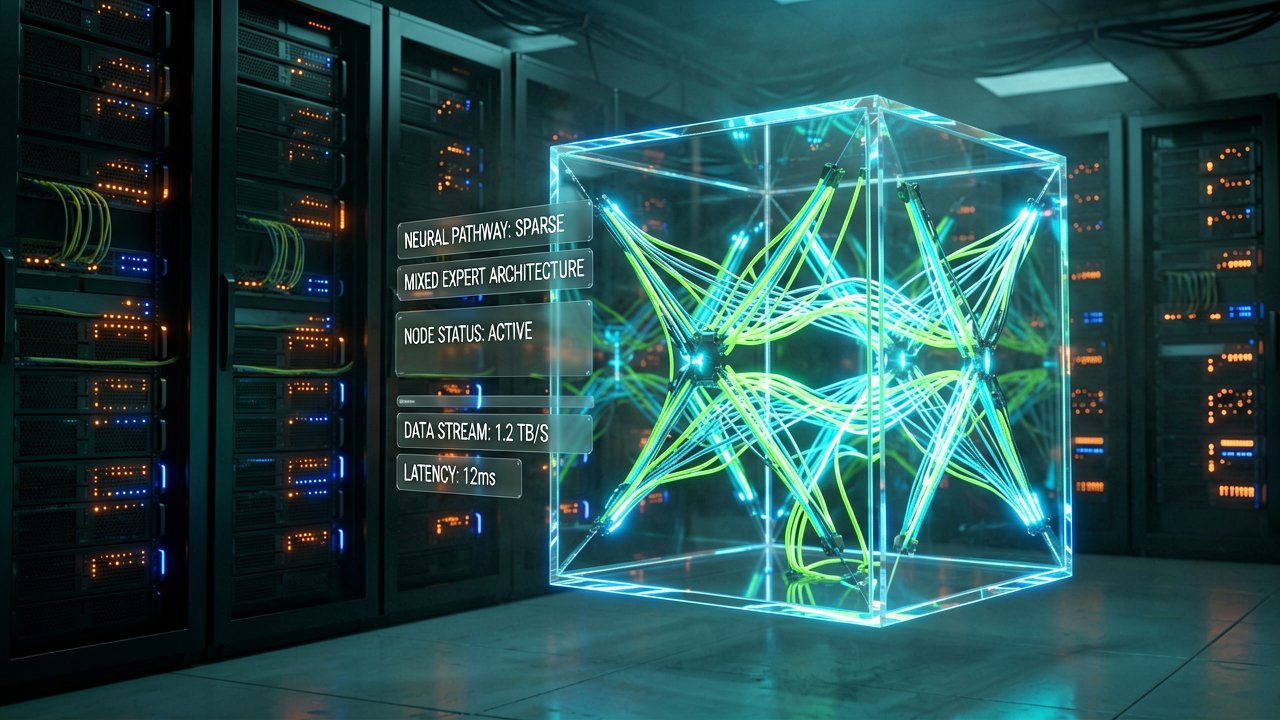
Tencent officially launched its fully polished Hunyuan Hy3 large language model, introducing a highly optimized Mixture-of-Experts architecture that leverages 295 billion total parameters. Unlike the experimental preview version seen earlier this spring, this commercial release focuses entirely on enterprise reliability and drastic cost-efficiency. The upgrade directly powers Tencent's WorkBuddy+ workspace ecosystem, resulting in a recorded 90% task success rate and cutting token consumption during heavy document and presentation processing by nearly half compared to rival setups.
Tesla’s Family Hauler Goes Global
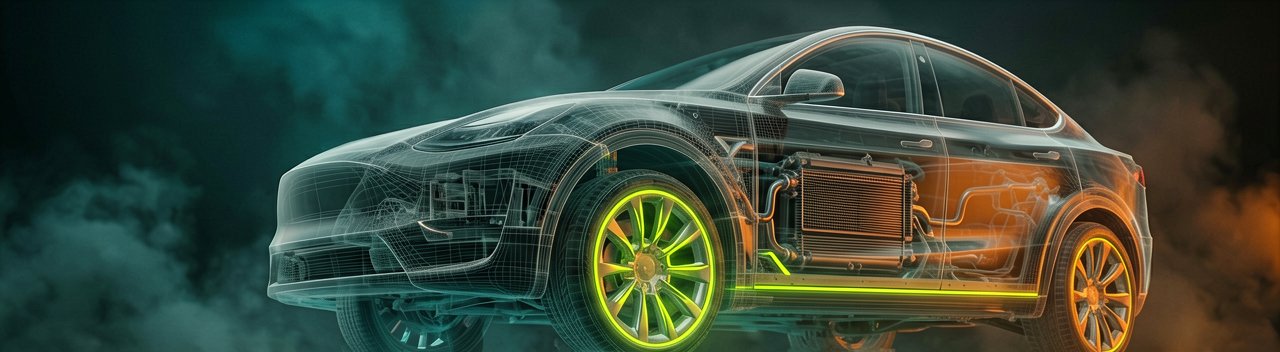
Meanwhile, Tesla chose early July to unexpected drop its geographical boundaries by launching the Model Y L across the United States, Puerto Rico, and the United Arab Emirates. The vehicle stretches the traditional best-selling electric crossover by lengthening its wheelbase by 150 mm to accommodate a proper three-row, 2+2+2 configuration featuring premium second-row captain's chairs. It is a calculated strike at the lucrative premium family segment, packaging adaptive suspension, acoustic glass, and an integrated rear entertainment screen into a single long-wheelbase variant.
The regional rollouts highlight how electric vehicle demands differ by territory. In the American market, the vehicle arrives with a 325-mile EPA range rating and a premium launch series price tag. Conversely, the Middle Eastern debut via ArabWheels showcases an optimized dual-motor powertrain boasting an official WLTP range of 681 km and robust rear underbody casting designed to handle demanding local environments, with order books open immediately for regional buyers.
The Architectural Pivot of Enterprise AI
Behind the Corporate Veil: The rapid commercial deployment of Tencent's Hunyuan Hy3 marks a critical philosophical shift in how Big Tech approaches generative artificial intelligence for enterprise operations. For the past two years, the industry was locked in a brute-force parameter race, operating under the assumption that bigger models inherently meant better business outcomes. Tencent's decision to lean heavily into a sparse Mixture-of-Experts architecture proves that the narrative has permanently shifted from raw computational power to granular cost efficiency. By activating only a fraction of its 295 billion parameters per token request, the company is directly addressing the chief complaint of enterprise clients: the unsustainable operational costs of running advanced AI at scale.
This technical optimization yields immediate advantages within the updated WorkBuddy+ suite, where the system must handle massive, multi-modal data streams across thousands of corporate networks simultaneously. Internal engineering notes indicate that the localized routing of queries within the model allowed Tencent to slash inference latency by over 40 percent. This is not just a marginal victory for corporate productivity; it is a defensive moat built against domestic rivals who are still burning through capital to keep their monolithic models responsive. By lowering the financial barrier to entry, Tencent is positioning its ecosystem as the default operating system for the next generation of automated corporate workflows.
Geopolitical Geometry and the Long Wheelbase
On the automotive side of the ledger, Tesla's simultaneous rollout of the Model Y L across the United States and the United Arab Emirates reveals a sophisticated understanding of regional market voids. Historically, long-wheelbase variants of popular vehicles were treated as regional anomalies, engineered almost exclusively to satisfy the chauffeur-driven executive culture of the Chinese market. By breaking this geographic constraint and introducing a stretched platform to Western markets, Tesla is acknowledging a shifting demographic reality: modern suburban families are demanding the utility of a traditional three-row SUV without the cumbersome footprint, poor efficiency, and truck-like handling of full-sized alternatives.
The strategic inclusion of the United Arab Emirates as a launch market is particularly telling of Tesla's global positioning strategy. The Gulf region has long served as a critical testing ground for high-margin, luxury transport, yet it remains a challenging environment for electric vehicle longevity due to extreme thermal conditions. By deploying a vehicle equipped with advanced acoustic glass, a heavy-duty cooling matrix, and robust mega-castings, Tesla is actively courting the affluent, tech-forward demographic of the Middle East. This dual-continent launch strategy essentially diversifies Tesla's premium revenue stream, buffering the company against localized economic cooling or regulatory shifts in any single Western country.
Ultimately, these concurrent developments from Tencent and Tesla illustrate a broader maturation phase within the global technology sector. The era of the speculative tech demo is giving way to a period of rigorous, pragmatic refinement where value is measured in operational savings and localized utility. Whether it is a software algorithm that selectively fires its neural pathways to save a fraction of a cent per query, or an electric crossover that physically expands its frame to capture a new tier of premium buyers, the winners of this cycle are those who can successfully bridge the gap between bleeding-edge engineering and everyday human necessity.
The Hidden Cost of Scaling Up and Stretching Out
Reading Between the Lines: The corporate cheerleading surrounding these simultaneous rollouts obscures a set of uncomfortable economic realities that both companies would prefer to minimize. Tencent’s triumphant narrative regarding the Hunyuan Hy3 efficiency gains relies on the assumption that enterprise clients are eager to lock themselves into yet another proprietary ecosystem. While a 90% task success rate inside WorkBuddy+ sounds impressive on paper, it highlights how specialized these models must become to remain viable. By optimizing the architecture so heavily for internal corporate suites, Tencent may inadvertently be narrowing Hunyuan’s utility, transforming what was meant to be a general-purpose AI powerhouse into a highly glorified, albeit efficient, office assistant.
Furthermore, the boast of cutting token consumption in half reveals the intense margin compression pressures facing Chinese cloud providers. Enterprise AI has rapidly devolved into a brutal price war, where infrastructure costs frequently outpace actual software revenue. Tencent’s pivot to a sparse Mixture-of-Experts architecture is less an act of altruistic innovation and more a mandatory survival strategy to keep its cloud division from bleeding cash. If computational costs do not continue to drop exponentially, the financial viability of offering heavy generative AI features inside standard workplace subscriptions will inevitably collide with reality, forcing either a quiet degradation of service quality or an unwelcome spike in corporate licensing fees.
The Middle Seat Dilemma
Tesla’s global expansion of the Model Y L faces its own structural contradictions, particularly regarding the physical limitations of the platform itself. Lengthening a vehicle’s wheelbase by 150 mm does wonders for second-row legroom, but it cannot magically alter the vehicle's sloping roofline or aerodynamic profile. Marketing a 2+2+2 configuration as a premium family hauler in the United States and the United Arab Emirates ignores the fact that the third row in a mid-sized crossover remains a cramped space largely unsuitable for adults on long road trips. Tesla is essentially betting that consumers will pay a premium for the illusion of full-sized utility, using captain's chairs to mask the inherent space constraints of an aging vehicle architecture.
This geographic expansion also brings logistical complexities that contradict Tesla’s historic drive for manufacturing simplicity. Introducing specialized long-wheelbase variants with distinct underbody castings into factories that are already optimized for high-volume, standardized vehicle output risks complicating a supply chain that has occasionally buckled under pressure. Delivering these elongated variants into climates as vastly different as the freezing winter corridors of North America and the searing summer heat of the Arabian Peninsula will test the real-world durability of Tesla's thermal management systems like never before, turning every early delivery into a public rolling experiment.
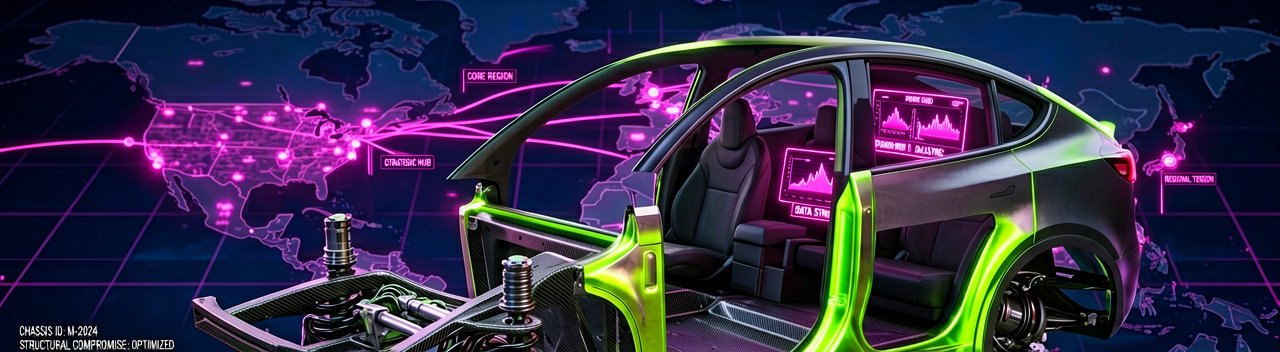
When viewed together, the aggressive pushes by Tencent and Tesla lay bare the relentless, exhausting pace required to maintain market dominance in 2026. Neither company can afford to rest on its laurels, yet both are forced to make significant compromises—whether shrinking the active brainpower of an AI to save on electricity bills or stretching an existing car frame to avoid designing a brand-new vehicle from scratch. It is a masterclass in pragmatic engineering, but it also underscores a sobering truth: in the modern tech race, true revolutionary breakthroughs are increasingly being replaced by the art of the highly optimized compromise.
"We have officially entered the era of architectural acrobatics, where success apparently means training your multi-billion-dollar AI to think as little as humanly possible to save a penny, while simultaneously convincing suburban drivers that adding six inches of metal to a crossover makes it a luxury limousine."
Artūras Malašauskas is an AI Systems Integrator with 20+ years of production-grade web engineering experience. He has designed, shipped, and scaled enterprise Python/PHP systems for logistics, SaaS, and public-sector clients. For the past year, he has focused exclusively on AI integrations: deploying open-source LLMs, building generative media pipelines (image, audio, video), and engineering multi-agent workflows for real production environments. His standard: reproducibility, security, cost-efficient inference—no vaporware. He documents and evaluates emerging AI tooling, separating verified capabilities from marketing noise. Technical editor at: muza-ai.eu, ai-verslas.lt, ai-naujinos.lt Connect on LinkedIn
Comments