FalconStor Bridges the Mainframe Cyber Resilience Void with Cloud Clean Room Solution
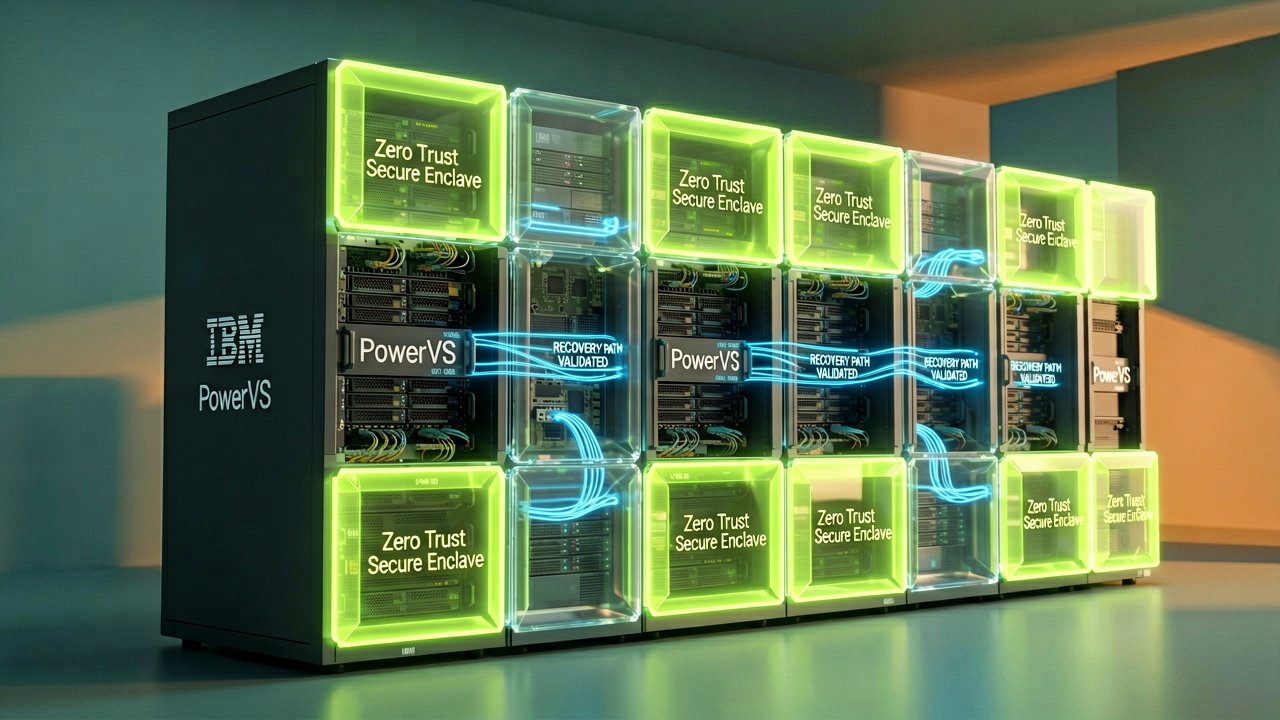
Enterprise data protection has historically prioritized the preservation and immutable vaulting of system data over the verification of the recovery process itself. This structural emphasis has created an operational mismatch for heavy enterprise architectures, which frequently possess robust backup repositories but lack the dynamic staging infrastructure required to verify complex recovery workloads under duress. FalconStor Software has addressed this exact core operational risk with the launch of its FalconStor Cloud Clean Room, an on-demand infrastructure platform purpose-built to engineer safe, isolated recovery testing specifically tailored for legacy-heavy IBM Power environments.
The market context surrounding this architectural update highlights a pervasive industry blind spot regarding cyber resilience readiness. Primary industry research conducted by analyst firm notes that while 91% of enterprise organizations place an explicit corporate priority on cyber resilience, a meager 30% maintain absolute confidence in their systematic recovery speeds following a destructive cyberattack or cloud data loss event, according to a report published by HyperFRAME Research. The persistent technical hurdle has never been standard data capture; instead, it centers on validated, multi-tier recovery testing that avoids cost-prohibitive standby architectures.
Architectural Orchestration and the Zero Trust Secure Enclave
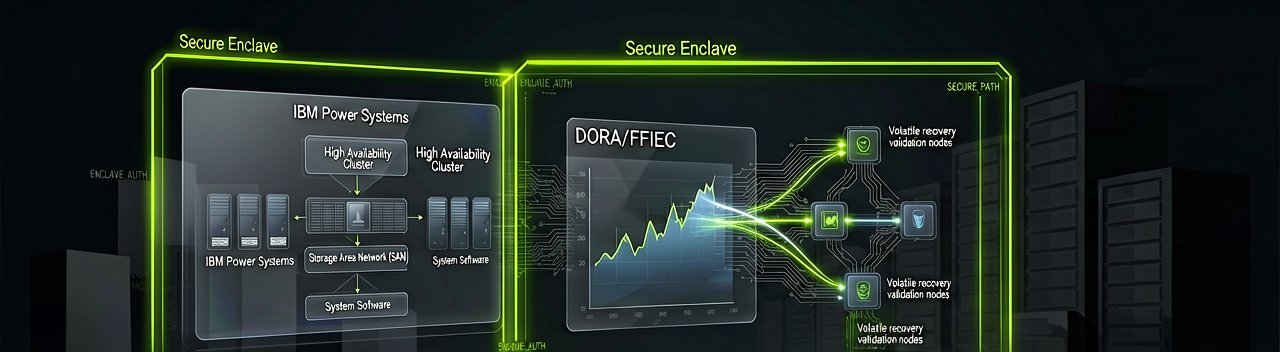
The solution functions as an on-demand infrastructure layer running natively inside the IBM Cloud, tapping directly into the global hardware footprint of IBM PowerVS environments. It is orchestrated through FalconStor’s patent-pending Zero Trust Secure Enclave (ZTSE) technology, which provisions a persistent, structurally hardened environment where isolated logical partitions (LPARs) are dynamically engineered, validated, and completely destroyed on an as-needed basis, per documentation by Help Net Security. By instantiating each system check from a strictly pristine state, the technology prevents the accidental carry-forward of hidden malware strains, persistent environment drift, or corrupted configuration payloads across test iterations.
Regulatory Alignment and Strategic Ecosystem Shifts
This automated provisioning strategy effectively insulates security-focused enterprise IT teams from needing deep, localized cloud virtualization expertise, as FalconStor handles the end-to-end lifecycle from LPAR setup through automated decommissioning. The resulting validation cycle moves away from superficial checkboxes by producing audit-ready, documented proof of system recoverability. This rigorous level of tracking provides an immediate compliance framework for highly regulated global firms working under strict mandates like the Digital Operational Resilience Act (DORA), FFIEC, and PCI-DSS, according to details shared by Yahoo Finance .
Market Impact and Managed Service Expansion
From a product integration standpoint, FalconStor has structured this clean room layer as an immediate add-on for its existing FalconStor Habanero enterprise platform, which delivers managed offsite backup vaulting for core IBM i and IBM Power ecosystems. This pairing offers mid-market and large enterprises a clean path toward complete ransomware resilience without resorting to disruptive, costly rip-and-replace infrastructure migrations. Furthermore, FalconStor is extending the underlying tech as a licensable, white-label framework for third-party Independent Software Vendors (ISVs) and Managed Service Providers (MSPs), signaling a strategic broader push to establish this on-demand secure enclave as a repeatable, foundational industry utility across complex hybrid-cloud landscapes.
Behind the Scenes: Inside the Enterprise Recovery Bottleneck
The operational reality confronting enterprise IT departments running critical legacy workloads is often hidden beneath polished boardroom assurances of 99.999% uptime. For decades, corporate disaster recovery strategies were built entirely around the mechanical certainty of tape or block-level replication, designed to protect physical data centers from localized acts of God, like floods or power grid failures. In those scenarios, restoring data to an identical secondary site was a linear engineering problem. However, modern ransomware actors do not destroy infrastructure; they patiently infect it, mapping active directory paths and planting dormant malware payloads weeks before executing an encryption trigger. This reality transforms traditional backup repositories into potential instruments of self-inflicted re-infection during a blind recovery attempt.
When an enterprise attempts a full-scale restoration of an IBM Power environment under active breach conditions, the true bottleneck quickly shifts from pure data throughput speeds to structural availability. Systems administrators are forced to make a high-stakes calculation: where can they safely boot and analyze heavily integrated logical partitions without exposing production networks to residual malware strains? Building and maintaining a dedicated, physically isolated secondary infrastructure mirroring a massive enterprise footprint is economically prohibitive for all but the largest global financial institutions. Without a sandbox layer, security analysts are trapped in an operational gridlock, forced to ration limited physical hardware to audit systems sequentially while business operations remain completely paralyzed.
This structural gap has fueled the urgent industry transition toward ephemeral, software-defined secure enclaves. By using cloud computing resources to provision isolated staging environments instantly, enterprise teams can parallelize their inspection processes, spinning up multiple historical system states simultaneously to isolate the exact point of malicious injection. This approach shifts the core metric of cyber resilience away from recovery point objectives and directly onto the speed of clean, verified restoration. The strategic value of this model lies in its ability to completely decouple validation testing from the physical data center, allowing enterprise recovery teams to systematically dissect, patch, and clear complex operating systems before a single byte of data is reintroduced to the active production network.
Reading Between the Lines: The Friction Point of Software-Defined Resilience
While the architectural premise of spinning up an ephemeral cloud clean room on-demand presents an elegant solution to a persistent engineering bottleneck, it simultaneously unmasks a structural contradiction in legacy infrastructure modernization. Enterprises running mission-critical workloads on IBM Power platforms often do so because these environments are heavily optimized, deeply integrated monolithic stacks that have evolved over decades. The industry consensus heavily promotes the cloud as a friction-free, infinitely scalable safety valve. Yet, the reality of mapping highly customized, tightly coupled on-premises network dependencies, storage topologies, and ancient operating system quirks into a virtualized, off-site environment remains a deeply complex integration challenge. A software enclave is only as rapid as the automated translation layer that maps the old world to the new.
Furthermore, relying on a cloud provider’s infrastructure for emergency cyber recovery introduces a secondary, and often unacknowledged, risk vector: concentrated availability risk during a regional or industry-wide security crisis. In the event of a widespread ransomware campaign targeting multiple financial institutions or supply chain networks simultaneously, the localized demand for isolated cloud compute capacity could spike dramatically. While cloud hyperscalers boast immense global footprints, the highly specialized hardware configurations required to faithfully simulate enterprise-grade environments are finite. Organizations operating under the assumption that an emergency clean room will always be instantly available on a standard commercial basis may find themselves competing for raw infrastructure allocation exactly when they can least afford to wait.
Finally, the long-term operational success of these automated validation platforms hinges entirely on the human element, specifically the cultural divergence between corporate compliance teams and boots-on-the-ground systems administrators. Producing an automated, audit-ready compliance report satisfies regulatory mandates, but it risks fostering a false sense of operational security if the underlying test parameters are not continually updated to reflect evolving threat vectors. If the testing protocols degenerate into passive, automated checkboxes designed merely to satisfy digital operational resilience regulations, the clean room effectively transforms into an expensive telemetry theater. For true cyber resilience, the technology must be paired with continuous, aggressive chaos engineering that actively simulates the messy, unscripted chaos of a live, malicious breach.
The corporate dream has always been to buy a piece of software that effortlessly solves a systemic architecture problem with the simple click of a button. However, until someone figures out how to securely containerize and seamlessly migrate thirty years of accumulated legacy configurations into a pristine cloud bubble without breaking a single undocumented network link, the enterprise clean room will remain a brilliantly engineered sanctuary inside an operational minefield.
Artūras Malašauskas is an AI Systems Integrator with 20+ years of production-grade web engineering experience. He has designed, shipped, and scaled enterprise Python/PHP systems for logistics, SaaS, and public-sector clients. For the past year, he has focused exclusively on AI integrations: deploying open-source LLMs, building generative media pipelines (image, audio, video), and engineering multi-agent workflows for real production environments. His standard: reproducibility, security, cost-efficient inference—no vaporware. He documents and evaluates emerging AI tooling, separating verified capabilities from marketing noise. Technical editor at: muza-ai.eu, ai-verslas.lt, ai-naujinos.lt Connect on LinkedIn
Comments