Commugen's AI Agents Disrupt Enterprise TPRM Playbook to Automate Cyber GRC
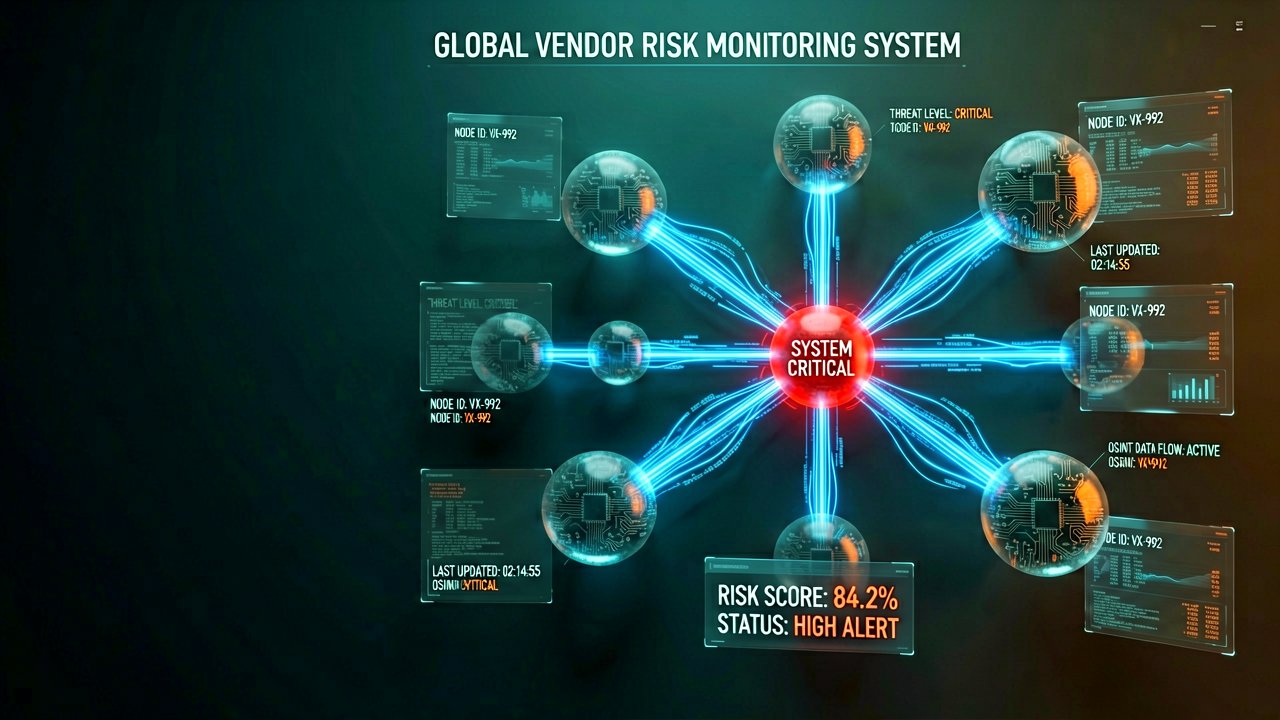
The enterprise cybersecurity perimeter is expanding far beyond internal infrastructure. Organizations must continually manage complex webs of third-party vendors and partners. In response to this operational bottleneck, Cyber GRC innovator Commugen has launched a new portfolio of specialized AI agents designed to automate Third-Party Risk Management (TPRM). This strategic rollout signals an industry shift away from manual assessments, spreadsheets, and delayed questionnaires toward continuous, autonomous vendor compliance and real-time oversight.
The core philosophy powering this technology is a no-code automation framework that embeds artificial intelligence natively into existing governance, risk, and compliance workflows. According to corporate resources published by Commugen, these specialized agents are engineered to enhance rather than replace existing security processes. They automate repetitive overhead tasks, such as internal policy drafting and historical cyber incident investigation, allowing overstretched security teams to allocate resources toward critical risk mitigation priorities instead of data entry.
Enterprise risk management is also evolving rapidly to account for complex data regulations, forcing compliance departments to modernize or risk massive regulatory exposure. The release of these tools follows a string of focused AI automation solutions from the company, including a dedicated Cyber Risk Quantification Agent and the world's first unified compliance suite targeting the strict guidelines of the European Union AI Act. This consolidated product strategy establishes a highly integrated ecosystem where internal compliance controls and external supplier data interact autonomously.
Autonomous OSINT and Real-Time Supplier Profiling
The fundamental bottleneck of traditional third-party risk management is its reliance on point-in-time, self-reported vendor surveys. Commugen's suite attempts to bridge this security gap through autonomous open-source intelligence (OSINT) gathering. According to reporting from Knox News, the newly deployed AI agents conduct extensive, continuous research across public data layers to flag past ransomware attacks, exposed login credentials, patch vulnerabilities, and active breach histories. By aggregating these fragmented data streams into a single intelligence report, the platform calculates a unified vendor cyber risk score, reducing manual analysis timelines from days down to minutes.
The Strategic Power of Explainable AI in Risk Quantification
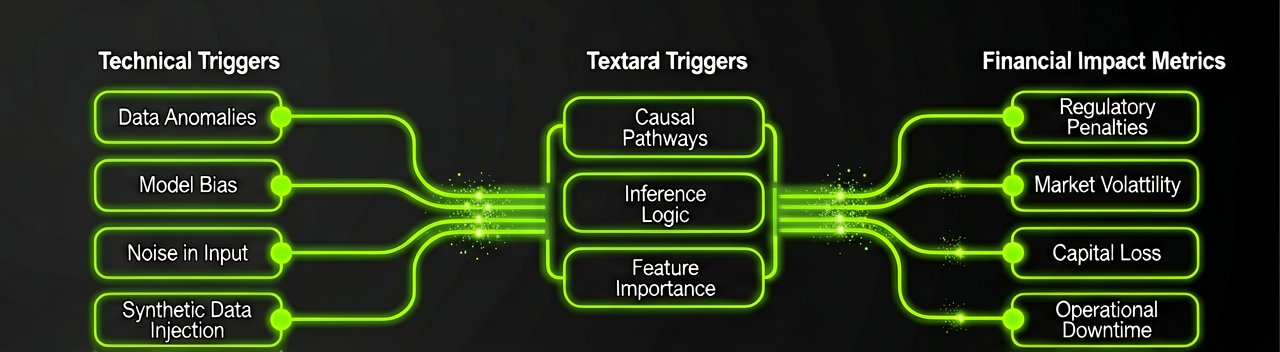
One of the most notable technical shifts within Commugen's platform is the integration of contextually explainable AI. As detailed by legal and technology insights via the National Law Review, these agents go beyond binary threat flags to provide detailed contextual reasoning for each risk assessment. This transparency allows chief information security officers (CISOs) to translate complex, low-level technical hazards into quantified financial terms. Consequently, executive boards and cross-functional corporate stakeholders can prioritize risk remediation paths using tangible business metrics rather than subjective technical speculation.
No-Code Delivery Democratizes Enterprise Compliance Scale
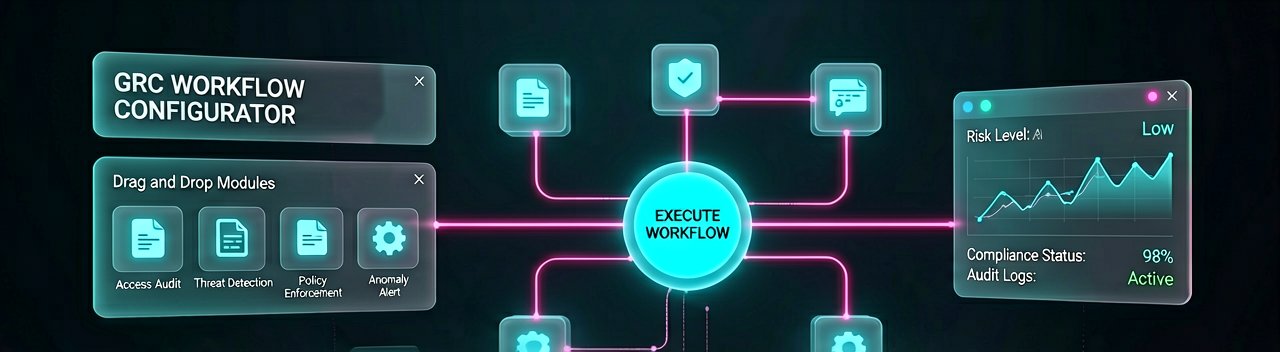
For decades, deploying enterprise risk management systems required intensive custom engineering, complex data science oversight, and lengthy onboarding cycles. Industry analysis by the Democrat & Chronicle emphasizes that embedding AI directly into a no-code interface allows non-technical GRC professionals to build and configure workflows on the fly. As regulatory parameters shift and third-party networks expand, corporate security teams can pivot their custom reporting rules instantly, turning what used to be a rigid operational bottleneck into an agile, predictive security defense system.
The Hidden Overhead of Legacy Vendor Audits
Behind the Scenes: The traditional third-party risk management lifecycle has long been corporate compliance's worst-kept secret, running on an unsustainable cocktail of sprawling Excel spreadsheets, boilerplate questionnaires, and adversarial relationships with suppliers. For years, security teams have treated vendor risk as a check-the-box compliance exercise, sending out five-hundred-question audits that vendors routinely hand off to junior staff to copy-paste standardized answers. This administrative theater creates a dangerous illusion of security while completely failing to flag real-time structural vulnerabilities, leaving enterprises blind to zero-day exploits occurring within their software supply chains.
Chief Information Security Officers (CISOs) are facing unprecedented fatigue from this relentless compliance carousel, particularly as the average enterprise now relies on hundreds of external digital services. When a major supplier suffers a security breach, the fallout triggers an immediate, chaotic scramble internally to trace where that vendor touches the corporate network. Security analysts must dig through outdated PDFs and legacy risk registries, losing critical hours that should be spent on active threat containment. This systemic friction has turned vendor management from a strategic defense line into an expensive, backward-looking bottleneck that fails to keep pace with modern cloud infrastructure.
The arrival of autonomous GRC agents represents a fundamental paradigm shift from static, point-in-time assessments to a model of continuous, dynamic validation. Rather than relying on self-reported vendor attestations that are obsolete the moment they are submitted, these digital agents operate as non-stop background investigators. They continuously monitor external threat feeds, open-source repositories, and public cloud configurations to build an objective, living ledger of vendor hygiene. This technical evolution fundamentally alters the power dynamic between enterprises and their suppliers, replacing subjective, text-based assurances with hard, verifiable telemetry.
From an operational standpoint, this automation changes the entire day-to-day workflow for enterprise risk teams, shifting human analysts from data collectors to risk mitigators. Instead of spending seventy percent of their time chasing down missing vendor documentation, security professionals can step in only when an AI agent flags a critical deviation from an established risk threshold. This transition dramatically lowers the operational burn rate of GRC departments while scaling their defensive capacity, allowing a small security team to manage a vendor portfolio that would have previously required an entire dedicated department.
However, the industry's rapid adoption of autonomous security agents introduces a new layer of organizational friction regarding algorithmic trust and accountability. Enterprise legal and compliance teams are historically risk-averse, often hesitating to trust automated platforms to make decisions that could legally terminate a vendor contract or freeze a critical software deployment. For these tools to achieve mainstream institutional permanence, security leaders must establish clear governance frameworks that define where autonomous curation ends and human oversight must step in. The organizations that strike this balance effectively will secure an agile compliance framework capable of neutralizing supply chain vulnerabilities before they can be weaponized.
The Counter-Intuitive Reality of Automated Risk Metrics
Reading Between the Lines: The core premise of the autonomous GRC revolution relies heavily on the assumption that more real-time data automatically translates into a safer corporate perimeter. In practice, substituting human-led, slow-moving vendor audits with a relentless torrent of automated threat signals can easily backfire by triggering systemic alert fatigue across the enterprise. Security operations centers already drown in internal telemetry; layering on a hyper-vigilant AI agent that flags every minor, short-lived configuration drift or credential leak from hundreds of third-party suppliers threatens to paralyze risk teams with an unmanageable volume of low-priority findings.
Furthermore, an unresolved contradiction lies at the intersection of automated OSINT collection and true systemic risk mitigation. When autonomous agents scrub public repositories, past breach records, and dark web forums to compile a vendor risk profile, they are ultimately evaluating a supplier's historical digital footprint rather than its current internal defense posture. A vendor may boast a flawless public security score while harboring disastrously insecure internal access permissions or unpatched, deeply buried internal codebases. This dichotomy creates a real danger where security teams achieve high compliance scores on automated dashboards while remaining completely oblivious to structural, hidden systemic flaws.
This reality forces an uncomfortable reckoning regarding the true independence of these automated systems. As AI agents begin talking to other AI agents across the B2B supply chain, enterprises risk creating an echo chamber of automated compliance. A supplier using automated AI tools to generate security policies and answer questionnaires will simply feed its data into an enterprise's automated AI agent designed to ingest and grade it. This creates a circular validation loop where software is essentially auditing software, stripping away the critical, skeptical human intuition that is often required to catch sophisticated social engineering threats or subtle corporate negligence.
Long-term operational projections also suggest a looming escalation in vendor relations. When an autonomous risk engine suddenly drops a vendor's rating based on a newly discovered public vulnerability, it can trigger automated contractual penalties or service suspensions. If the flagged risk turns out to be a false positive—or an asset mistakenly attributed to the vendor—the enterprise faces unnecessary operational downtime and severe strain on its B2B partnerships. Navigating the messy middle ground between absolute automated execution and nuanced human dispute resolution will become the defining operational challenge for security leaders over the next decade.
Ultimately, automation cannot engineer away the fundamental reality that third-party risk is, at its core, a human management problem. Technology can streamline data collection, flag glaring anomalies, and standardize the bureaucratic paperwork of compliance, but it cannot assume the legal liability or strategic burden of an actual security breach. Organizations that view these new AI suites as a magic bullet to entirely outsource their risk oversight will likely find that they have merely automated their blind spots, trading slow manual failures for high-speed automated catastrophes.
We are rapidly approaching a future where an enterprise's AI agent will spend its morning sternly auditing a supplier's AI agent, only for both to enthusiastically approve a software update that someone accidentally left exposed on a public server anyway.
Artūras Malašauskas is an AI Systems Integrator with 20+ years of production-grade web engineering experience. He has designed, shipped, and scaled enterprise Python/PHP systems for logistics, SaaS, and public-sector clients. For the past year, he has focused exclusively on AI integrations: deploying open-source LLMs, building generative media pipelines (image, audio, video), and engineering multi-agent workflows for real production environments. His standard: reproducibility, security, cost-efficient inference—no vaporware. He documents and evaluates emerging AI tooling, separating verified capabilities from marketing noise. Technical editor at: muza-ai.eu, ai-verslas.lt, ai-naujinos.lt Connect on LinkedIn
Comments