Revenera Bridges the Gap Between AI Agents and Enterprise Revenue Operations with New MCP Server
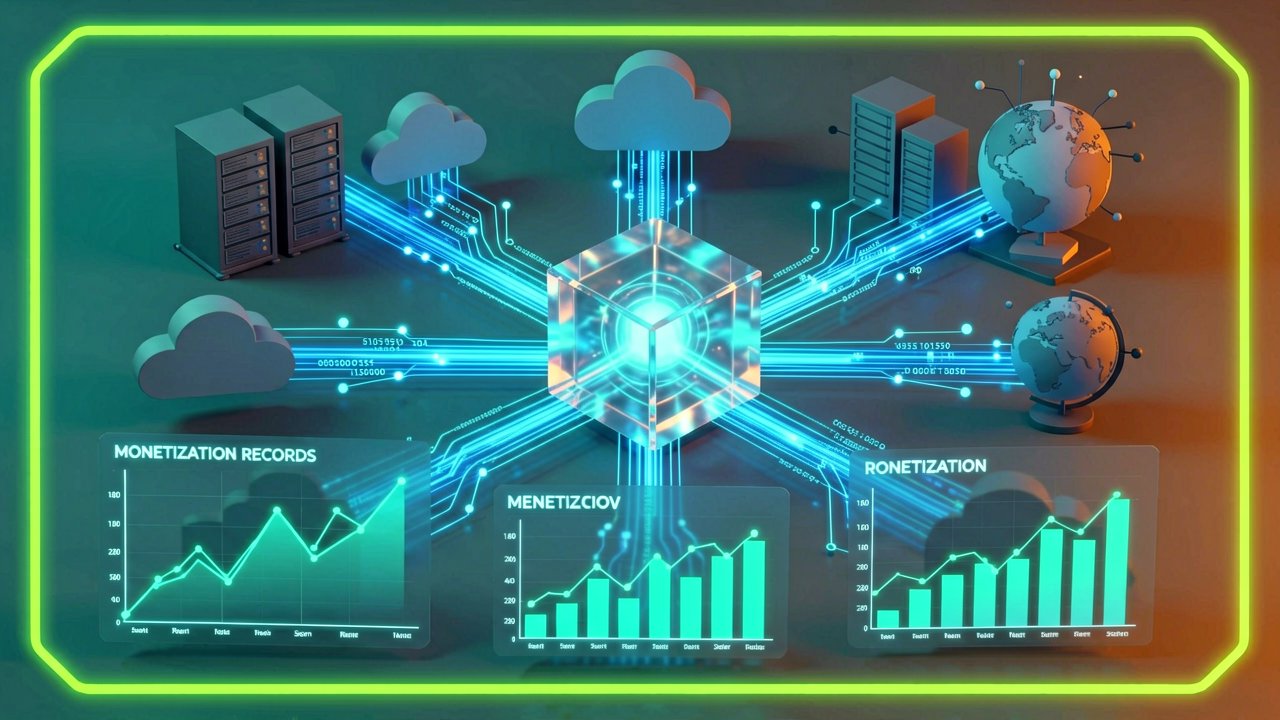
The enterprise software ecosystem is experiencing a fundamental structural shift as autonomous AI systems move from isolated chat interfaces to active operational agents. Software monetization pioneer Revenera announced the launch of its new Revenera MCP Server, a dedicated capability that natively plugs artificial intelligence into its FlexNet Operations entitlement management system. By addressing critical data silos, this deployment establishes a direct channel for autonomous agents to interact with underlying quote-to-cash applications, billing engines, and customer relations management tools.
Historically, connecting generative models to secure, transactional enterprise data required bespoke API wrappers and manual integration pipelines that proved fragile and labor-intensive. By utilizing the Model Context Protocol, an open standard designed to harmonize the interface between artificial intelligence and external resources, Revenera allows enterprises to deploy their own choice of language models without sacrificing administrative governance. This layer enables autonomous systems to interpret intellectual property insights, evaluate real-time usage metrics, and query complex monetization records natively.
Unlocking Autonomous Monetization and Churn Prediction
The strategic value of this integration centers on turning historical enterprise data into real-time operational context. Business teams can utilize natural-language systems to actively monitor customer health, uncover immediate upsell opportunities, and detect signs of account churn before renewal windows close. For instance, AI agents can continuously cross-reference declining active usage trends against customers holding significant consumption metrics, signaling accounts that require proactive sales intervention.
Market Implications for Agentic Software Ecosystems
As corporate investments heavily lean into agentic workflows, the priority for modern technology organizations has transitioned from model intelligence to functional actionability. The introduction of standardized infrastructure by vendors like Revenera highlights an industry-wide trend toward decentralizing data queries while maintaining robust corporate security parameters. This shift allows software producers to confidently scale dynamic pricing, token-based usage models, and hybrid licensing strategies within complex enterprise environments.

Behind the Scenes of the Agentic Architecture Shift
What Most Reports Miss: The foundational challenge of enterprise software monetization has never been the technical ability to track a seat or meter a gigabyte, but rather the structural latency built into data retrieval. For decades, monetization backends operated as passive accounting registers, strictly isolated from external automation tools due to security compliance and formatting friction. Revenera’s shift toward a decentralized Model Context Protocol architecture reflects a deeper operational necessity: the realization that if an autonomous system must wait for a human developer to build a customized middleware pipeline every time it needs to verify an active contract entitlement, the agent’s core utility collapses entirely.
By transforming these static backend layers into active, context-aware environments, enterprise stakeholders are suddenly forced to re-examine traditional boundary lines between sales operations and engineering teams. Product managers can now give AI agents bounded permissions to query the exact licensing state of a customer account without exposing the sensitive, raw relational database tables underneath. This shift drastically lowers the barrier to building custom internal tools, allowing automated agents to act as highly specialized financial analysts that understand the nuanced legal language embedded within software contracts.
The Realities of Governing Autonomous Licensing
From a technical implementation standpoint, this rollout addresses a major bottleneck in the current generation of corporate large language models: the lack of standardized, non-hallucinatory access to business infrastructure. When an AI agent relies on standard web scrapers or poorly documented REST APIs, it often misinterprets contract parameters, leading to highly inaccurate compliance assessments. Natively anchoring the agent’s context directly to the source of truth within a secure monetization framework removes this ambiguity, forcing the AI model to calculate real-world software usage precisely as defined by active subscription parameters.
However, this high degree of systemic access introduces a fresh set of governance responsibilities for enterprise security architecture teams. Giving autonomous entities the power to dynamically query revenue operations infrastructure requires exceptionally strict administrative boundaries to ensure data compliance and prevent unauthorized leakage of proprietary intellectual property insights. Organizations utilizing these emerging tools must proactively implement robust access controls, ensuring that while the AI system remains highly capable of identifying account friction, its operational reach remains firmly restricted within predefined corporate compliance boundaries.

The Hidden Cost of Autonomous Revenue Control
Reading Between the Lines: The tech industry’s rush to integrate autonomous AI agents into every conceivable backend layer ignores a glaring systemic irony: the primary promise of generative AI—unpredictability and creative problem-solving—is fundamentally incompatible with the hyper-rigid, deterministic world of revenue compliance. Enterprise monetization platforms like Revenera’s FlexNet exist to enforce absolute consistency, ensuring that software licensing parameters are followed to the exact digit. Injecting probabilistic neural networks into these systems creates an operational paradox where organizations are trusting inherently unpredictable software systems to monitor, optimize, and protect their predictable recurring revenue streams.
Furthermore, the claim that these tools will naturally eliminate labor-intensive middleware pipelines glosses over the massive human overhead required to audit agentic activity. While an AI agent can rapidly cross-reference usage trends to predict churn or recommend dynamic pricing changes, its calculations are only as reliable as its ongoing contextual prompts. If the underlying data schema changes, or if an LLM shifts its internal reasoning due to an unexpected model update, the financial fallout could be catastrophic, requiring human operations teams to spend more time reverse-engineering autonomous decisions than they would have spent manually building traditional API integrations.
The enterprise ecosystem is essentially betting that the speed of agentic optimization will outweigh the long-term cost of errors. For all the enthusiasm surrounding real-time pricing models managed by autonomous bots, software vendors are likely to face sudden pushback from corporate buyers who refuse to let an unvetted algorithm adjust their software bills on the fly. Until standard guardrails can completely guarantee that an autonomous agent will never hallucinate a contract violation, the true bottleneck to widespread adoption will not be the protocol standard itself, but rather the legal department's appetite for algorithmic risk.
We are rapidly approaching an era where software companies deploy AI agents to maximize corporate extraction, while corporate buyers deploy their own AI agents to actively evade overcharging, effectively reducing the future of enterprise software monetization to an expensive, automated war of attrition waged entirely by bots.
Artūras Malašauskas is an AI Systems Integrator with 20+ years of production-grade web engineering experience. He has designed, shipped, and scaled enterprise Python/PHP systems for logistics, SaaS, and public-sector clients. For the past year, he has focused exclusively on AI integrations: deploying open-source LLMs, building generative media pipelines (image, audio, video), and engineering multi-agent workflows for real production environments. His standard: reproducibility, security, cost-efficient inference—no vaporware. He documents and evaluates emerging AI tooling, separating verified capabilities from marketing noise. Technical editor at: muza-ai.eu, ai-verslas.lt, ai-naujinos.lt Connect on LinkedIn
Comments