Google Kills Conversational Boilerplate with New Genkit Agents Preview

Building autonomous AI agents used to mean drowning in a sea of custom infrastructure code. Software engineers had to write and maintain complex logic for message logs, streaming setups, and loop handling. That hassle is coming to an end. On July 7, 2026, the Google for Developers team officially rolled out the preview version of the Genkit Agents API to radically rewrite how software creators construct full-stack, autonomous software systems.
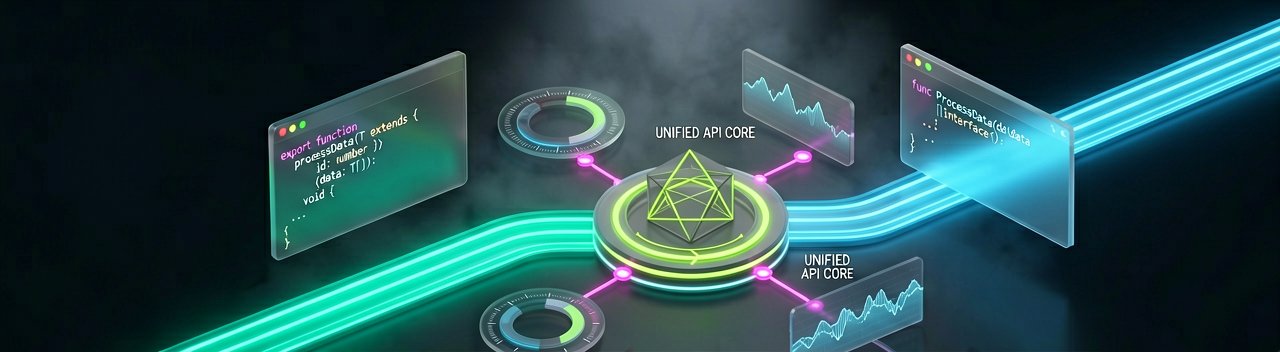
This release targets a massive bottleneck in the modern engineering pipeline. Up until now, connecting a frontend user interface to a backend AI engine forced engineers to recreate standard messaging loops manually. According to developer updates published on the Google Developers Blog, this toolkit offers built-in session management, direct tool calling capabilities, and seamless front-to-back chat synchronization inside a unified package. Creators can build their system logic directly on the server and drive it smoothly using lightweight frontend calls.
Flexible State Architecture
What makes this specific addition to Google's open-source framework notable is its engineering flexibility. According to technical documentation analyzed by Alpha Signal, the framework gives engineers total freedom regarding state ownership. Teams can freely decide whether conversation logs live on the server or right on the client side, and the system automatically morphs to fit that architectural path. This capability removes rigid constraints that previously plagued data storage design.
Polyglot Core Support
Google is rolling out this initial preview across multiple major backend environments simultaneously to secure a broad adoption footprint. The new system provides day-one support for both TypeScript and Go ecosystems. That alignment ensures full type-safety and structural data validation for teams operating within production environments. The developer ecosystem can also lean into an ecosystem adapter package, giving developers alternative options to hook directly into popular third-party UI libraries like the Vercel AI SDK.
The Architectural Shift Toward Production Stability
Behind the Scenes: The launch of this preview marks a major shift in how the tech industry tackles the systemic fragility of first-generation autonomous AI systems. Early attempts at building autonomous agent workflows frequently collapsed under the weight of runtime state corruption, runaway execution loops, and poor session visibility. By embedding orchestration logic directly into the Genkit engine, the engineering team is moving the industry away from fragile, custom-built middle layers and toward standardized infrastructure that behaves predictably under heavy enterprise workloads.
This technical foundation solves a recurring headache for full-stack engineering teams: tracking state across asynchronous networks. When an agent loops through multi-step reasoning, fetches external database records, and streams responses simultaneously, conventional client-server setups often drop packets or lose track of user intent. The updated framework treats these complex, multi-turn reasoning loops as native, traceable transactions. This allows backend teams to audit the precise path an LLM took before executing a specific function call or returning an error.
A Strategic Countermeasure in the Framework Wars
Industry observers see this development as a direct competitive response to early movers in the open-source orchestrator landscape, such as LangChain and LlamaIndex. While those initial toolkits won the hearts of developers during the early prototyping gold rush, they have faced criticism for over-abstraction and steep learning curves when deployed at scale. Google's counter-strategy focuses heavily on minimalist, idiomatic design patterns that feel native to TypeScript and Go programmers, avoiding the bloated wrapper layers that often complicate debugging.
This developer-first philosophy is especially visible in the platform's cloud-agnostic runtime architecture. Although Genkit is designed to integrate seamlessly with Google Cloud infrastructure and Firebase Services, the underlying runtime engine does not lock developers into a single ecosystem. Software engineers can run these autonomous agents on virtually any serverless compute provider, containerized environment, or traditional on-premise infrastructure. This flexibility is a critical requirement for enterprise tech buyers who are wary of vendor lock-in.
Bridging the Gap to Production-Ready AI
The broader implications of this release stretch far beyond merely eliminating repetitive boilerplate code. By reducing the friction required to build dependable, multi-turn conversational agents, the barrier to entry for shipping production-grade software is dropping significantly. Smaller engineering squads can now deploy complex, tool-using digital assistants that previously required dedicated AI research and platform engineering teams to maintain.
However, the real test for this preview framework will play out over the coming months as developers push its session management and state synchronization models to their breaking points. As production traffic scales, the developer community will determine whether this unified API truly simplifies the deployment lifecycle, or if the inherent unpredictability of autonomous LLMs will continue to demand custom, hand-crafted guardrails. For now, the framework gives engineers a clean, highly structured sandbox to find out.
The Technical Friction Behind Autonomous Execution
Reading Between the Lines: While the promise of radically simplifying full-stack AI development sounds ideal on paper, it glosses over a fundamental contradiction in modern software engineering. Frameworks thrive on predictability, strict type-safety, and deterministic control flows. Autonomous agents, by their very nature, rely on the inherently non-deterministic and unpredictable outputs of large language models. Wrapping an unstable core in a beautifully structured, type-safe API might make the initial development phase smoother, but it does little to solve the unpredictable behavioral drift that occurs when these agents interact with real-world users.
There is also an undeniable tension between the framework’s open-source marketing and the economic realities of cloud computing. Google highlights the flexibility of running these agents on any infrastructure, yet the deepest efficiencies and most seamless integrations naturally point developers straight toward the Google Cloud and Firebase ecosystems. Enterprise teams must carefully weigh the convenience of this ready-made architecture against the long-term risk of architectural lock-in, where migrating away from the specialized state management setup could require a complete rewrite of the application's backend.
The Real Cost of Eliminating Boilerplate
Furthermore, automating session synchronization and front-to-back chat loops introduces a dangerous layer of abstraction that could backfire on complex enterprise applications. When a framework handles state transitions behind a curtain of hidden logic, debugging a failed multi-turn reasoning loop becomes an exercise in frustration. Sophisticated software teams often find that the very "boilerplate code" they are encouraged to eliminate is exactly where they need to insert precise security guardrails, custom caching layers, and token-throttling mechanisms to keep cloud bills from skyrocketing.
Ultimately, providing a smoother on-ramp for building autonomous workflows may inadvertently flood production environments with half-baked applications. When writing the networking glue for an agent becomes effortless, the market inevitably sees an influx of tools that can execute external API functions without the robust validation logic required for enterprise safety. Simplifying the code deployment pipeline does not automatically equate to engineering a resilient, secure system, and teams must remain skeptical of any tool promising a shortcut to autonomous stability.
The tech industry spent decades teaching developers how to make software perfectly predictable, only to pivot overnight toward building tools that make unpredictable software easier to ship. We are efficiently streamlining the process of letting AI choose its own adventure on our cloud budgets, proving that if you give engineers a clean enough abstraction layer, they will happily automate their own operational headaches away.
Artūras Malašauskas is an AI Systems Integrator with 20+ years of production-grade web engineering experience. He has designed, shipped, and scaled enterprise Python/PHP systems for logistics, SaaS, and public-sector clients. For the past year, he has focused exclusively on AI integrations: deploying open-source LLMs, building generative media pipelines (image, audio, video), and engineering multi-agent workflows for real production environments. His standard: reproducibility, security, cost-efficient inference—no vaporware. He documents and evaluates emerging AI tooling, separating verified capabilities from marketing noise. Technical editor at: muza-ai.eu, ai-verslas.lt, ai-naujinos.lt Connect on LinkedIn
Comments