CyberProof Agentic MXDR Shifts the Burden of Threat Investigation from Analysts to Autonomous Systems
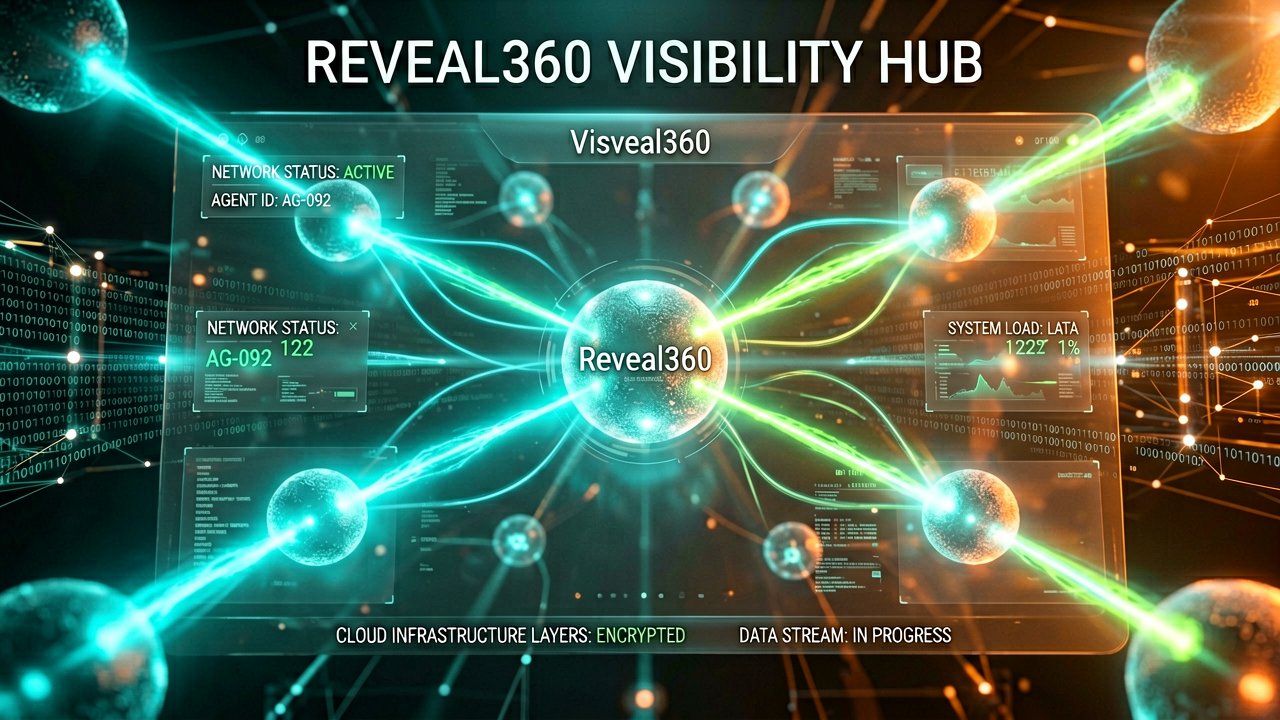
The operational landscape of modern Security Operations Centers (SOCs) is facing an unsustainable inflection point due to severe analyst burnout and rapid, AI-accelerated exploit cycles. To resolve this complexity, global co-managed security services provider CyberProof Inc. has officially launched its CyberProof Agentic MXDR Service. This new paradigm transitions traditional managed detection and response from siloed, manual workflows into an orchestrated ecosystem of expert AI agents under strict human governance. By directly integrating security telemetry across multi-vendor environments, the architecture autonomously processes foundational data triage and cross-discipline coordination.
According to market details compiled by SiliconANGLE, this platform is specifically designed to handle up to two-thirds of routine security investigations entirely on its own. By removing the tedious burden of initial threat assessment from human analysts, the system dramatically optimizes internal resources and reduces the threat of alert fatigue. Complex or critical risk decisions are automatically escalated to senior human teams, ensuring a robust human-in-the-loop validation model that shields companies from operational disruption without introducing complete reliance on unvetted machine logic.
Industry coverage from MSSP Alert highlights that the core differentiation of CyberProof's framework lies in its structural shift toward a hybrid cyber fusion center. Rather than implementing isolated AI utilities for narrow use cases, the platform embeds interconnected AI agents to manage distinct roles—such as threat hunting, quality control, and detection engineering—within a single, unified loop. The solution addresses a critical market gap for enterprise organizations utilizing mixed infrastructures, providing standardized precision that improves threat investigation accuracy by up to 30% while effectively curbing the time from threat disclosure to containment.
The Architecture of Orchestrated AI Cooperatives
Unlike early-generation automation tools that relied on static, siloed scripts, the agentic model coordinates multiple specialized AI entities that dynamically share environmental context. A single investigation triggers synchronous collaboration between distinct agents tailored for threat intelligence gathering, hunting query creation, and alert validation. This multi-agent framework natively interfaces with existing enterprise technology stacks, including Microsoft and Google SecOps, preventing vendor lock-in while unifying hybrid cloud telemetry into their proprietary Reveal360 visibility hub.

Mitigating Human Burnout and Optimizing SOC Economics
By automating the vast majority of repeating analysis tasks, enterprises can reallocate their human resource capital toward high-tier hunting, strategic edge-case remediation, and defensive governance. As detailed by Help Net Security, this release also incorporates a specialized quality control framework designed to actively evaluate agent efficiency against underlying compute expenses. This gives security leaders predictable visibility into operational accuracy versus performance costs, offering clear financial boundaries while establishing continuous optimization for modern enterprise threat defense.
Inside the Machine: The Mechanics of Multi-Agent Collaboration
Beyond the Automated Playbook: Early efforts to introduce automation into the Security Operations Center relied heavily on rigid, linear Security Orchestration, Automation, and Response scripts. These legacy systems triggered automated responses based on tightly defined parameters, but they failed when confronted with obfuscated payloads, complex multi-stage attacks, or unfamiliar infrastructure configurations. CyberProof's shift to an agentic architecture changes this paradigm by employing independent AI personas that act more like an agile human department than a fixed script. Instead of relying on a centralized program to handle every variable, individual AI agents focus on discrete tasks—such as parsing localized logs, querying global threat feeds, or drafting defensive configurations—and pass their context back and forth until a consensus is reached.
This decentralized interaction mimics the behavior of elite tier-two security personnel. When a potential threat indicator surfaces within a hybrid cloud network, the specialized threat hunting agent requests specific historical telemetry from the log-parsing agent while simultaneously pulling recent indicators from open-source intelligence feeds. By allowing these agents to autonomously negotiate tasks and analyze variables in parallel, the platform avoids the latency and processing bottlenecks that often cripple centralized enterprise monitoring systems. The human analyst is no longer forced to act as the primary engine of data collection; instead, they step into the role of a final reviewer, stepping in only when the agent cooperative encounters conflicting data or high-risk administrative actions.
For executive leadership and chief information security officers, this strategic shift addresses a persistent structural crisis: the ballooning financial cost of retaining specialized cybersecurity talent. The industry has suffered under a chronic shortage of senior analysts capable of navigating the nuances of modern multi-vendor cloud environments. By delegating two-thirds of routine, repetitive investigations to an autonomous layer, organizations can extract more value from their existing staff. Human operators are shielded from the exhausting volume of low-fidelity alerts, allowing them to focus on proactive architecture hardening, table-top incident response simulations, and addressing complex edge cases that require nuanced business context.
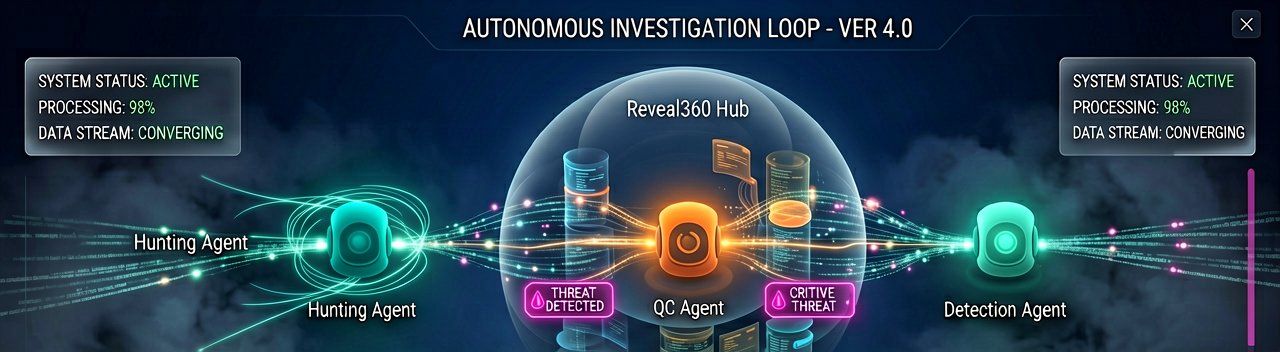
However, the rapid adoption of agentic security solutions introduces new operational considerations regarding computational overhead and system trust. Operating a multi-agent framework requires significant backend processing power, making the balance between investigation depth and compute cost a primary metric for modern security directors. CyberProof’s integration of a dedicated quality control agent addresses this problem directly, evaluating whether the compute costs of an autonomous deep dive match the severity of the alert. As this tech continues to mature across the enterprise space, the focus of enterprise security leaders will inevitably shift away from managing individual alerts and toward the orchestration, auditing, and financial budgeting of autonomous AI teams.
The Hidden Fault Lines of Autonomous Defenses
Reading Between the Lines: The cybersecurity industry’s rapid transition toward autonomous agentic operations is frequently marketed as a silver bullet for analyst burnout, yet this evolution introduces unique structural contradictions that enterprise security leaders cannot afford to ignore. While offloading two-thirds of routine threat investigations to a cooperative network of AI agents drastically lowers immediate operational friction, it simultaneously creates a dangerous abstraction layer between human operators and their networks. Security teams that rely entirely on autonomous data triaging risk losing their fundamental diagnostic instincts. When senior analysts spend all of their time merely reviewing pre-packaged machine conclusions rather than wrestling with raw log data, the institutional knowledge required to hunt for unprecedented zero-day exploits inevitably begins to decay.
Furthermore, the economic narrative surrounding agentic security platforms contains an inherent paradox. Vendors highlight the cost savings achieved by reducing human headcounts and minimizing manual triage hours, but they rarely highlight the unpredictable operational costs of continuous LLM orchestration. Running a multi-agent framework—where specialized AI personas repeatedly query, analyze, and debate security telemetry—demands massive computational resources. If an enterprise experiences a sudden surge in low-fidelity alert traffic, the resulting token consumption and api compute expenses can quickly spiral. Without strict financial governance guardrails, organizations risk trading predictable human labor costs for highly volatile machine compute invoices that fluctuate alongside the daily threat landscape.
There is also the unresolved question of systemic trust and the vulnerability of the AI agents themselves to sophisticated adversarial manipulation. Sophisticated threat actors are already pivoting from traditional code exploits to prompt-injection and data-poisoning tactics designed to deceive autonomous systems. If an attacker intentionally seeds network telemetry with specific contextual clues, they could theoretically trick a validation agent into concluding that a live data exfiltration event is merely a routine administrative backup. In an entirely automated ecosystem, a single logical blind spot across the agent collective could allow a breach to persist undetected for months, fundamentally undermining the speed and accuracy advantages that these agentic platforms were built to deliver.
"We are rapidly approaching a fascinating operational milestone where autonomous AI software agents will spend their days furiously investigating automated attacks launched by rogue AI algorithms. Meanwhile, the human security director sits quietly in the corner, staring at a neatly formatted dashboard, wondering if they are running a cutting-edge defense center or simply paying the electricity bill for a very expensive machine-to-machine argument."
Artūras Malašauskas is an AI Systems Integrator with 20+ years of production-grade web engineering experience. He has designed, shipped, and scaled enterprise Python/PHP systems for logistics, SaaS, and public-sector clients. For the past year, he has focused exclusively on AI integrations: deploying open-source LLMs, building generative media pipelines (image, audio, video), and engineering multi-agent workflows for real production environments. His standard: reproducibility, security, cost-efficient inference—no vaporware. He documents and evaluates emerging AI tooling, separating verified capabilities from marketing noise. Technical editor at: muza-ai.eu, ai-verslas.lt, ai-naujinos.lt Connect on LinkedIn
Comments